
Many Places. One Passion.
Many Places. One Passion.
14.02.2024
CLAAS operates more than ten production plants worldwide—all united by a passion for agriculture. If it has the CLAAS name on the outside, you can be sure it has the CLAAS quality on the inside—from products to corporate culture. That said, how does the company manage to uphold the highest standards globally and create a community? You can find out on this page. Get to know selected production plants in more detail—and meet the people behind the machines. If you want to discover even more about global production at CLAAS, you can find all our production plants here.


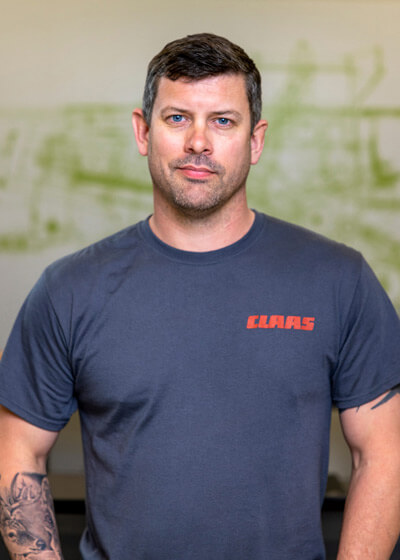
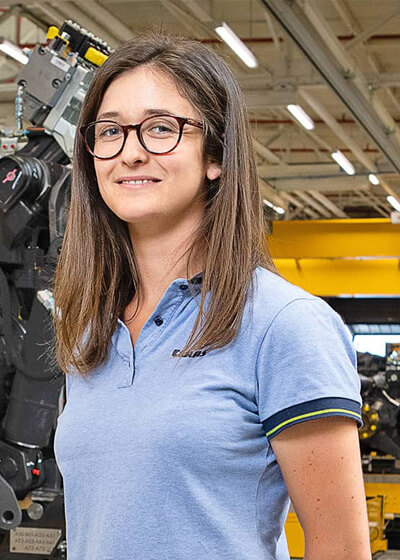

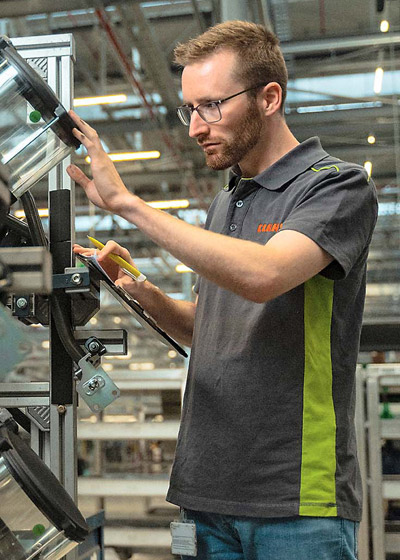
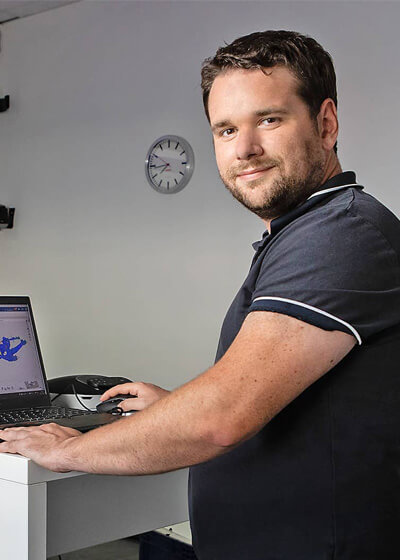
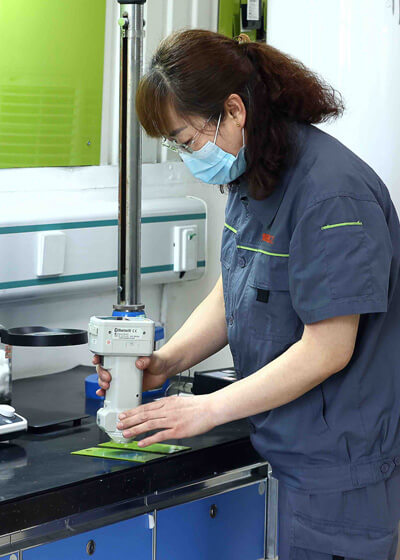
“As a trainee to become a mechatronics technician, I think it’s great how much CLAAS invests in its employees. I like being able to use the skills I’ve learned to help build our LEXION.”
– Kirk Skaggs, mechatronics technician trainee

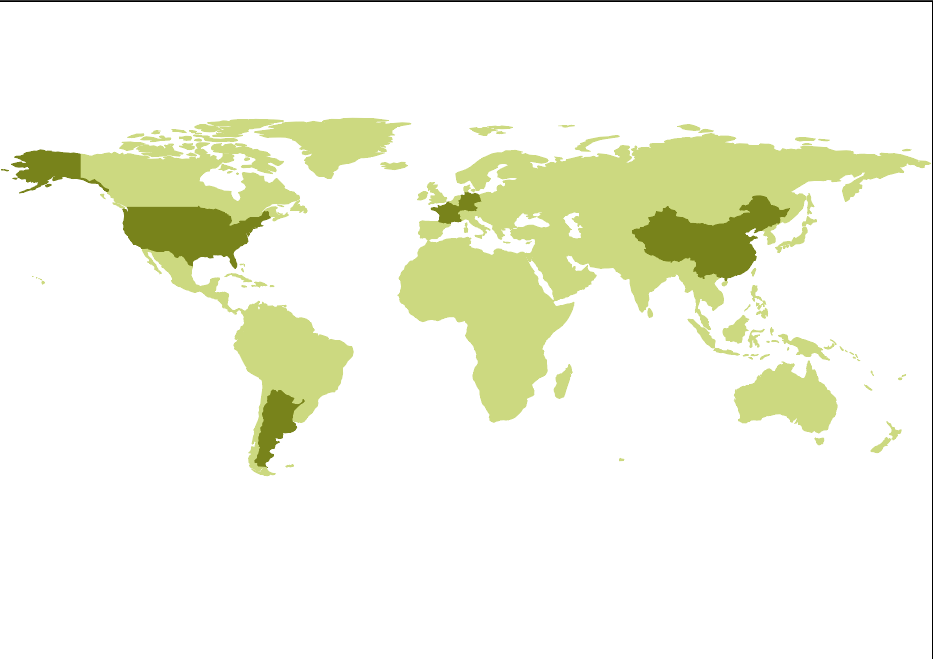
1. In how many countries does CLAAS have production plants and where are they located?
1. In how many countries does CLAAS have production plants and where are they located?
1. In how many countries does CLAAS have production plants and where are they located?
1. In how many countries does CLAAS have production plants and where are they located?
We basically distinguish between production (i.e., manufacturing individual components) and the final assembly. We manufacture at the following locations:
- Germany: Harsewinkel, Paderborn, Bad Saulgau
- France: Le Mans, Metz-Woippy
- Hungary: Törökszentmiklós
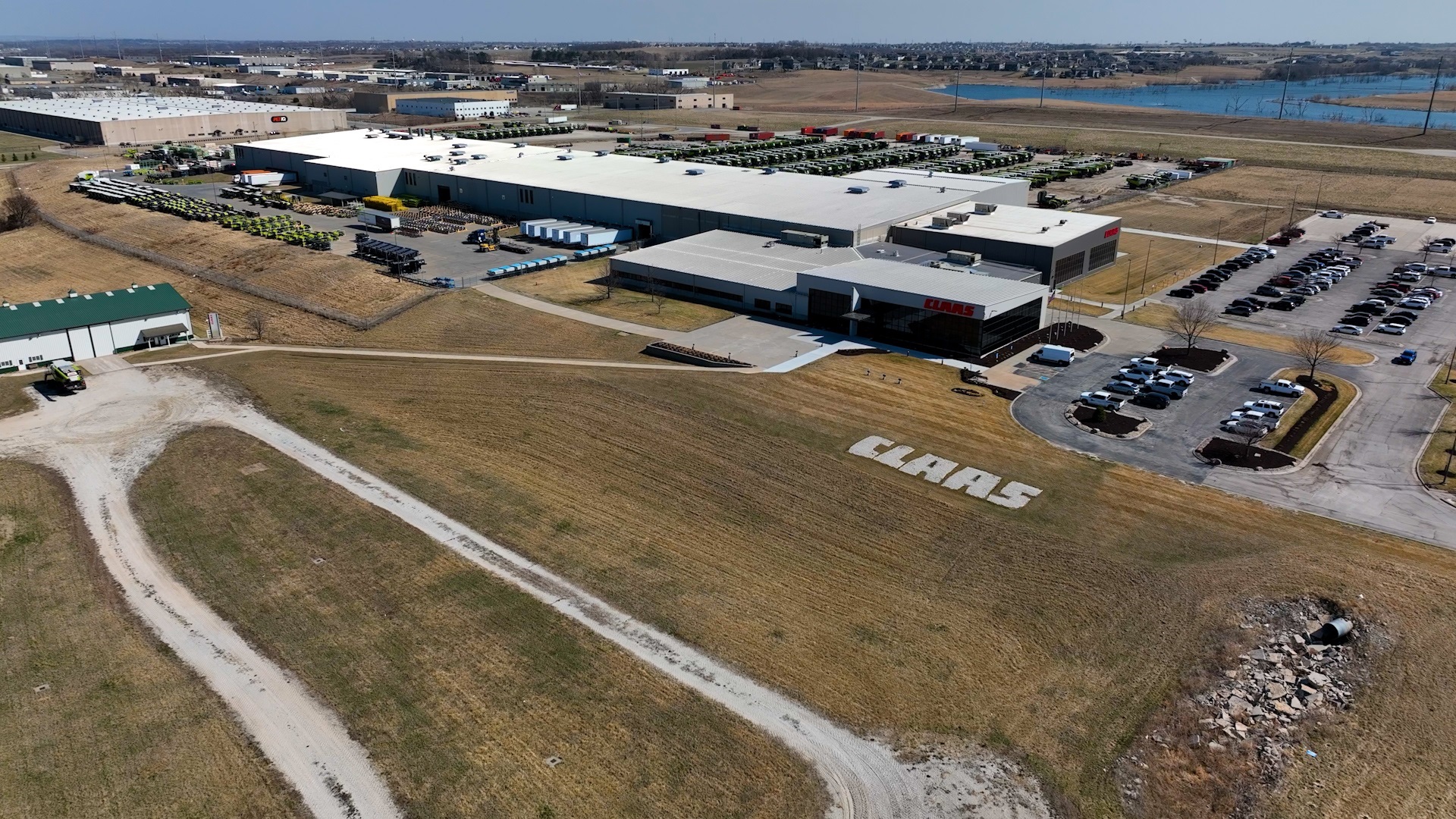
- USA: Omaha
- India: Chandigarh
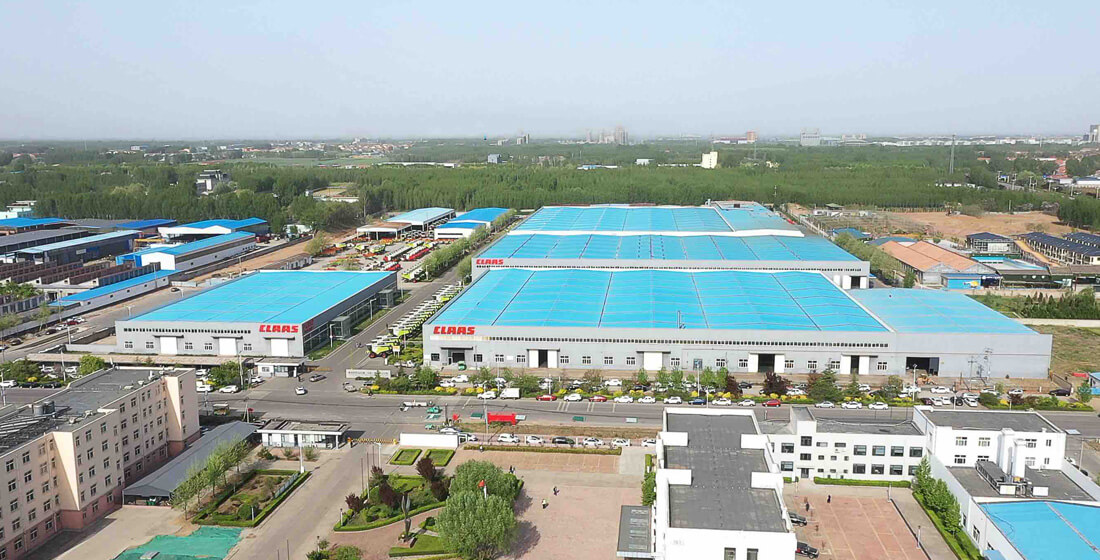
- China: Gaomi
- Russia: Krasnodar
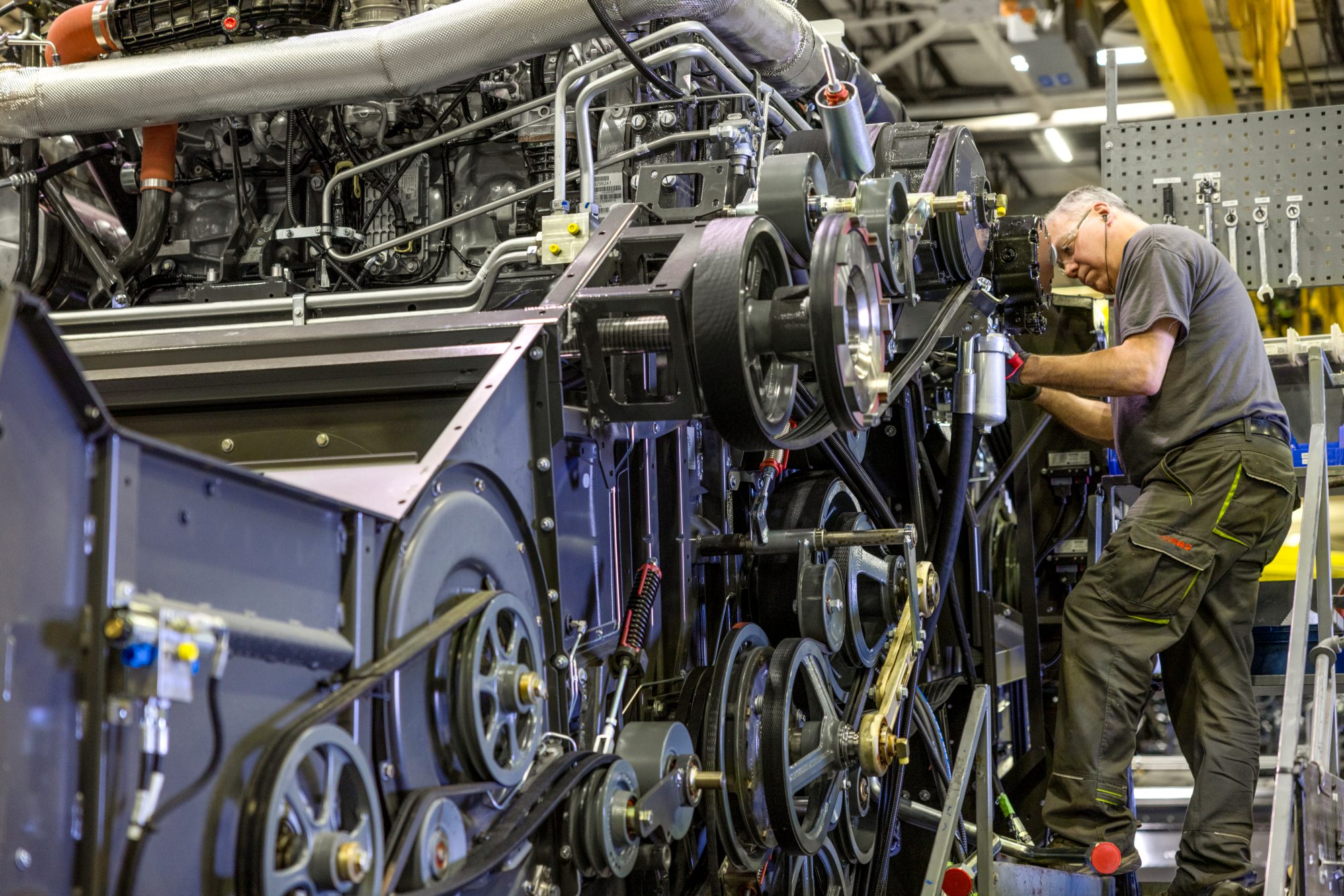
Final assembly takes place in Uzbekistan (Tashkent) as well as Krasnodar (in addition to local TUCANO production). We also source machines from partnerships with Liebherr (SCORPION, TORION) and Carraro Agritalia Tractors (NEXOS, ELIOS).
2. Why do CLAAS products routinely perform so well in tests?
2. Why do CLAAS products routinely perform so well in tests?
2. Why do CLAAS products routinely perform so well in tests?
2. Why do CLAAS products routinely perform so well in tests?
Our products are consistently rated high and best-in-class in independent surveys due to several factors. First, we have years and often decades of experience and expertise in many product areas. This puts us at the forefront of cutting-edge design when it comes to combine harvesters, forage harvesting equipment, TERRA TRAC crawler tracks, and CEMOS assistance systems.
We also have innovative employees who are attuned to our customers' needs—many of our developers come from farming backgrounds. Furthermore, direct feedback from customers all over the world helps us to refine and improve our products continually.
Another important factor is that when developing our products, we not only focus on producing reliable, efficient, and highly effective products but also design them to be low maintenance with minimal wear costs, so they retain their value longer and have an exceptionally long service life.
3. Does CLAAS manufacture everything in-house? What is the level of vertical integration?
3. Does CLAAS manufacture everything in-house? What is the level of vertical integration?
3. Does CLAAS manufacture everything in-house? What is the level of vertical integration?
3. Does CLAAS manufacture everything in-house? What is the level of vertical integration?
No, we do not make everything in-house; that would not be commercially viable. Depending on the products, our level of vertical integration is around 20 to 25 percent. Take components such as diesel engines, for example. We don’t have sufficient volumes to justify in-house production, so instead, we rely on engineered components that are also used in HGVs or construction vehicles.
Not only that, but it’s often more economical to source high-quality, specialized manufacturing processes such as plastics processing, electronics production, and metal forging and forming.
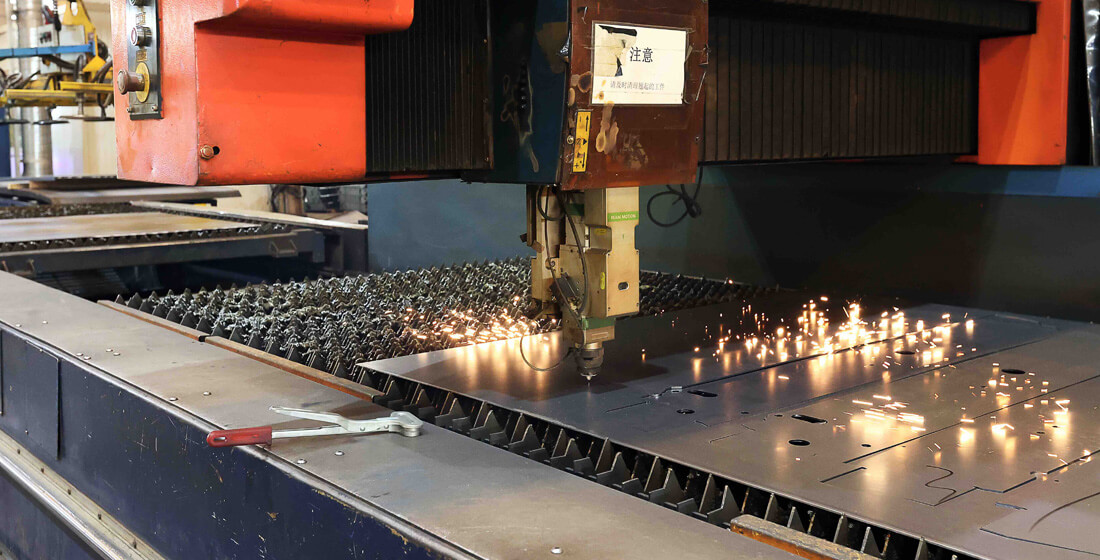
However, we tend to manufacture large-volume welded components in-house just in time. We also generally assemble and commission our products ourselves.
4. How does CLAAS ensure that its products are consistently produced to the same standard?
4. How does CLAAS ensure that its products are consistently produced to the same standard?
4. How does CLAAS ensure that its products are consistently produced to the same standard?
4. How does CLAAS ensure that its products are consistently produced to the same standard?
First and foremost, our highly qualified and skilled staff is responsible for the excellence of our products. We have also implemented a range of procedures to ensure the quality of our machines.
- Quality management: The group-wide quality management system is regularly audited both internally and externally and continuously improved.
- Supplier selection: Just as we do from ourselves, we expect the highest standards of quality from our suppliers (see question 5: What standards do CLAAS suppliers have to meet?). To satisfy these standards, we select our suppliers with utmost care in accordance with a standardized process. We regularly check our standards to ensure that they comply with automotive standards.
- Validation of components: We use simulation-based methods to test how components and assemblies behave under continuous load and peak loads.
- Constant field testing: During development and pilot production, we test our products in the field to detect possible quality problems before starting series production. During series production, we then test the machines remotely, both offline and online, so that even the slightest discrepancies can be corrected.
- Inspection of components: Purchased parts at CLAAS undergo routine incoming goods inspections. Parts manufactured in-house are regularly checked to ensure they conform to specifications.
- Quality gates: QGs are part of our coordinated and standardized manufacturing and assembly processes. They enable us to identify and rectify deviations directly on-site. When deviations occur, established internal quality control loops are immediately set in motion to rectify the deviation in the short term and permanently eliminate the actual cause of the error. CLAAS also uses a group-wide IT app to support the process of fault finding and rectification.
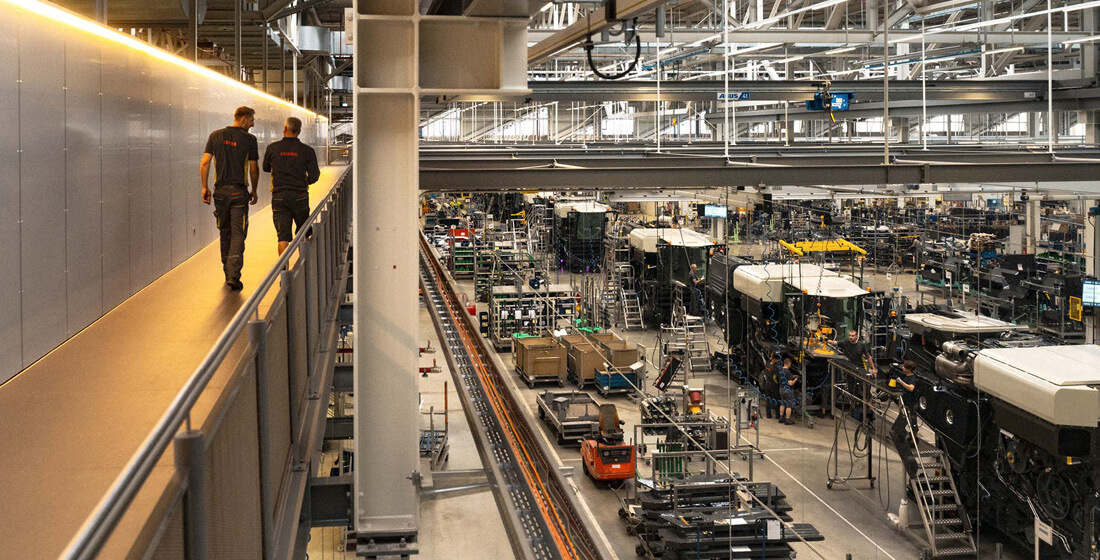
- Machine test benches: These test benches integrated into the assembly line test whether the machines meet the specified load profile for customer use.
- Product audits: We regularly select machines at random and test them for several hours from the customer's perspective.
- Pre-delivery inspection: We give machines a final inspection before delivering them to dealers. This means that we can be sure that our products comply with all customer requirements.
5. What standards do CLAAS suppliers have to meet?
5. What standards do CLAAS suppliers have to meet?
5. What standards do CLAAS suppliers have to meet?
5. What standards do CLAAS suppliers have to meet?
We’re a premium manufacturer, so our suppliers are required to meet the highest standards in terms of quality, logistics, costs, innovation and motivation. These aspects are reviewed annually as part of our supplier assessment process, and our suppliers are also expected to make continuous improvements.
Developing good working relationships with our partners is important to us. We’re constantly looking for opportunities to deepen our special partner status with our suppliers, and that works both ways.
6. According to what standards are CLAAS employees trained?
6. According to what standards are CLAAS employees trained?
6. According to what standards are CLAAS employees trained?
6. According to what standards are CLAAS employees trained?
We educate and train our staff according to the following principles:
- Objective- and needs-based approach: For us, further development means helping our staff drive CLAAS forward—now and in the future. The CLAAS corporate strategy and objectives determine the development needs of our workforce. To this end, we take a systematic approach to analysis and planning in order to prioritize training opportunities. In individual discussions with employees, we identify where their focus of professional development should lie—other than mandatory training such as occupational health and safety.
- Focus on practice and transfer: We base training and development on the 70-20-10 model: 70% of the time our staff learn on the job, e.g. by taking on new responsibilities. 20% of the time, they learn informally from others, e.g., through feedback. 10% of the time, they learn formally in professional development programs and on- or off-line training courses. The courses and programs must build on one another, encourage reflection and have a large practical element to facilitate consolidation. Formal further education and training programs are delivered through a combination of methods tailored to the target group.
- Transparency: Eligibility requirements for our professional development opportunities are transparent. The assessment criteria are based on systematic frameworks such as the CLAAS skills model.
- Individual responsibility: Every employee has a unique potential that deserves to be recognized and nurtured. Employees take responsibility for their own professional development—from start to finish. Our management team and HR Department play a coaching role in helping employees achieve their development goals.
- Evaluation and quality control: Employees are encouraged to provide feedback after each person's development activity. This enables us to assess the success of each measure. In addition, we benchmark our results with other companies to validate and enhance our development opportunities.
7. How does CLAAS create a common employee culture in locations all around the world?
7. How does CLAAS create a common employee culture in locations all around the world?
7. How does CLAAS create a common employee culture in locations all around the world?
7. How does CLAAS create a common employee culture in locations all around the world?
One thing that unites us all is that we’re a family business with shared values. We also share enthusiasm for the CLAAS brand and our products and a vision of making our customers the best in their field.
Of course, the family-like working atmosphere plays a major role, shaped by the personal commitment of all employees worldwide.
8. How does CLAAS support local farmers and agricultural service providers?
8. How does CLAAS support local farmers and agricultural service providers?
8. How does CLAAS support local farmers and agricultural service providers?
8. How does CLAAS support local farmers and agricultural service providers?
We support local farmers and agricultural service providers primarily by providing innovative and efficient products and by our experienced, highly professional sales and service partners:
- CLAAS machines: Our tractors and harvesting machines are among the most efficient on the market; they have low operating costs and top-quality drive and chassis technologies that are fuel-efficient and soil-friendly – including the TERRA TRAC crawler tracks and CTIC tire pressure control system.
- Assistance systems: We are at the forefront in this area too. A wide variety of CEMOS assistance and process optimization systems relieve the burden on drivers so that they can focus on their jobs during long working days. The technology also enables less experienced operators to deliver outstanding results.
- Data documentation and analysis: We provide solutions for data documentation and analysis such as TELEMATICS and CLAAS connect which are aimed primarily at contractors and arable farms.
- Precision farming technologies: Users of our machines can cut down on inputs with the aid of digital tools such as automatic steering systems, guidance systems and Section Control. We offer digital solutions through 365FarmNet, from fleet management and farm management software to field mapping, crop planning and herd management.
- DataConnect: Our connected machines are compatible with the cloud-to-cloud DataConnect platform. This means that our customers can view machine data across their entire fleet–from CLAAS, 365FarmNet, CNH and John Deere.
We also take pride in having an extensive network of professional dealerships that offer outstanding service:
- Spare parts: We ensure a fast and reliable supply of high-quality spare parts, which includes several product lines – not just for new CLAAS machines, but older models too.
- Warranty: The manufacturer's warranty can be extended by up to eight years or 8,000 operating hours, providing the financial security that businesses need to plan with confidence.
- Used machines: The global CLAAS used machine business is regarded as the most professional in the industry. Certified used machines with warranties give purchasers peace of mind.
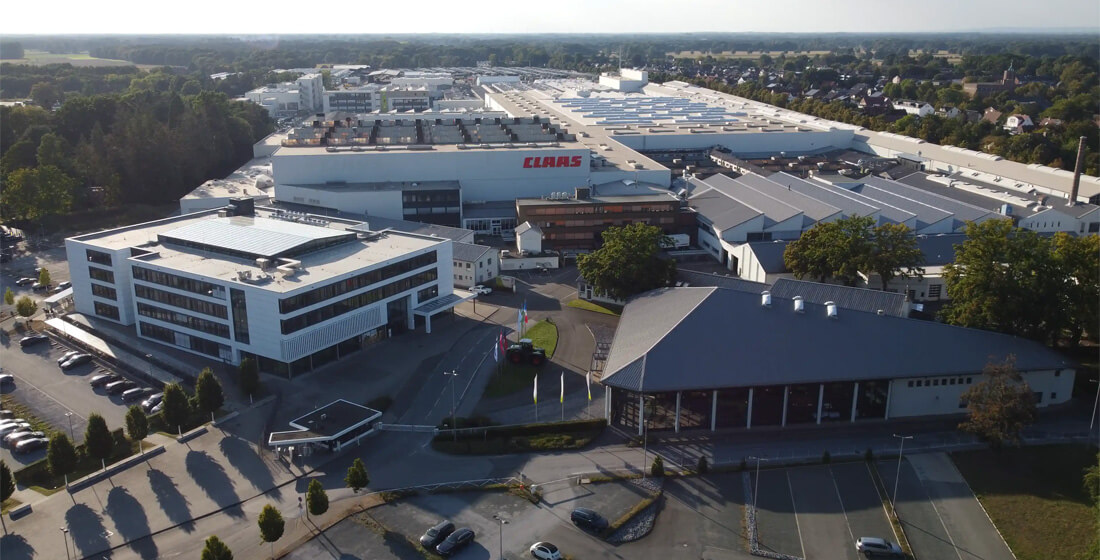
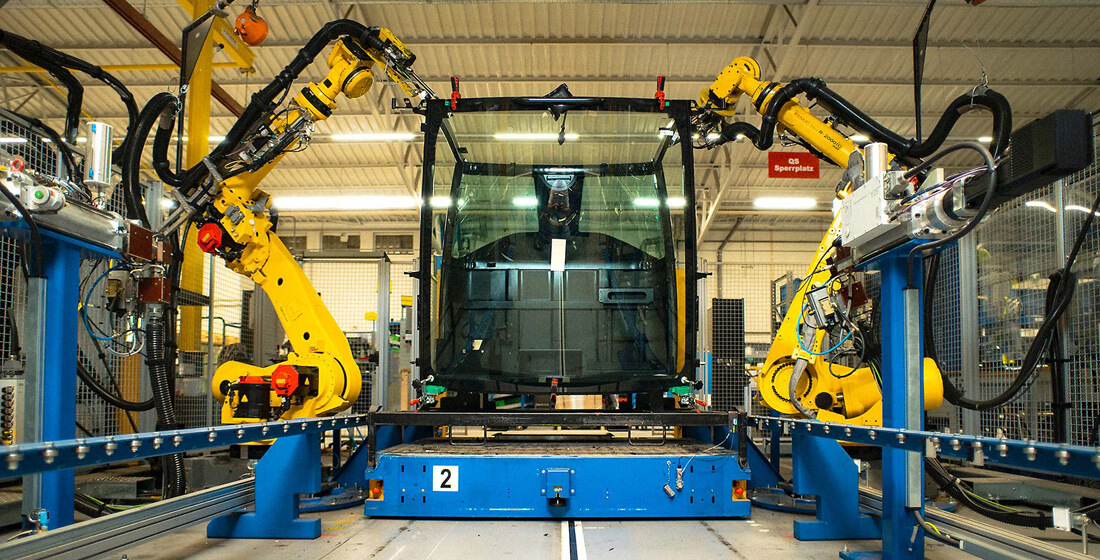
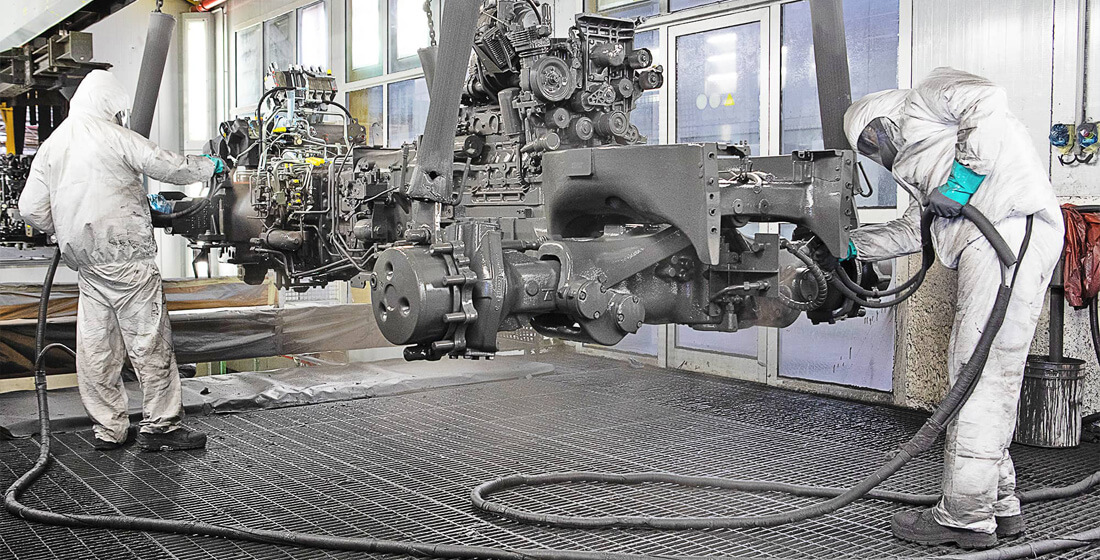
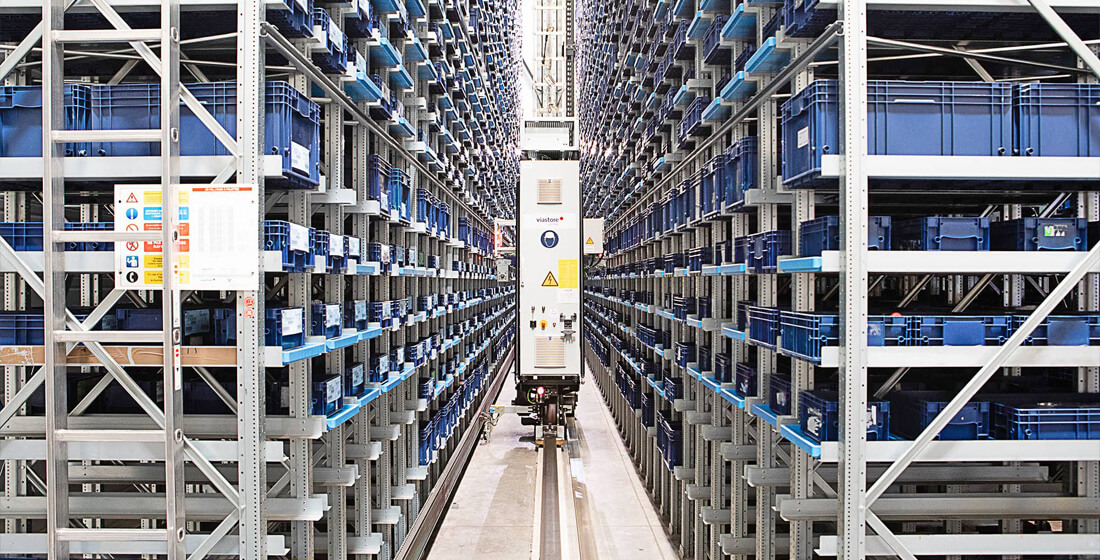
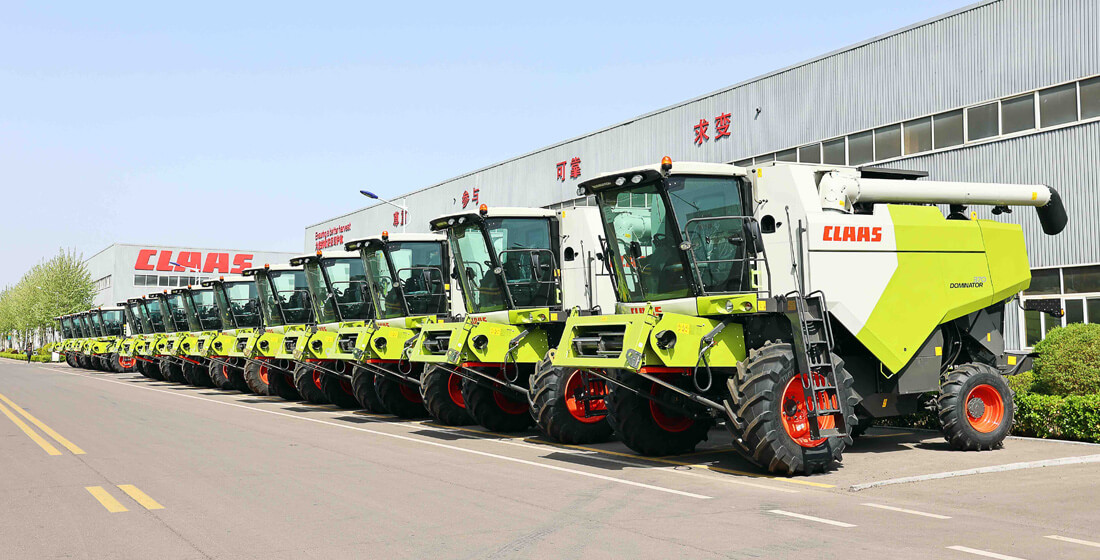
The main CLAAS production plant in Harsewinkel, which covers over 135 acres, is home to around 3,600 employees and is equivalent to over 100 football fields.