Products
Smart Farming
Service & Parts
Discover CLAAS
Career
Press
About CLAAS

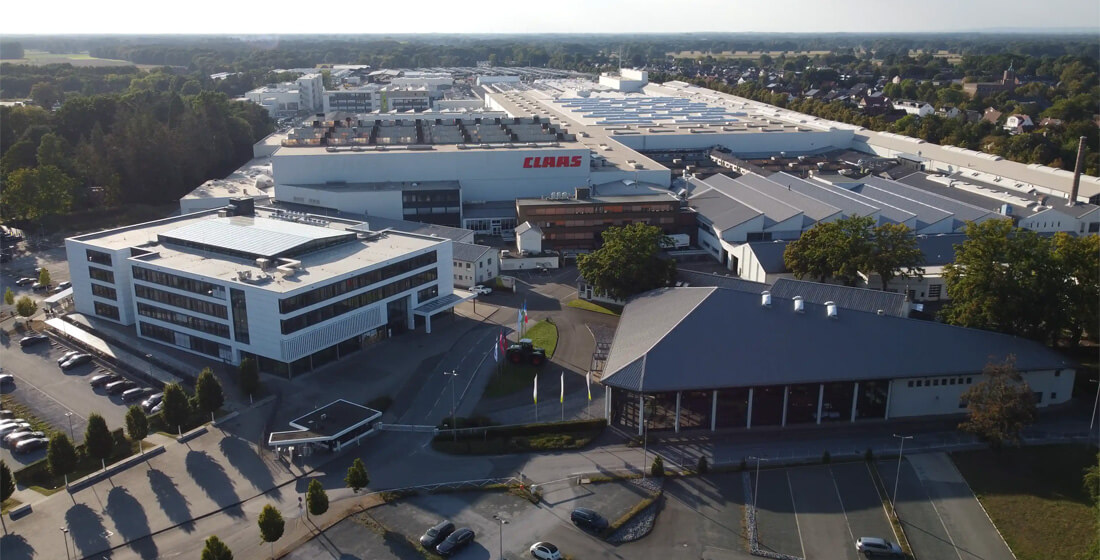
The global headquarters.

Minus 4 degrees Fahrenheit and sleet: when Lisane Volkeri arrived at the CLAAS factory in Omaha, Nebraska, in January 2018, it was so cold that the entrance door had frozen shut. “The temperatures came as a real shock to me, but my colleagues gave me a very warm welcome,” said the 31-year-old engineer with a laugh.


The warm reception was all the more important, given that the team had a major challenge on their hands. They had to prepare the Omaha factory for the full-scale production of a new series of the LEXION large combine harvester—model numbers 8900–5300—just a few months after the prototype had been assembled for the first time in Harsewinkel.


The goal was to produce the machines in the American factory to exactly the same standards as the main production plant within two years—even though Omaha is nearly 4,400 miles away from Harsewinkel as the crow flies.

Made by CLAAS.


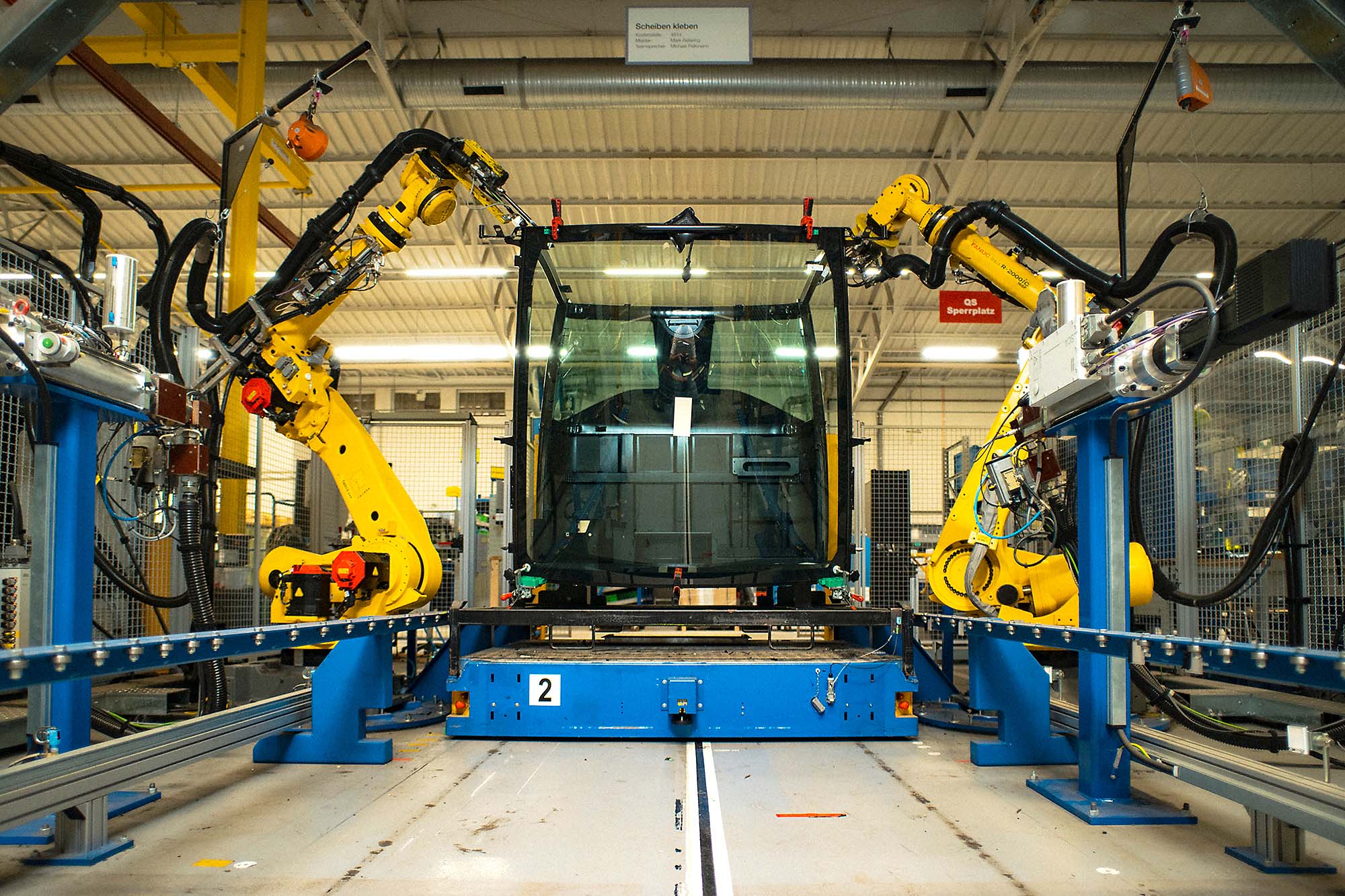
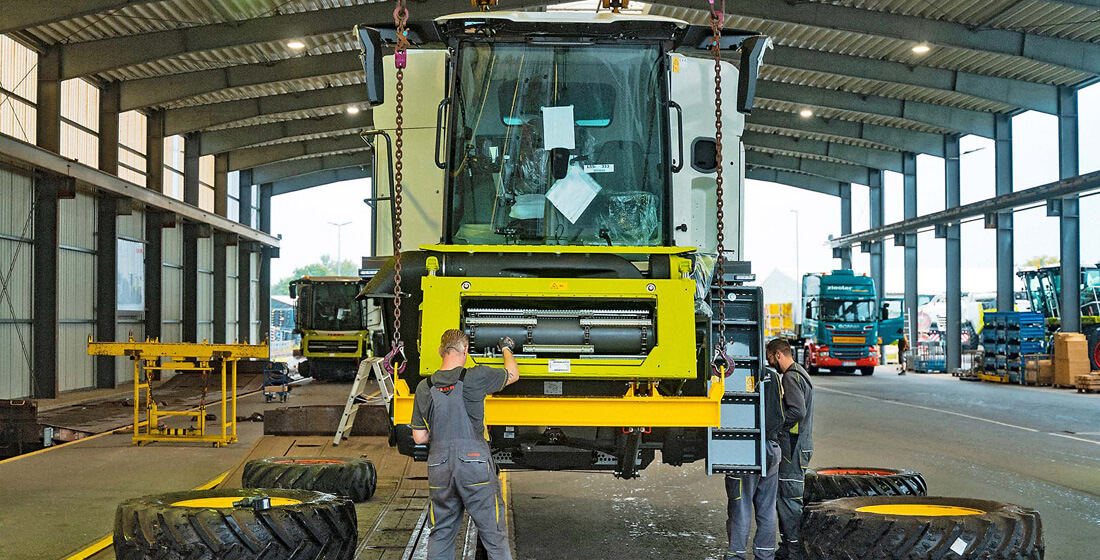
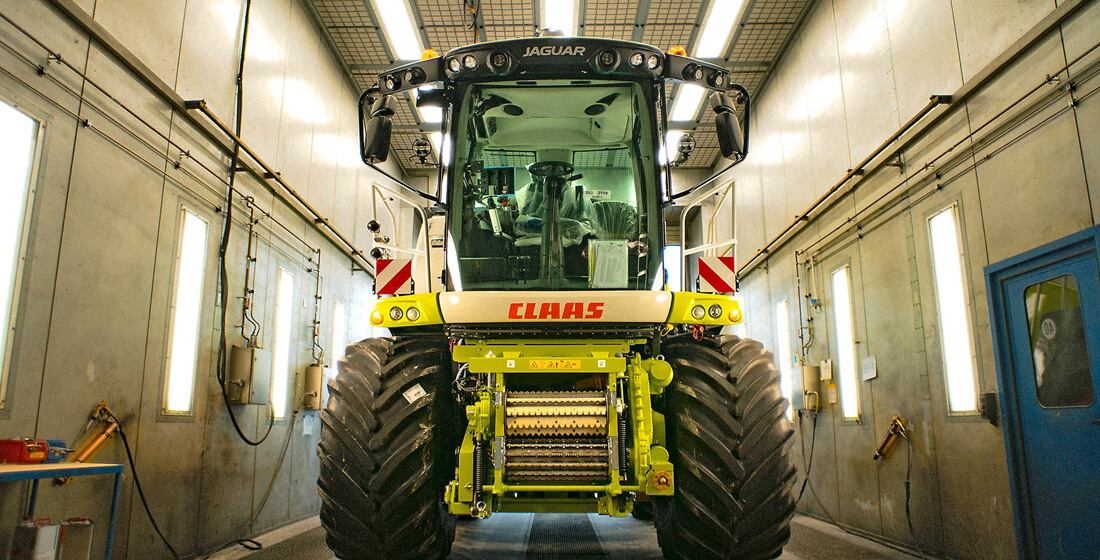
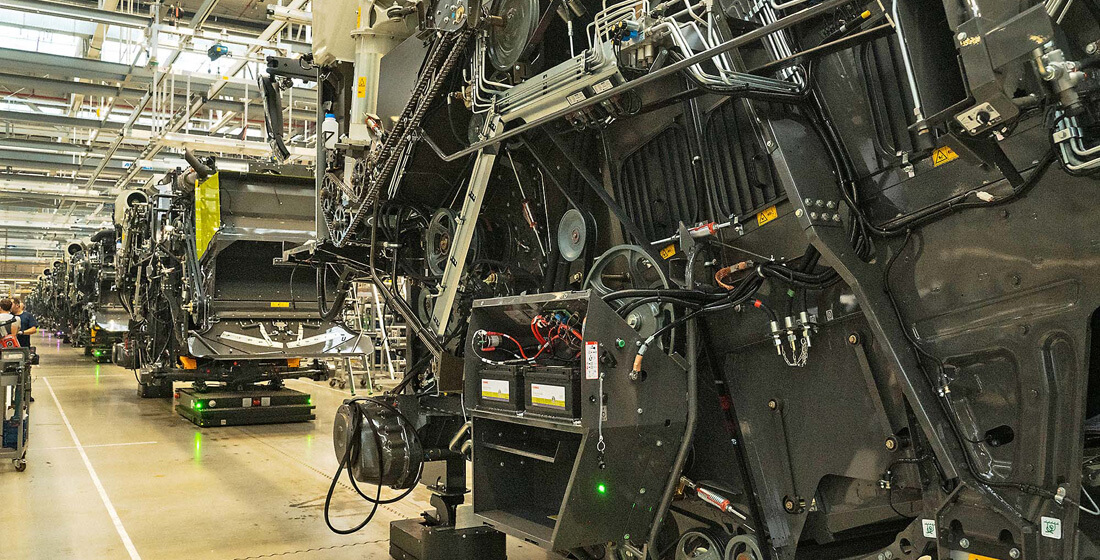
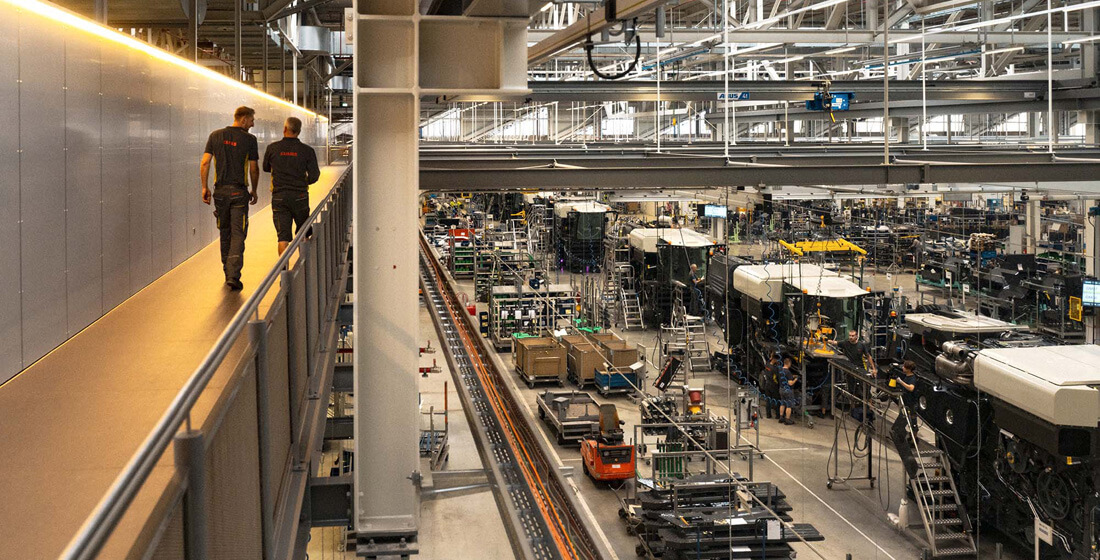
And for many, Harsewinkel is still synonymous with CLAAS. The small town in Münsterland became the company headquarters in 1919. Since 1936, more than 450,000 combine harvesters have rolled off the production line. Today, around 2,300 employees work on a production area of nearly 100 acres (400,000 m2). The LEXION large combine harvester, JAGUAR forage harvester and XERION large tractor are just some of the products manufactured here.


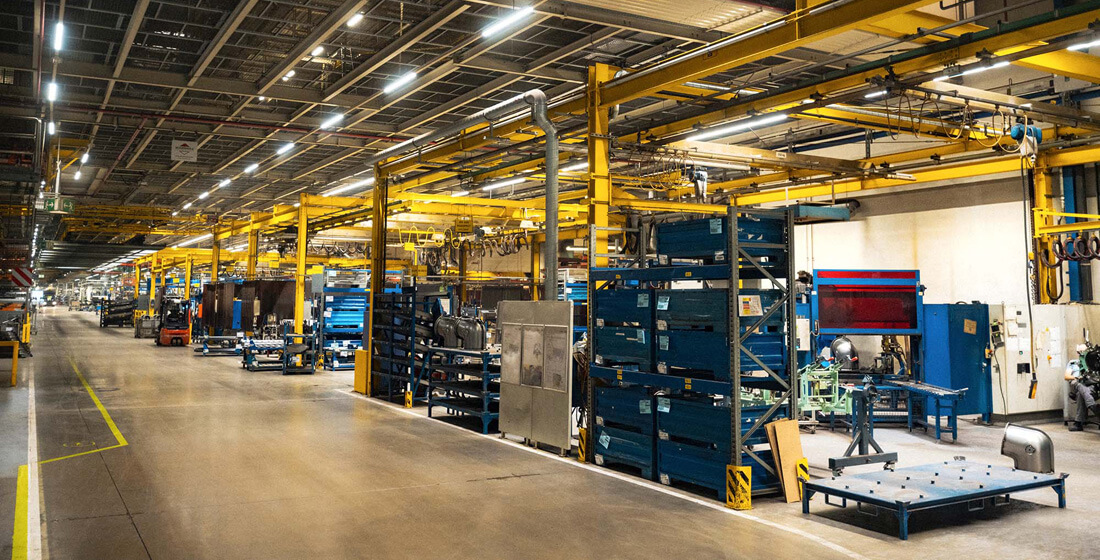
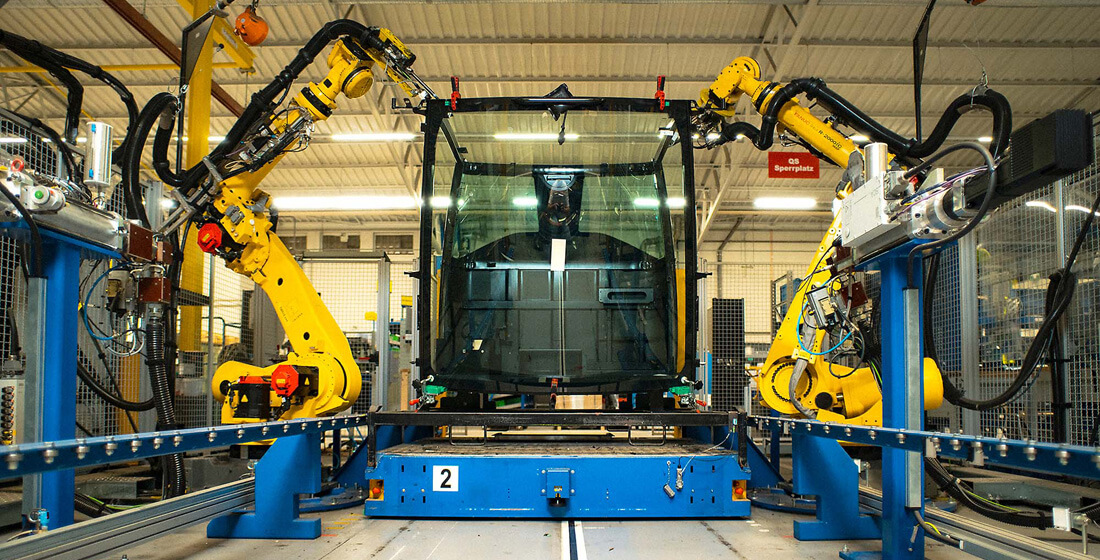
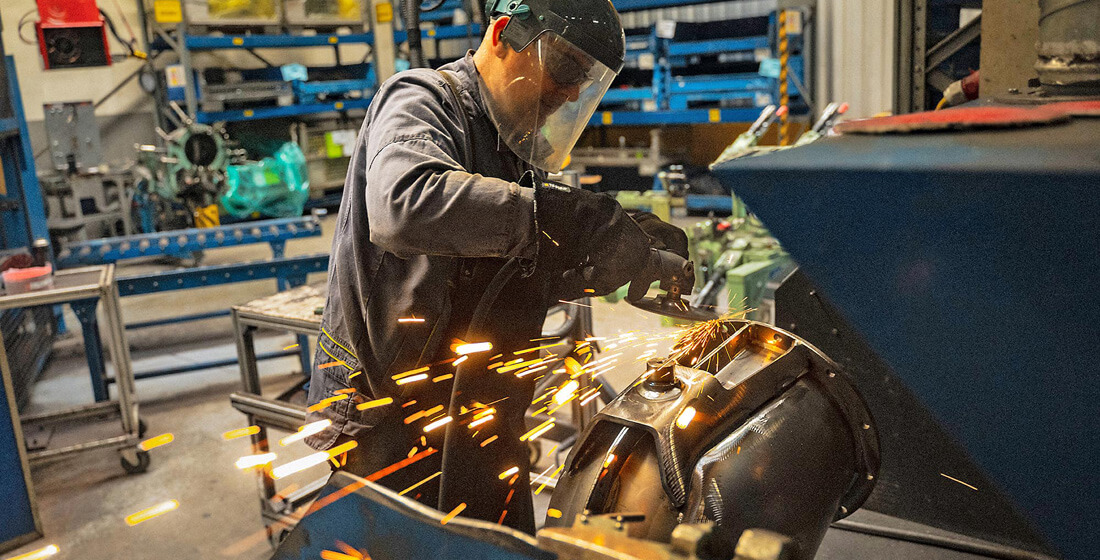
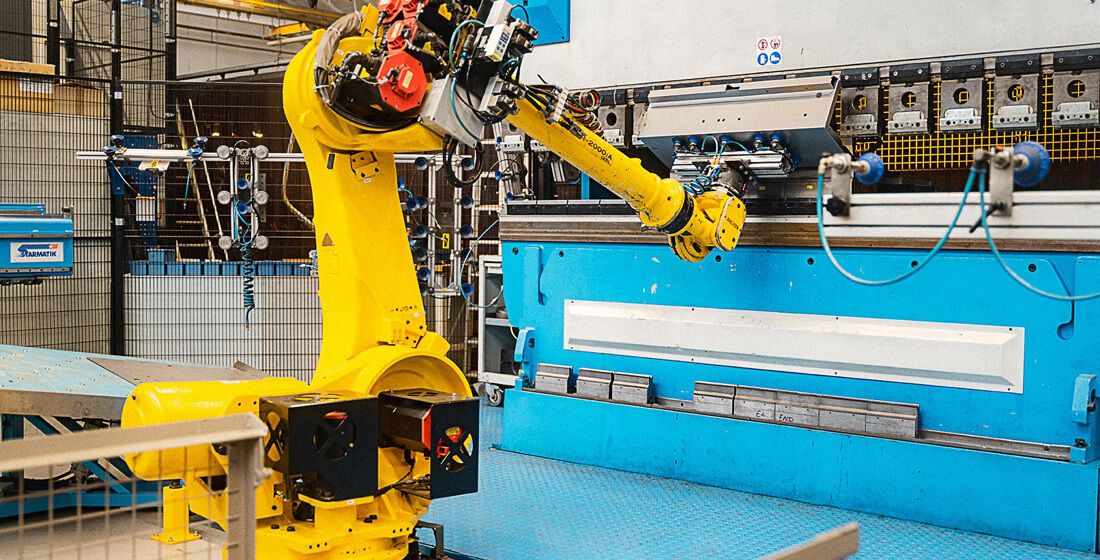
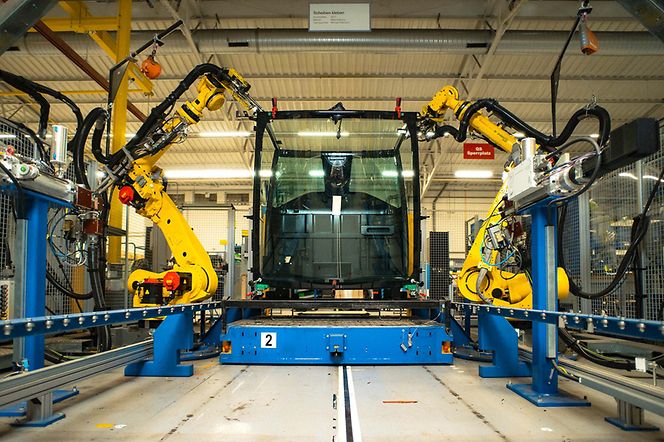
The factory is one of the most advanced production plants for combine harvesters and forage harvesters in the world, thanks in part to the SynPro 2020 modernization project. Its smart production processes and test procedures are second to none.


Yet there is far more to CLAAS than Harsewinkel. The Group now has over ten production plants worldwide, including in China, France, Hungary, and the USA. And they all operate on the same footing as the main factory. “For us, it’s really important that all our machines, wherever they’re manufactured, are made exactly to CLAAS quality standards,” says executive board member Jan-Hendrik Mohr.

A step-by-step guide to setting up a new factory.


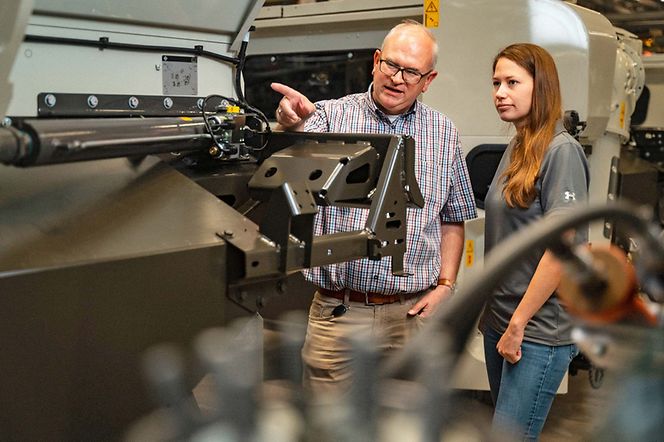
Bernd Schapmann, manager of the main combine harvester assembly line in Harsewinkel, is responsible for ensuring that CLAAS quality standards are the same worldwide. He has worked for the Group for 32 years and has helped set up several international production plants. “Every site is treated the same,” he explains. We implement the same CLAAS quality standards everywhere.”


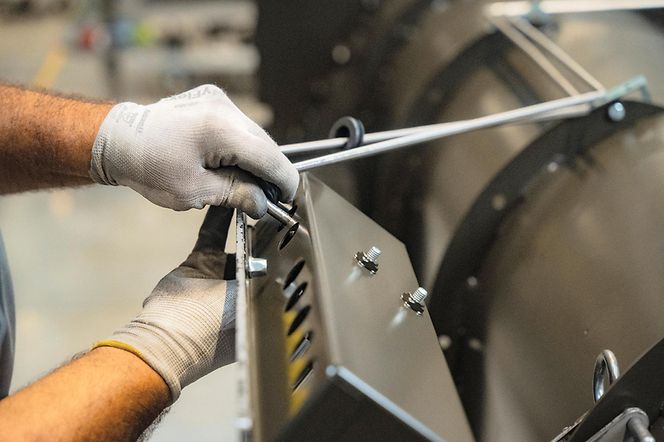
We do this by guiding each production plant step-by-step until it can be manufactured independently. New plants start with the “semi-knocked down” stage. This means that the employees on site assemble individual parts on a largely finished machine supplied by another plant. Harsewinkel supports them every step of the way, for example, by providing parts lists and work schedules.


Then comes the “completely knocked down” stage. In this stage, only some of the components and assemblies are supplied to the new plant. Others are sourced from local suppliers. The next stage is localization: the plant purchases only individual parts from other CLAAS factories and sources the majority of parts from a supplier network. The final stage of development is reached when the new plant has found suppliers that are so good that other CLAAS plants also use them.


Harsewinkel closely supervises new production plants in the first few years. Experienced colleagues from the main factory are on site to assist in all areas: management, planning, production and quality assurance. At the same time, employees from the new site receive training in Harsewinkel. “The main goal is to get everyone on the same page in terms of our quality standards,” explains Schapmann. For example, how can a paint defect be assessed to determine if it has to be redone?


“It’s important to stress that at Harsewinkel, our role is that of an advisor, not a director,” says Schapmann. If colleagues need help, we provide it, but we’re not the center of the universe.”

New suppliers are carefully vetted.


The same is true for quality assurance management, which is firmly embedded in every site as a dedicated function. The QA management reports both within the matrix function and to Peter Schonefeld in the corporate function. He is the senior director of the Corporate Quality & CLAAS Excellence System, which is based in Harsewinkel.


However, it’s not about issuing unilateral instructions. “We work together across all our locations,” stresses Schonefeld. The quality assurance managers regularly speak to one another, agree on targets relating to supplier performance, for example, or work together on quality-related projects.


When one factory plans to produce a new product or feature, it selects the necessary processes, such as incoming goods inspections or quality checks along the assembly line, from a group-wide process landscape.


Globally, CLAAS also has standard procedures in place for vetting suppliers. New suppliers are evaluated as part of a comprehensive auditing process that assesses their technological expertise, supplier stability, and financial figures.


The QA departments at the various plants also cooperate in ongoing production. Suppose deviations occur at one production plant that exceeds a few parts per million. In that case, the QA managers agree internally on who is responsible for working with the supplier to fix the problem.


Reciprocal visits.


The test engineering department under Stephan Dohmann aims for consistently outstanding products. His department is responsible for devising the routines for testing machines at our locations worldwide. “Our challenge is to ensure that a machine in Harsewinkel is commissioned in precisely the same way as in Omaha, for example,” explains Stephan Dohmann.


Test engineers at the different plants work with the test engineering center in Harsewinkel to determine how a certain product should be tested and which hardware and software should be used.


In addition, specialist test engineers from Harsewinkel regularly visit our international locations to observe how they operate and exchange ideas with their colleagues. Test engineers from other production plants also visit the CLAAS headquarters from time to time to stay up to date on changes to test engineering and commissioning procedures at Harsewinkel.


“In most cases, the basic configuration of the test equipment is still undertaken in Harsewinkel,” says Dohmann.

The link between Harsewinkel and Omaha.


Working together as equals is something that Lisane Volkeri also experienced during her time in Omaha. When she arrived there in 2018, the site was already in the localization phase. Her job was to help prepare for the production of the new LEXION 8900–5300 under local conditions with parts sourced from local suppliers.


Volkeri was part of a team of six in charge of production planning. At which point in production is which component assembled using which tool and in which way? How long does the respective assembly step take? The team’s job was to work out the answers to these questions and devise a work schedule.


“In a sense, I acted as the link to the main factory,” says Volkeri. "I knew many people in Harsewinkel, and I was able to relay questions between the two factories.” A small number of this generation of LEXION had already been assembled at the German factory, so there was experience in some areas. However, the team in Omaha was constantly coming up with solutions that were of interest to Harsewinkel, too.


“I still remember when we turned the keys in the ignition, and the first machine to roll off the Omaha assembly line started up,” explains Volkeri. “It was a fantastic feeling.” She returned to Harsewinkel in October 2019 with the job done and full-scale production of the new LEXION series about to begin. She would like to visit her old team in Omaha again soon. Hopefully, the weather will be warmer next time!

Five facts about Harsewinkel.


1.

Harsewinkel is a town of 25,000 inhabitants in the Gütersloh district of North Rhine Westphalia, Germany. It lies in the predominantly agricultural Münsterland region.


2.

The town's history goes back over 900 years. Harsewinkel was first mentioned in records in 1090. In the Middle Ages, the town was famous for the Marienfeld Cistercian Monastery, which survives to this day.


3.

CLAAS has been based in Harsewinkel since 1919. The company’s presence in the town has brought it nationwide recognition, and since 2013 it has been affectionately known as the “combine harvester town.”


4.

Harsewinkel is a large rural community covering over 24,500 acres. More than 65 percent of the area is used for farming.


5.

In addition to machine and tool manufacturing, the town is home to companies in the recycling, food and beverages, automation, and plant engineering industries.