Agricultural Machinery
Smart Farming
Service & Parts
Discover CLAAS
Career
Press
About CLAAS

Harvest Times -- Summer 2026 Edition


As the pace of the growing season picks up, Harvest Times returns this summer with stories that showcase the people, innovations and investments driving agriculture forward. From custom harvester Chad Brenner's first year with the new JAGUAR 1200 to the exceptional value the TRION 740 delivers for family farms, this issue highlights how CLAAS equipment is helping producers get the most from every acre. You'll also get a look inside the new CLAAS Customer Experience Center in Omaha, learn three signs it's time to replace your disc mower, and read about the new Helmut Claas Scholarship created by the CLAAS Foundation in partnership with the University of Nebraska–Lincoln. It's a great read you won't want to miss. 


From Record to Reality: The JAGUAR 1200

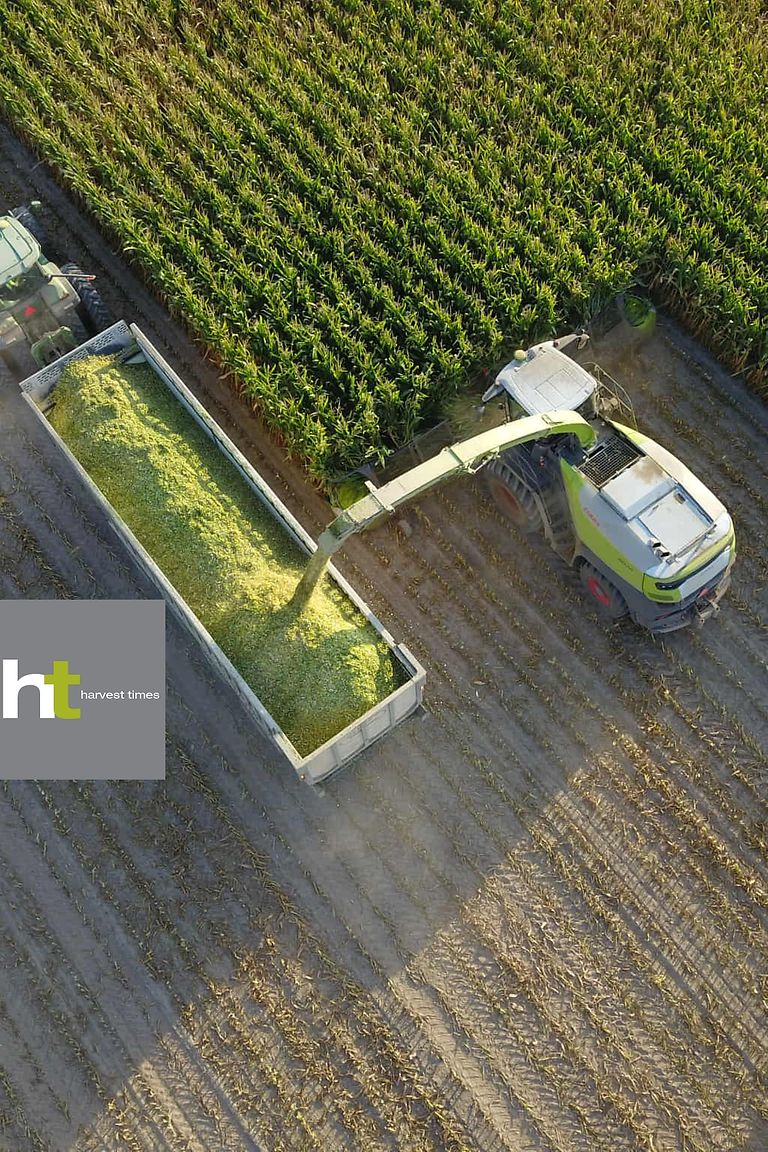
Chad Brenner’s first season with the highest-horsepower CLAAS forage harvester.

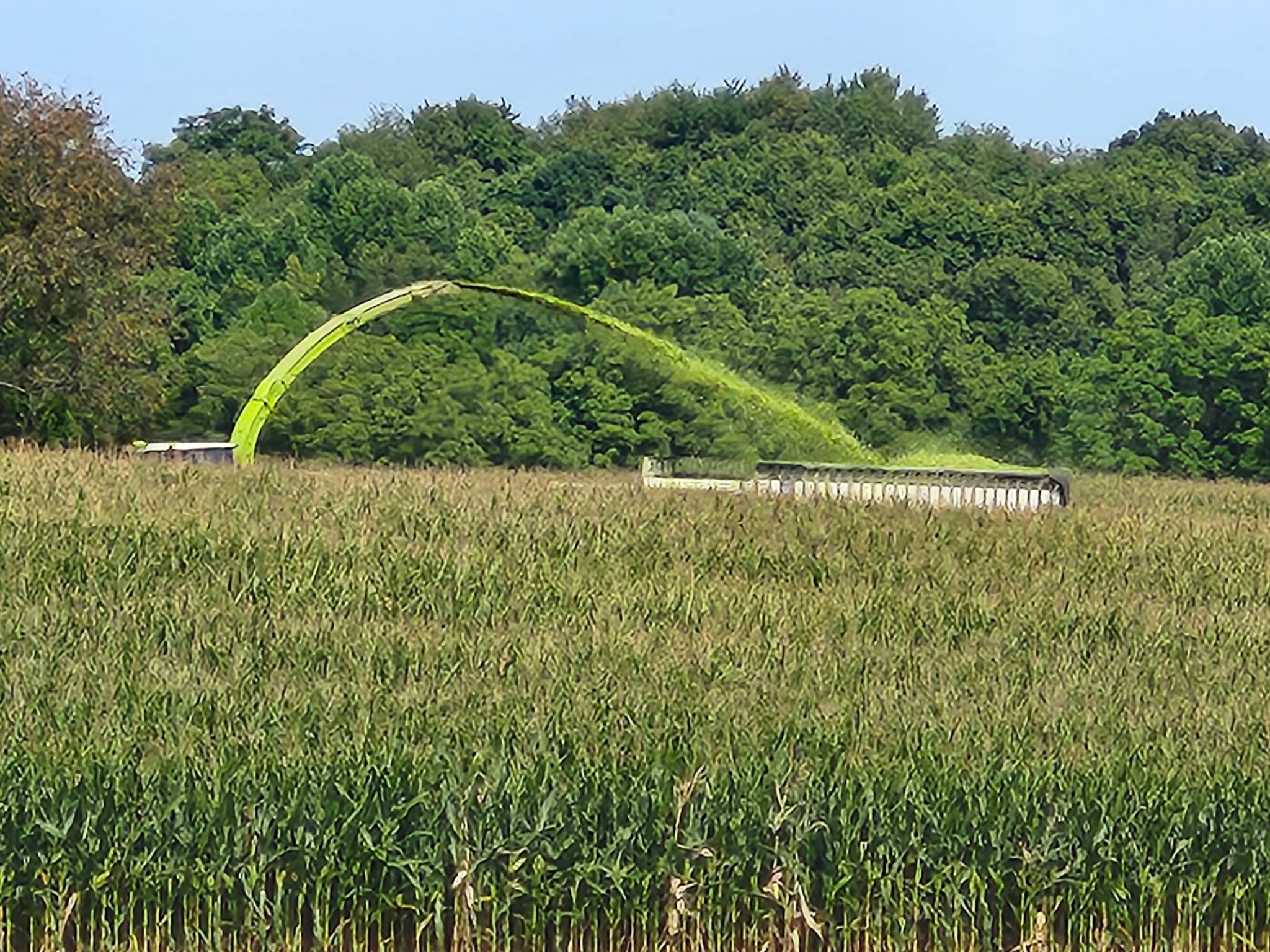
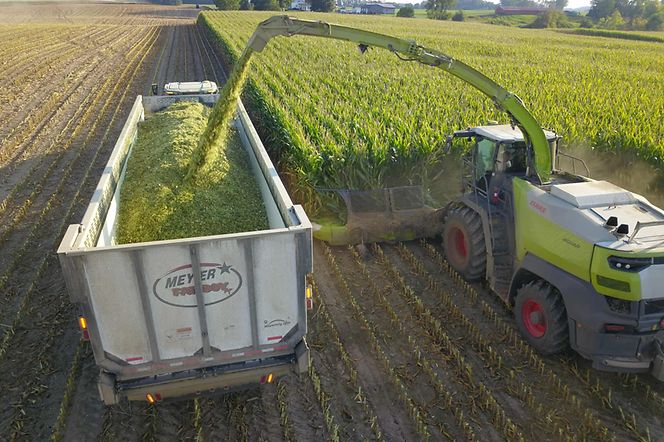
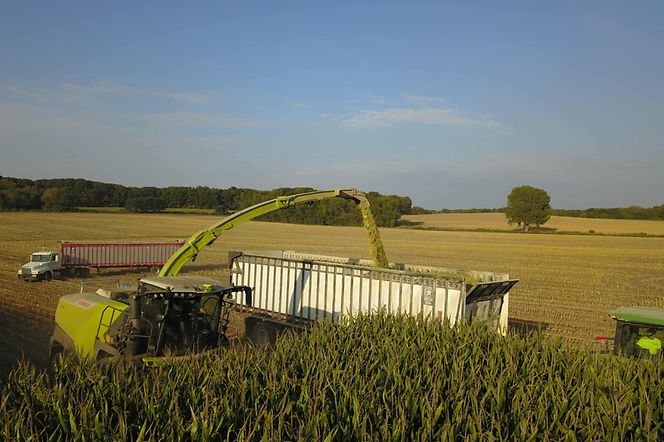
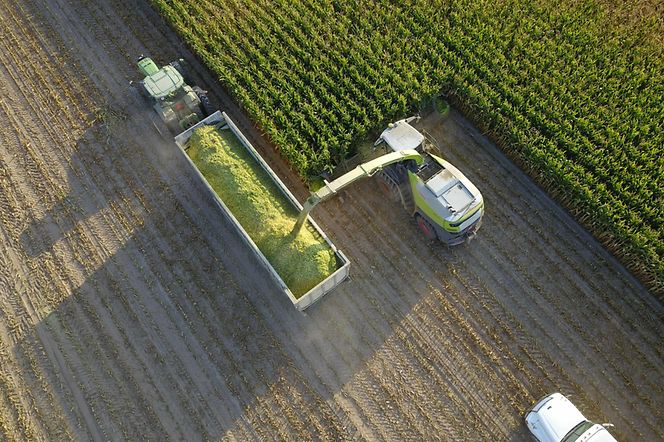
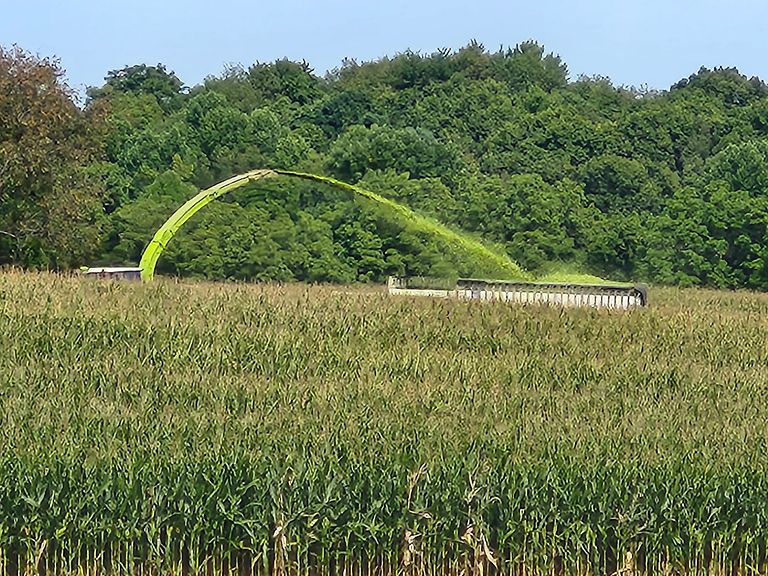
For Michigan custom operator Chad Brenner, silage season is measured in tons, long days and tight weather windows. Growing up on a family dairy farm, he has spent his life around forage equipment and understands what it takes to keep operations moving forward when conditions change quickly.
 

This past year marked his first season operating a CLAAS machine. After running competitive machines across the country, Brenner wanted to see how the JAGUAR 1200 forage harvester would perform in real-world conditions, under the pressure of real custom work. The results came quickly.


Record-Breaking Throughput

As the season progressed, early impressions turned into measurable differences. After comparing output across his fleet, Brenner estimates the JAGUAR 1200 delivered 25% to 30% more throughput than competitive machines over the course of the year.


For a custom operator, that margin matters. Higher throughput allows crews to cover more acres in a shorter weather window or maintain acreage with fewer machines in the field, while still maintaining a precise chop quality. In today’s economic environment, efficiency directly impacts labor, fuel use and overall operating costs.


The performance Brenner experienced in Michigan reflects what CLAAS engineered into the JAGUAR 1000 series. The 1,110-horsepower JAGUAR 1200 showed off during a 12-hour wheatlage harvest in Dalhart, Texas. Operating under full working conditions, the machine set a world record for total tons harvested, bringing in 4,515 tons.

“When it comes to who’s the leader of the forage industry right now, it’s for sure the JAGUAR 1200.”

Unwavering Chop Quality


For dairy producers, forage quality remains nonnegotiable. Chop consistency and processing quality directly influence cow health, milk production and long-term profitability. In other words, throughput doesn’t matter if chop quality isn’t there.


That’s where the JAGUAR really stood out. Increased throughput is supported by a redesigned crop flow and feeding system that promotes more uniform intake and consistent processing, particularly in heavy swaths and corn silage. Operators can maximize output while maintaining the quality their customers expect. “Everybody has different standards,” he said. “Some want more shred, others want kernels obliterated. After 80,000 tons of corn, it’s more than able to meet our demands.”


Through the CLAAS connect app, operators can capture a few images of chopped material and receive a Corn Silage Processing Score within minutes, without waiting for lab analysis.


The near-instant feedback means farmers and custom harvesters can act on quality insights in real time, updating machine settings to harvest higher-quality forage with their next pass through the field. The result is less labor, time and costs invested in harvesting a high-quality crop.


Beyond crop quality, CLAAS connect also supports machine management throughout the season. Operators can monitor performance, receive maintenance alerts and share machine data directly with their dealer to address potential issues before they turn into downtime. For growers working in tight weather windows, that support helps keep machines running and harvest on schedule.


Built for Long Days in the Field


While throughput is the primary focus during harvest, operator comfort plays a critical role over the course of a long season. After six weeks of 14-hour shifts, Brenner felt the difference.


“By the end of the day in other machines, I’d have to swallow a lot of Tylenol to get rid of the headache,” Brenner said. “Running this 1200 has made a very tiresome time of the year more tolerable.”


The cab is larger and quieter than previous models, with sound levels reduced by nearly five decibels. Features such as joystick steering, enhanced visibility, and automation systems like CEMOS AUTO PERFORMANCE and AUTO FILL are designed to reduce fatigue while helping maintain consistent output.


The world record in Texas demonstrated what the JAGUAR 1200 can achieve under sustained, high-demand conditions. Brenner’s first season demonstrated what that performance looks like in everyday custom harvesting: more high-quality tons of silage per hour, more acres covered and greater operational efficiency across an entire operation.


Brenner’s conclusion is straightforward: “When it comes to who’s the leader of the forage industry right now, it’s for sure the JAGUAR 1200.”
 

Rolling Out the CLAAS-Green Carpet

Omaha Opens New Customer Experience Center

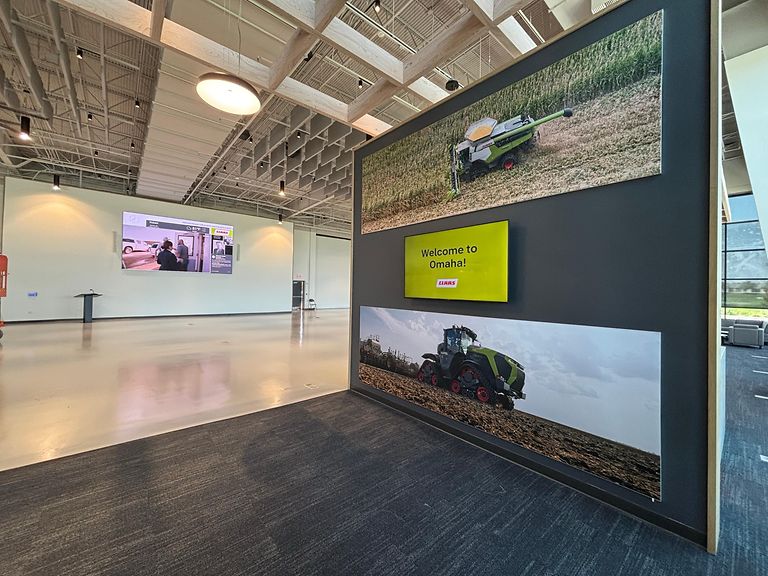
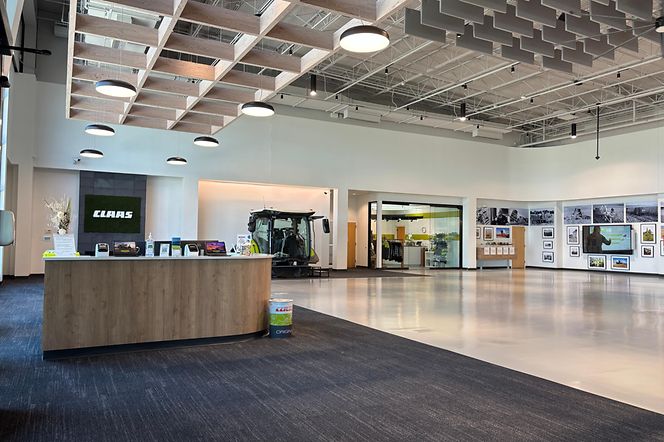
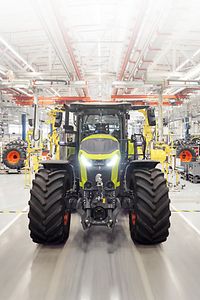
Visitors arriving at the CLAAS North American headquarters in Omaha are now being welcomed into a completely reimagined Customer Experience Center that reflects the innovation, quality and customer focus of the CLAAS brand. For more than 25 years, guests touring the Omaha facility have begun their visit by walking through an open showroom before stepping into the combine assembly hall. 

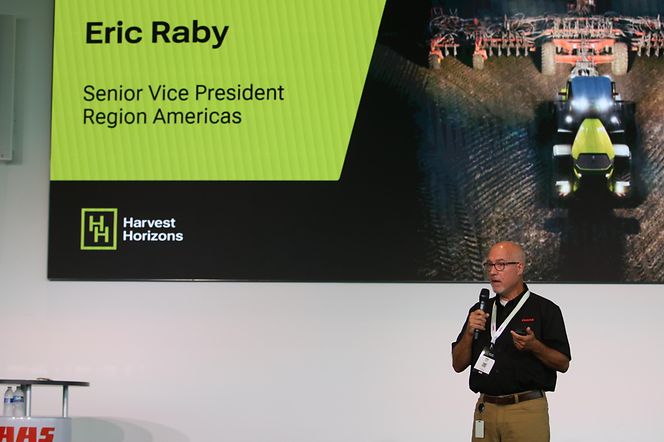
Following several months of renovation, the first phase of the transformed space officially opened during the annual Harvest Horizons customer event held June 23–24. A couple short weeks after that event, the new facility also hosted the annual Field Team and “Rev Up” Dealer Meetings for CLAAS of America.


Designed to be much more than a traditional showroom, the Customer Experience Center showcases the latest CLAAS equipment while telling the company's story through more than 110 years of innovation and engineering excellence. Visitors can also relax in a welcoming customer lounge featuring a coffee bar before beginning their tour of the Omaha combine assembly hall.


"We wanted to create an environment that immediately demonstrates who we are as a company and how much we value our customers," said Erin Atkins, Customer Experience Manager. "Every detail was designed to create an engaging, memorable experience that reflects the CLAAS commitment to helping farmers succeed."


The Experience Center serves as the gateway to the Omaha manufacturing facility, where visitors can see firsthand how CLAAS combines are assembled for North American producers. Together, the showroom and factory tour provide an immersive look at the technology, craftsmanship and people behind every machine.


The project also reinforces the company's continued investment in the North American market while strengthening the way customers, dealers and business partners experience the CLAAS brand. As more visitors from around the world come to Omaha, the Experience Center will serve as an important destination for showcasing both the company's heritage and its vision for the future.


Work on the project will continue later this year with Phase 2, which will introduce interactive exhibits and a viewing deck overlooking a new tractor ride-and-drive course. These additions will create even more opportunities for visitors to experience CLAAS technology and innovation firsthand.


The new Customer Experience Center represents the combined efforts of numerous teams across the organization whose collaboration helped bring the vision to life. As the front door to CLAAS in North America, it stands as a reflection of the passion, expertise and dedication of employees throughout the global CLAAS family.

Performance, Pre-Tariff Pricing, and Peace of Mind.

Get tremendous deals on remaining TRION 740 combines.

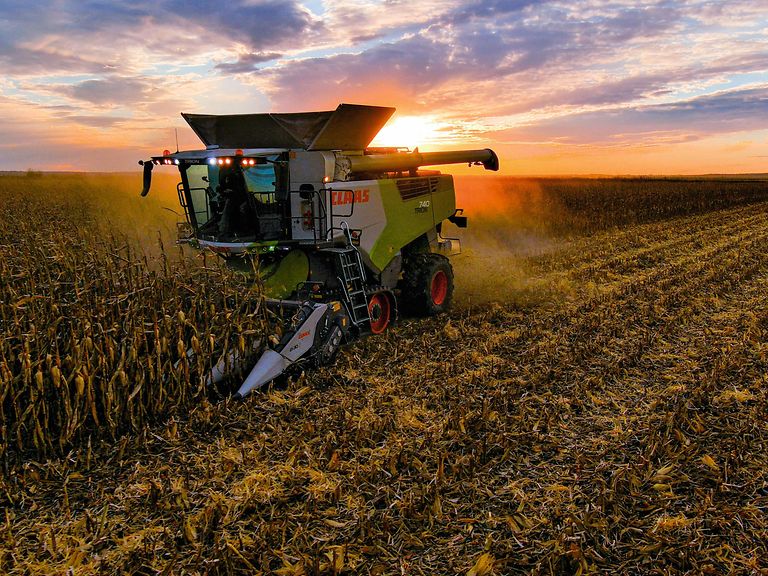
For family farmers, every equipment decision comes down to one question: Will it deliver more value to my operation? The CLAAS TRION 740 answers with the performance, technology and reliability growers need—without stepping up to a larger, more expensive machine.

Designed for farms harvesting approximately 1,000 to 3,000 acres, the TRION 740 combine offers impressive capacity with straightforward operation and easy maintenance. At its heart is the proven CLAAS Accelerated Pre-Separation (APS) HYBRID threshing system paired with a ROTO PLUS single rotor to finish separation, delivering exceptional crop flow, high grain quality and consistent performance across a wide range of crops and harvesting conditions.


The result is a combine that punches well above its weight class.

Whether you're harvesting corn, soybeans, wheat or other small grains, the TRION 740 is engineered to maintain throughput while minimizing grain loss and preserving sample quality. The APS HYBRID system accelerates crop material before it reaches the threshing cylinder, removing a significant portion of the grain early in the process. That means the rotor can focus on efficient separation, allowing operators to harvest more acres in less time.


TRION 740 brings many of the premium features found on larger CLAAS combines to the family farm. Operators can take advantage of advanced automation technologies including CEMOS AUTOMATIC which helps optimize machine settings as field conditions change throughout the day. Instead of constantly making manual adjustments, growers can spend more time focusing on harvesting while the system automatically and autonomously fine tunes performance regardless of field conditions.


Maintenance is another good reason to consider the TRION 740. Daily service points are easy to access, helping reduce downtime and keep harvest moving when every hour counts.


Now it’s an even greater value:


CLAAS currently has a limited inventory of pre-tariff machines available, allowing growers to purchase at prices that have not been impacted by recent tariffs affecting much of the agricultural machinery market. Combined with deep discounts on select model years, attractive payment credits and competitive low-rate financing options, these combines offer exceptional value for producers looking to maximize their investment.


Adding even more confidence is the new MAXI CARE allowance. Eligible TRION 740 purchases include a $10,000 MAXI CARE allowance that can be applied toward an extended protection plan, giving owners added peace of mind long after harvest begins. It's another way CLAAS helps protect your investment while reducing the uncertainty of equipment ownership.


For many family operations, the TRION 740 combine delivers the ideal balance of capacity, technology and affordability. It offers the harvesting performance growers expect from CLAAS while remaining sized and priced for farms that need every equipment dollar to work harder. With limited pre-tariff inventory available, now is an excellent time to secure a TRION 740 before these machines are gone.


Contact your local CLAAS dealer today to learn more about current pricing, financing offers, MAXI CARE protection and available inventory. 
 

Three Signs It's Time to Upgrade Your Mower 

Product Manager Mark Scuffham offers replacement advice.

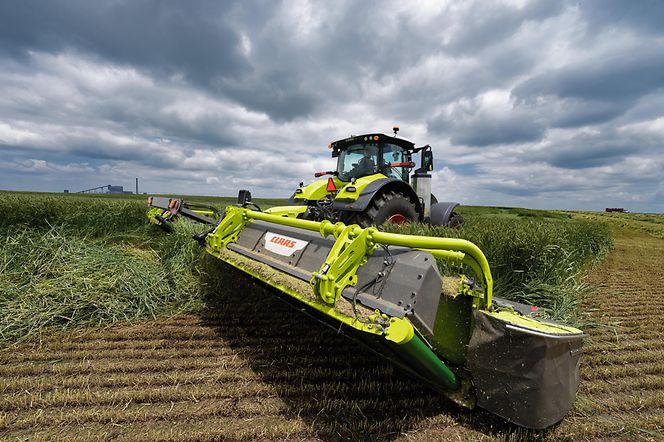
Whether you're running a single mower on a growing operation or running an aging double or triple mower season after season, there comes a point when your equipment starts working against you. Knowing when that moment arrives (and what to do about it) can be the difference between a profitable hay season and a frustrating one.

Regardless of whether you're running a single, double or triple mower, here are a few key signals that indicate it may be time to upgrade:


1.    You can't finish mowing within your quality window.


In high-moisture regions, letting cut crop sit too long risks quality loss. In drier climates like the western U.S., crops can dry out before baling is complete. Either way, the clock is working against you.


Wyatt Gigot of MG Hay Farms and Thunderstruck Farms in Garden City, Kansas, knows this pressure firsthand. His operation runs 10,000 irrigated acres, aiming for five cuttings of alfalfa during the growing season, spread across 30-day intervals. They also double-crop triticale in the spring and sorghum in the fall. With that kind of calendar, they need a faster cure and dry down time that keeps their season on track.


When Gigot switched to disc mowers from a self-propelled machine, smaller windrows meant faster dry-down, more consistent hay quality and fewer input costs. One disc mower replaced two self-propelled swathers, sparing two operators and reducing fuel costs in the process. "It was an absolute no brainer in our eyes to make the change," Gigot says.


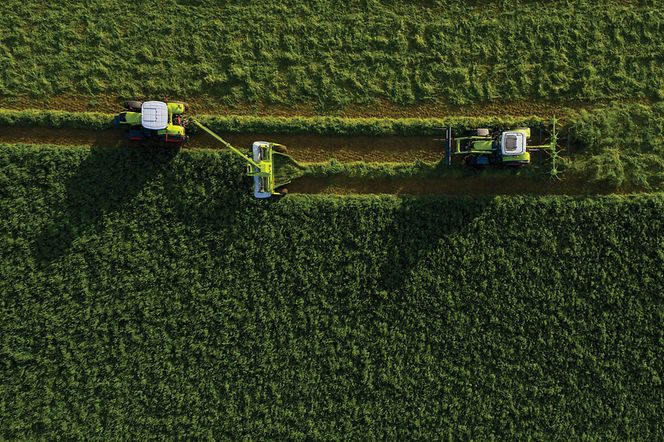
Based on CLAAS data, most operations can cut 250 acres in about 28.5 hours with a single 13-foot mower. A double mower brings that down to 16 hours, and a 30-foot triple mower down to 11.2 hours. For peak efficiency, a 35-foot mower reduces time invested to 9.5 hours, nearly one-third of the time of a single mower. Fewer passes also mean less fuel burned and less soil compaction.


Ask yourself: 


•    How many acres do I need to cover each day? 
•    What’s the return on investment or ROI of cutting my acres in one day versus two, from both a quality and time-savings perspective?
•    What size tractor am I working with?


Your region, cutting windows and crop type all shape when a single mower stops being enough. A mid-sized forage operation in Kansas (average 27 inches of rainfall per year) will pencil out very differently than the same operation in Pennsylvania (average 42 inches). If you can't complete mowing within the timeframe your crop quality demands, it's time to look at a double or triple mower.

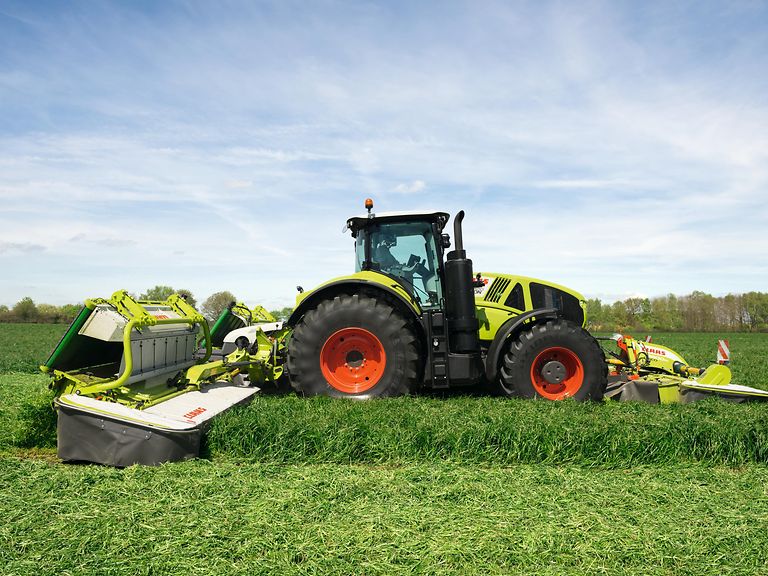
Debating between a double or triple mower? Daily acreage goals, target completion time and available tractor horsepower are the deciding factors. Triple mowers require more horsepower, but tractors with a front hitch and PTO capability are worth exploring — in many markets, they offer a path to added capacity. CLAAS AXION tractors are well-suited for triple mower configurations and pull double duty across a range of farm tasks. Additionally, the CLAAS ARION is a great fit for double mowers and offers flexibility for various tasks around the farm like loader work and baling.


2.    You already have the supporting equipment to justify the upgrade to a double or triple mower.


Upgrading to a double or triple mower is not only about whether your operation can take full advantage of the added capacity. If you already own a higher-horsepower tractor you're using for tillage or planting or manure hauling, or a high-performance baler that demands that kind of power, you may find that your mower is simply the bottleneck holding you back. Even if your operation already has the acreage and equipment to justify it’s also about time savings – what else can you accomplish instead with that time savings? Upgrading to a disc mower lets you get more out of your existing equipment.


Wyatt Gigot's operation illustrates the point — the same tractors that power his disc mowers run manure spreaders in winter, eliminating the need to buy or lease additional machines the way he would with dedicated self-propelled swathers.


If your mower is the weakest link in an otherwise capable system, that's a clear signal it's time to upgrade.

3.    Maintenance is becoming a headache.


Older equipment naturally accumulates wear, and while it's difficult to put a hard number on repair costs, a machine that's regularly pulling you out of the field for fixes is costing you in time and potential revenue.


Beyond reliability, mower technology has advanced meaningfully over the past 15 years. Steel conditioning rolls, for instance, allow operators to gain roughly 3 mph over rubber rolls in the same field conditions on the same tractor — a real capacity boost without added horsepower.

CLAAS disc mowers also feature wave-designed cutter bars that help redirect soil and debris, like gopher mounds, to flow under the cutterbar and away from the crop stream rather than pulling it through. This directly reduces ash content in the windrow and improves forage quality and nutritional value. Adjustable cutter bar RPM also plays a role. Running at lower speeds in more delicate crops reduces turbulence and minimizes leaf loss during the cutting pass.

Streamlined controls, ISOBUS compatibility and better tractor hydraulic integration round out the user experience improvements, making newer machines more accessible for less experienced operators.


The Bottom Line on ROI

Anyone involved in agriculture knows that efficiency can make or break your bottom line. Getting the job done in fewer hours means you can take on more acres, tackle other jobs or spend more time with family. So, when you add up efficiencies gained by upgrading mowers, don’t discount the value of your time.


The right upgrade, at the right time, might just pay for itself. Talk to your local dealer today.
 

CLAAS Foundation, UNL partner to empower ag engineering students

In commemoration of Helmut Claas’ 100th birthday, his foundation invests in the next generation of agricultural technology talent

The CLAAS Foundation is commemorating the 100th birthday of its namesake, Helmut Claas, with two significant initiatives to support University of Nebraska–Lincoln students: the Helmut Claas Scholarship and the CLAAS Foundation Study Abroad Fund.
 

Helmut Claas, born on July 16, 1926, shaped the CLAAS company for decades as a visionary entrepreneur and passionate supporter of the next generation of agricultural engineers. The international Helmut Claas-Scholarship was the CLAAS Foundation’s first initiative — a program that Helmut Claas personally launched and to which he always attached significant importance. His objective was to inspire young talent to pursue careers in agricultural technology and pave the way for them to enter the industry. Claas passed away in 2021.


Much of CLAAS' long-term commitment to North America was shaped during Helmut Claas' leadership. Building on a presence that dates back more than six decades, the company has steadily expanded its operations in the region. Today, its North American headquarters in Omaha is also home to LEXION combine assembly and engineering teams developing the next generation of harvesting technology.

“Agricultural technology needs the best minds in the world — and the best minds in the world need an opportunity. Supporting the next generation is not an option; it is our responsibility toward the future of agriculture” -- Helmut Claas


Helmut Claas Scholarship


In cooperation with UNL, a top-ranked university for agricultural engineering in the United States, the CLAAS Foundation, based in Harsewinkel, Germany, will launch the Helmut Claas Scholarship to support undergraduate students majoring in agricultural engineering or agricultural systems technology at UNL. Four scholarships, which may be renewed annually for four years, will be offered to students who are beginning their studies.


The new scholarship, created through the University of Nebraska Foundation, builds on the CLAAS Foundation’s longstanding international focus and sends a strong signal in support of cross-border cooperation in agricultural engineering education.


The partnership with UNL represents more than just an institutional collaboration: It brings together two traditions of excellence in agricultural engineering — the European and the North American.


CLAAS Foundation Study Abroad Fund


In addition, the CLAAS Foundation established a fund to support students in the Department of Biological Systems Engineering who are participating in a short-term study abroad program offered in collaboration with the Osnabrück University of Applied Sciences in Germany.

The study abroad program underscores the CLAAS Foundation’s appreciation for academic achievement even in the early stages of a student’s studies and enhances the appeal of a career in agricultural engineering.


“We are tremendously grateful to the CLAAS Foundation for its generous support of our students,” said Joe Luck, interim head of the Department of Biological Systems Engineering. “This gift highlights our strong partnership with the CLAAS Foundation. We share a common goal to support students who are pursuing their dream of a career in agricultural engineering, serving the well-being of Nebraska and the global community.”


The CLAAS Foundation’s generosity supports “Only in Nebraska: A Campaign for Our University’s Future“, a historic effort to raise $3 billion from 150,000 unique benefactors to support the University of Nebraska. The campaign’s top priority is student access and success.