
Agricultural machinery
Digital Solutions
Service & Parts
Experience
Press
About CLAAS

History.

Many companies have a history – but some of them have also made history. CLAAS has helped to define the world of agriculture. Join us as we delve into the history of the company since its establishment back in 1913.

1913.

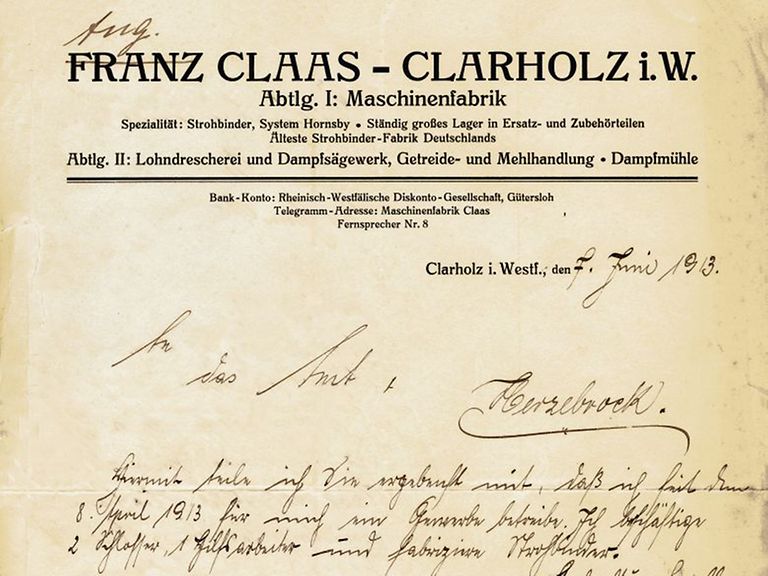
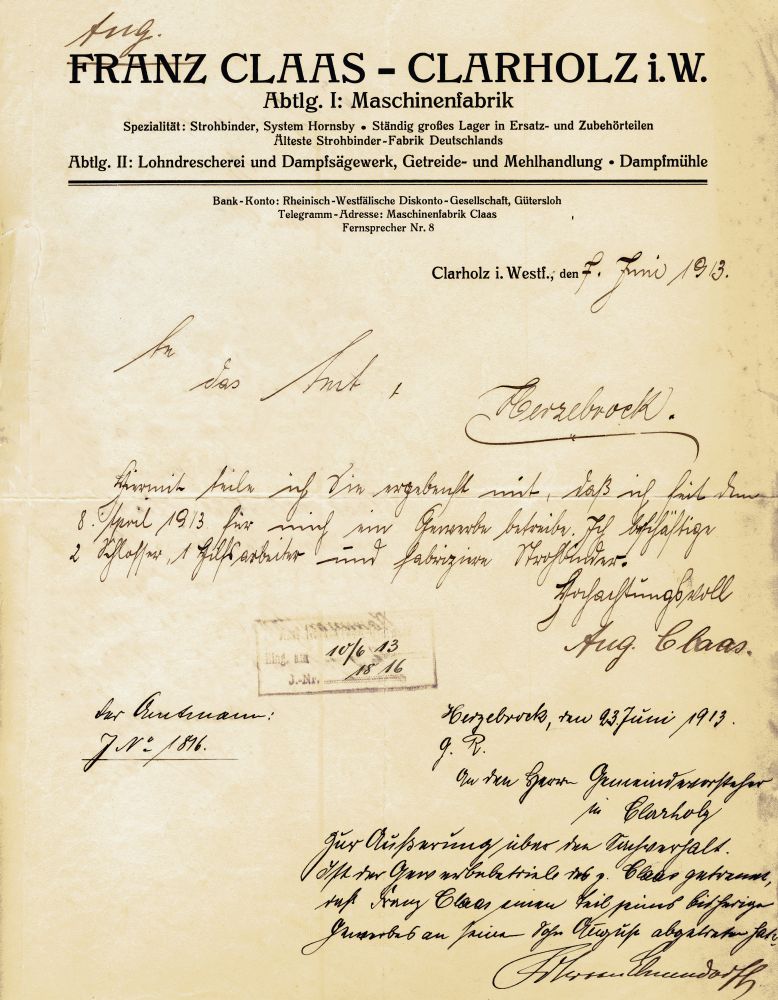
Business registration (1913)

Foundation of the company.

The story of CLAAS begins in the tranquil farming community of Clarholz-Heerde in East Westphalia. In the summer of 1913, at the age of just 25, young August Claas saw the family business of his father, Franz Claas senior, struggling financially and decided to set up his own small business. Together with his brothers Bernhard, Franz junior and Theo Claas, he began producing agricultural straw binders on their home farm. The following year, the brothers officially joined the company, which then became known as 'Claas Brothers'.

1921.

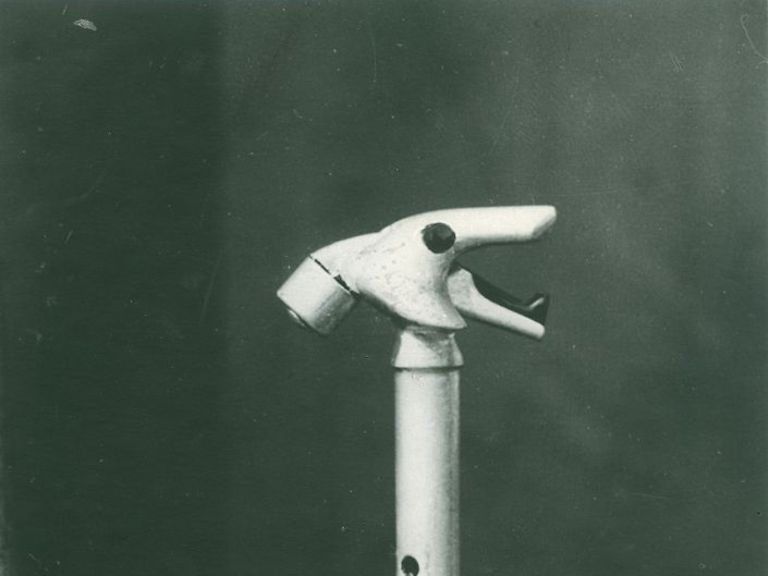
CLAAS KNOTTER (1921)

First CLAAS patent: the knotter device.

Unreliable binding was a key problem with early straw binders. To solve this problem, August Claas worked intensively on the central mechanism of the straw binder, the knotter. In 1921, he developed his own knotter, for which the company received its very first patent, no. 372140, in 1923. The patented 'knotter billhook with floating upper jaw' greatly improved the knotter’s tying reliability. The reliable CLAAS straw binders became bestsellers and the flagship product of the Harsewinkel-based company.

1936.

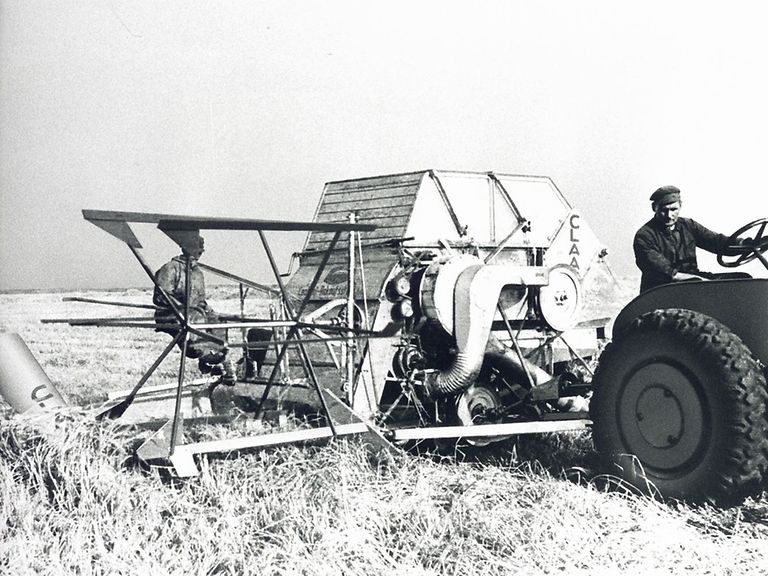
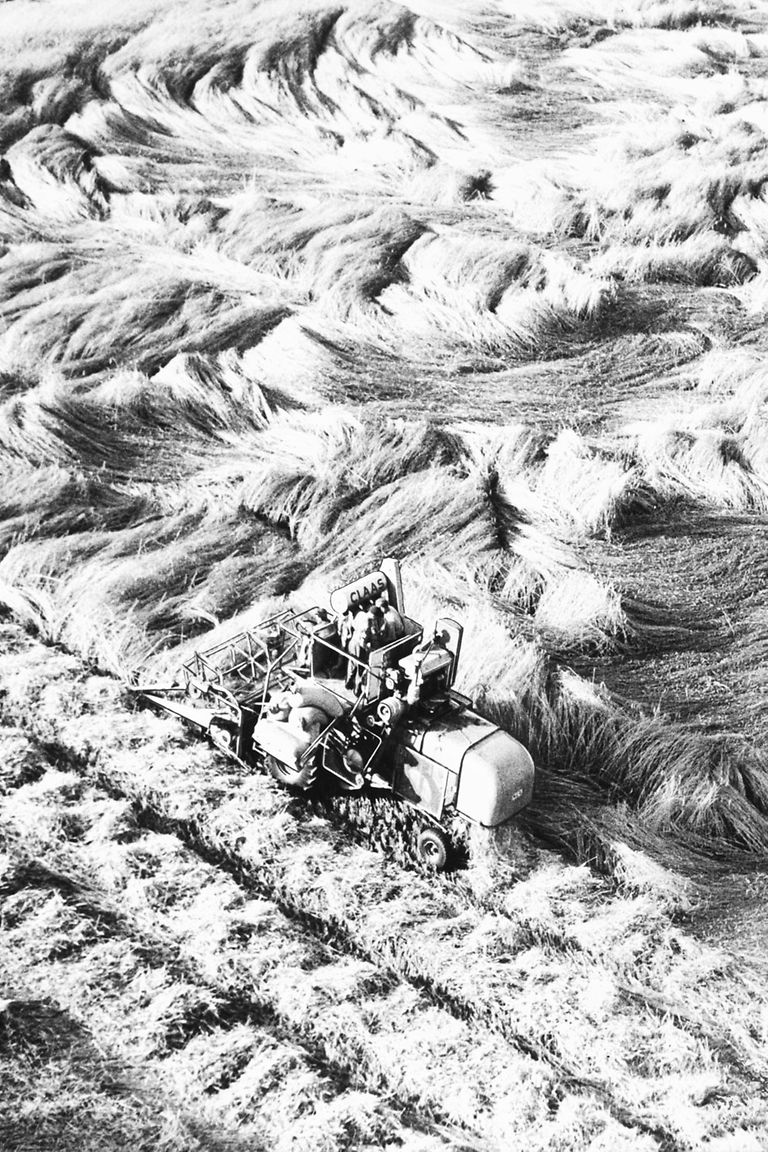
CLAAS MOWER-THRESHER-BINDER (MBD) (1936)

First European combine harvester: CLAAS mower-thresher-binder (MDB).

Encouraged by the success of their knotter, the Claas brothers turned their attention to new developments in the late 1920s. They were particularly fascinated by the emergence in America of the combine harvester, which had never worked in Europe. They developed their own working model, which was successfully tested on and sold from a farm in Zschernitz, Germany, in 1936, marking the birth of the first European combine harvester. The MDB went into series production in 1937. Some 1,400 machines were built until production was discontinued in 1943 due to the war.

1946.

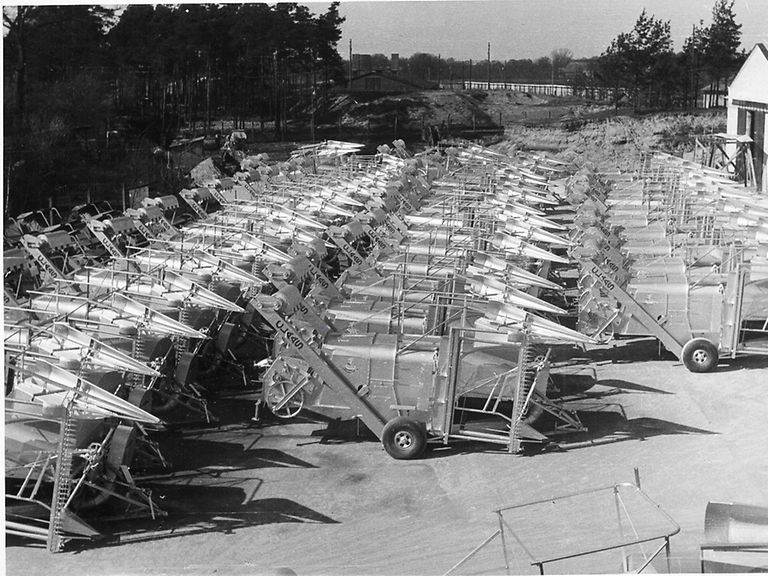
CLAAS SUPER on the company’s Harsewinkel premises (1948)

The SUPER combine harvester with L-shaped crop flow is launched on the market.

The MDB had proved that combine harvesting worked in Europe. In 1942, CLAAS began to develop a new type of combine harvester, the SUPER. A unique feature of this machine was the patented threshing system with L-shaped transverse and longitudinal flow, which allowed the machine to be towed straight behind the tractor without lateral pull. The SUPER was sold worldwide as an 'all-purpose harvester' and, with over 65,000 units built, became the most widely produced CLAAS combine harvester family. For three decades, the SUPER was the mainstay of combine harvester production at CLAAS.

1953.

CLAAS SF machine fleet in the field (1954)

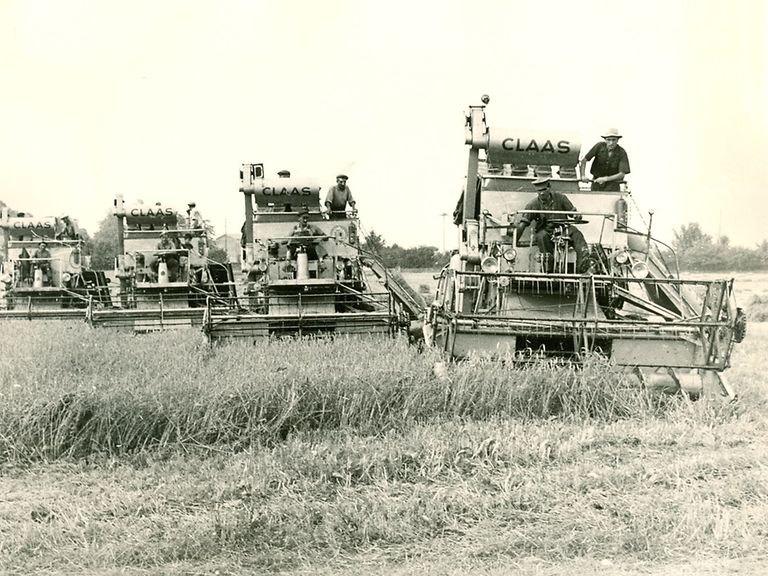
Market launch of the first self-propelled combine harvester.

While the SUPER trailed combine harvester was still in production, CLAAS began to develop a self-propelled combine. The HERCULES, the first self-propelled combine harvester, was unveiled on the birthday of company founder August Claas on 15 December 1952 and launched on the market the following year. As the name HERCULES was already a registered trademark, it was replaced by “SF” (for the German term for 'self-propelled machine') in the same year. With its excellent performance and versatility, the SF was particularly attractive to large farms and contractors, and it laid the foundation for later self-propelled combine harvesters from CLAAS.

1956.

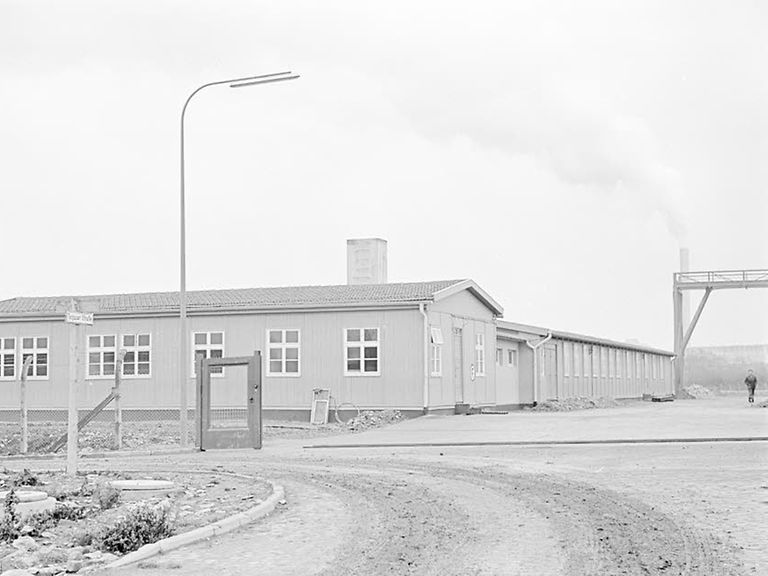
First production hall at the Paderborn plant (1956)

Establishment of the Paderborn production facility

Demand for combine harvesters increased to such an extent in the mid-1950s that Harsewinkel could no longer meet the staffing levels. So it was decided to construct a new production facility on the former Mönkeloh airport on the edge of Paderborn. Construction work started in 1955 along with the training of new employees. The first production hall measuring 3,500 m² was completed in the summer of 1956 and in October of that year the factory officially went into production. It would soon become a key site for CLAAS.

1962.

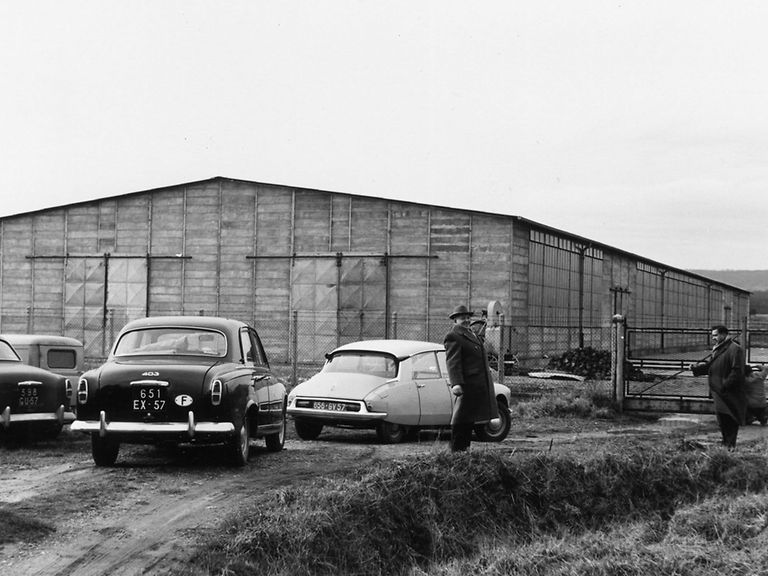
First production hall at the Metz plant (circa 1961)

Start of production at the new baler plant in Metz (France).

The foundation stone for the first CLAAS plant outside Germany was laid in 1958 in Metz, Lorraine. The plant became the new home of CLAAS straw balers and a clear symbol of the close relationship between Germany and its neighbour France. Centrally located between these two major markets, Metz is the perfect place to quickly supply balers to farmers and contractors throughout Europe. The city’s excellent connection to the Central European rail network was another plus. Metz also offered a broad and skilled labour force. The labour market in Lorraine was full of highly qualified people, often bilingual, who were ideally suited to this Franco-German project.

1969.

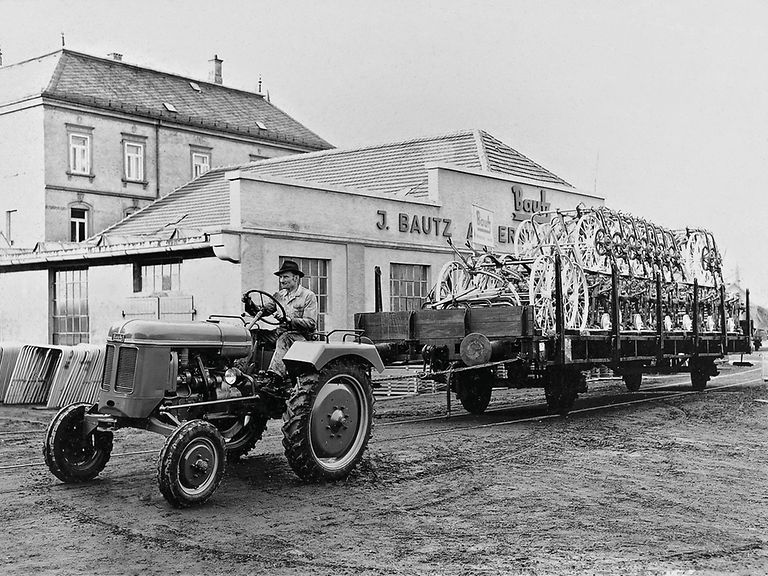
Aerial view of CLAAS Saulgau (1974)

Forage harvesting machinery added to the product range.

In the years of the Economic Miracle after 1945, CLAAS grew rapidly to become the world’s leading manufacturer of combine harvesters. However, when the economic boom came to an end, demand for agricultural machinery fell sharply, prompting CLAAS to change its corporate strategy. With the acquisition of Bautz and Speiser in 1969 and 1970, CLAAS expanded its product range to include mowers, tedders, swathers, loader wagons and forage harvesters. This transformed CLAAS from a pure combine harvester manufacturer into a broad-based harvesting machinery specialist.

1971.

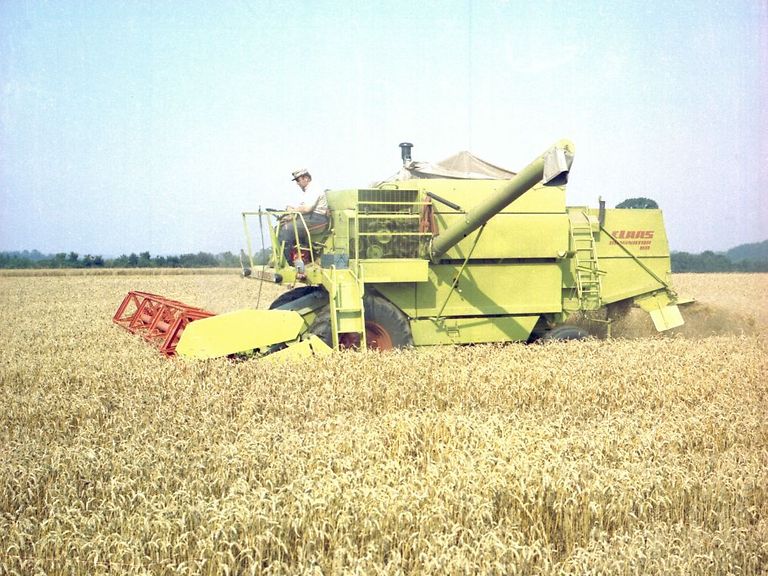
CLAAS DOMINATOR 80 (1971)

Launch of the DOMINATOR series.

With the DOMINATOR, CLAAS set new standards in international combine harvester design. This machine, which was first used in the field for the summer harvest of 1970, was developed using the simultaneous engineering approach, in which development and production processes run essentially in parallel. By 1971, it was launched on the market. The new modular design significantly increased efficiency and reduced production costs. The DOMINATOR was also designed with global markets in mind, as its 'multi-crop threshing concaves' could be adapted to a wide range of crops grown around the world. In the years that followed, the DOMINATOR became one of the world’s best-selling combine harvesters.

1988.

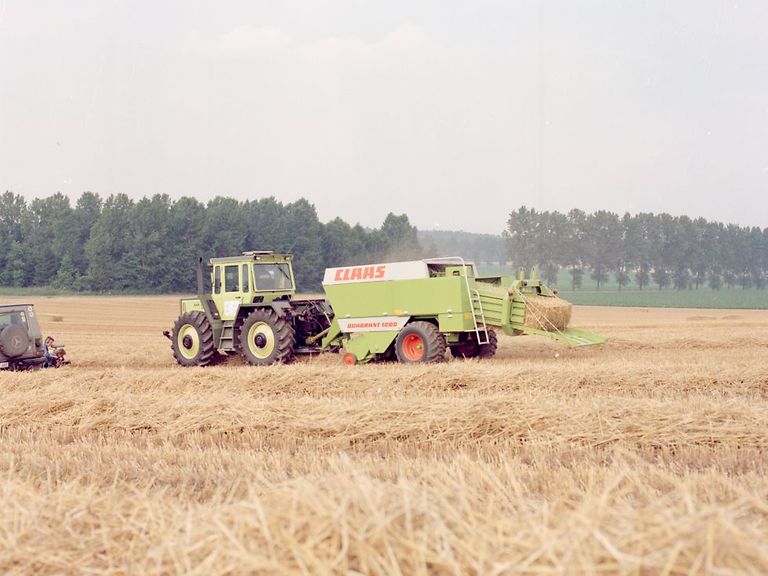
CLAAS QUADRANT 1200 with MB-trac in the field (1988)

First CLAAS QUADRANT large baler.

In 1988, CLAAS launched the QUADRANT 1200 – the company’s first large square baler. Designed specifically for large farms and contractors, this baler delivered an output of up to 30 tonnes of straw per hour. It produced bales weighing up to 360 kg and measuring 0.70 m high, 1.20 m wide and 1.00 to 2.50 m long, perfectly adapted to European road transport dimensions. Thanks to its cost-effectiveness, the QUADRANT quickly became the baler of choice for professional contractors and multi-farm operations. It enabled faster field clearance and took up less storage space, further increasing its popularity.

1993.

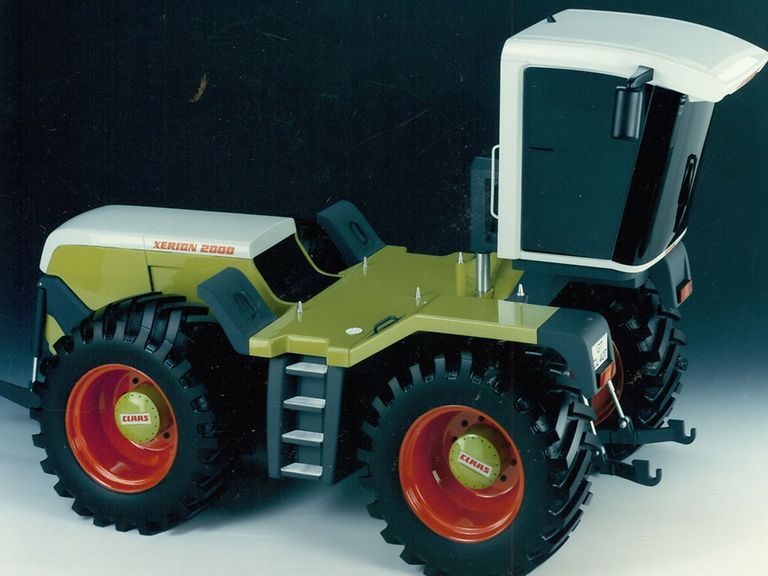
Design study of the XERION 2000

Launch of the CLAAS XERION.

In 1993, CLAAS unveiled a groundbreaking innovation in agricultural machinery: the XERION, a tractor whose versatility set it apart from conventional tractors right from the start. With its four equally sized wheels, continuously variable transmission, high engine power and many other unique features, the XERION is an ideal tractor for a wide range of applications. Since it went into series production in 1997, the XERION has become a major player in international agricultural technology.

1996.

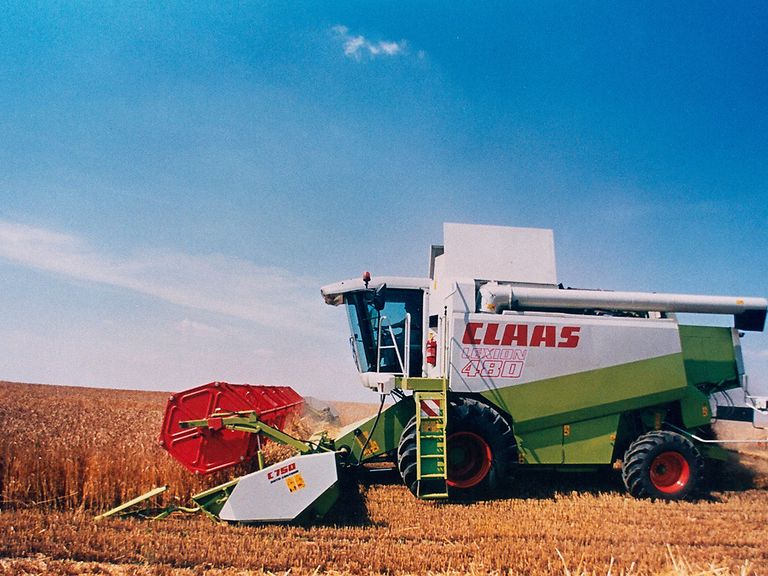
CLAAS LEXION 480 (1996)

Launch of the CLAAS LEXION.

With the LEXION, CLAAS entered an entirely new performance class. This machine combined the APS threshing system with the ROTO PLUS grain separation system to create the revolutionary APS HYBRID SYSTEM. Other performance-boosting features such as the redesigned cab and the intelligent CEBIS on-board computer, which offered the driver greater comfort and reduced strain, rounded off this new premium class. The LASER PILOT and GPS PILOT steering systems also significantly increased the efficiency of this machine by making the combine harvester much easier to control.

1997.

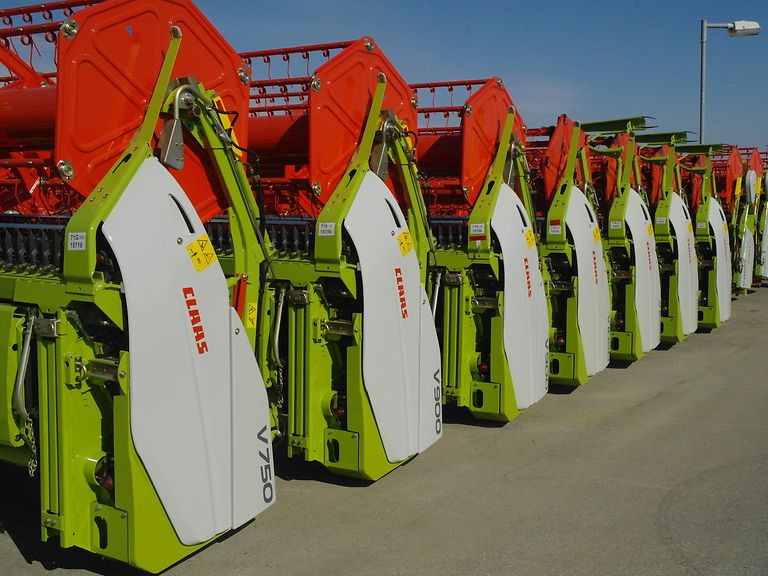
Cutterbars from the CLAAS Hungaria plant (2007)

Acquisition of a plant in Törökszentmiklos, Hungary.

The political changes in the early 1990s opened up new sales opportunities for CLAAS, particularly in Eastern Europe. CLAAS had been the only Western manufacturer to operate successfully in Hungary since 1969 and still owes its good reputation in Eastern Europe in part to this early involvement. This special relationship led to the acquisition of an existing production plant in Törökszentmiklos in 1997, which CLAAS had already been supplying with key components and parts. Today, CLAAS Hungaria is the largest agricultural machinery manufacturer in Hungary and provides secure employment for around 800 people. All CLAAS drum mowers and cutterbars are developed and manufactured in Törökszentmiklos.

1999.

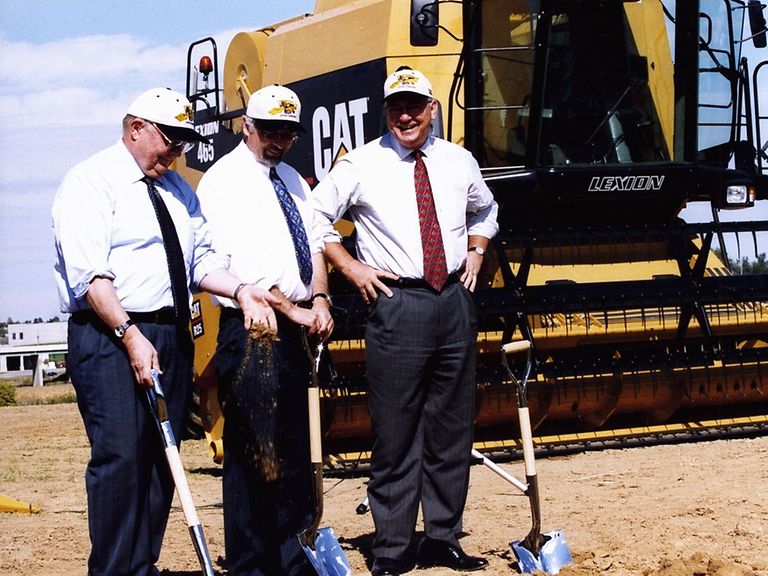
Ground-breaking ceremony for the new combine harvester plant in Omaha (2000)

Construction of a combine harvester plant in Omaha, USA.

CLAAS has a long history in North America, dating back to the 1950s when it exported its first machines to the region. CLAAS took its first major step on the North American continent in 1965 in cooperation with Ford. Then in 1979, to strengthen sales, CLAAS established its own marketing and sales company, which has been based in Columbus, Indiana, since 1981. In the late 1990s, CLAAS took further significant steps in the North American market. In 1997, the company merged with Caterpillar, opening a combine harvester plant in Omaha, Nebraska in 1999, which it took over completely in 2002.

2003.

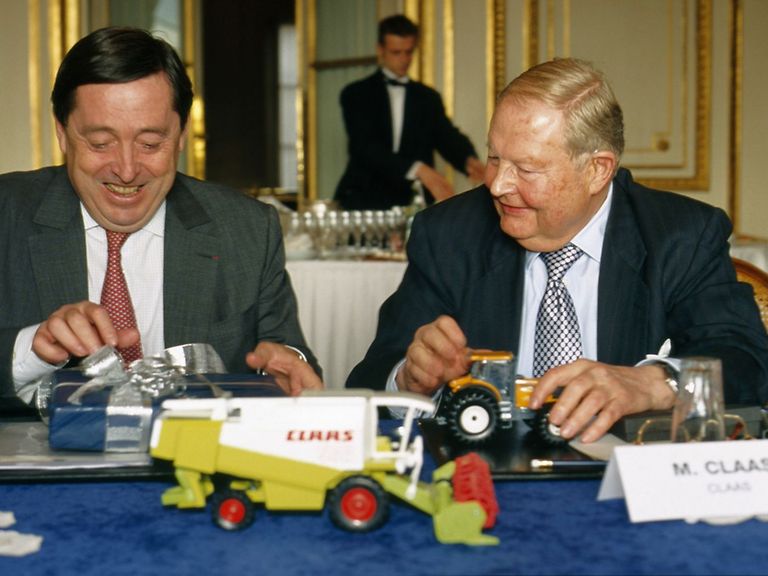
Patrick Faure and Helmut Claas signing the contract (2003)

Acquisition of Renault Agriculture and tractor plant in Le Mans.

In 2002, CLAAS was presented with an unexpected opportunity when the renowned tractor manufacturer Renault Agriculture was put up for sale. The two companies eventually merged. Helmut Claas and Patrick Faure sealed the deal in Paris in the run-up to the French Sima trade fair in 2003. CLAAS initially acquired a stake in Renault Agriculture and then took over the tractor factory in Le Mans with its rich tradition in several stages. Renault orange was replaced by bright CLAAS green, and the long-held CLAAS dream of manufacturing its own tractors was finally realised. With this step, CLAAS achieved an important goal: the company successfully expanded from a specialist in harvesting machinery to an international long-liner.

2005.

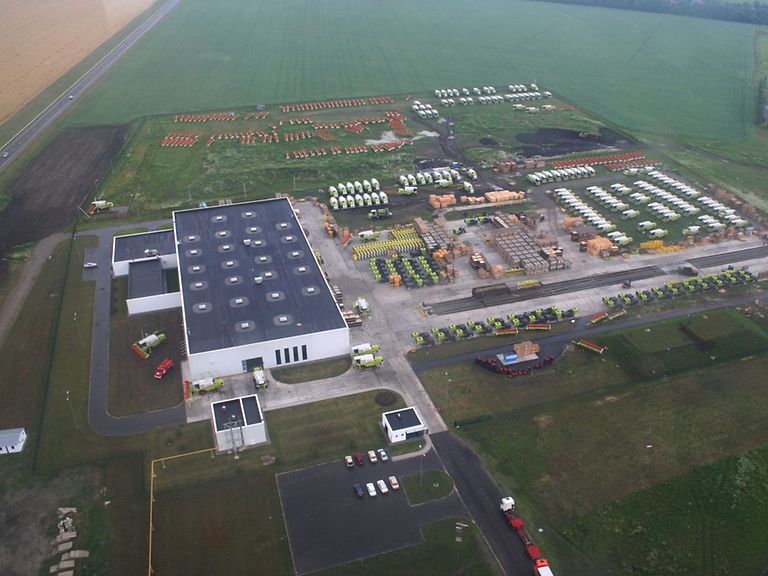
Aerial view of the combine harvester plant in Krasnodar (2006)

Opening of the combine harvester plant in Krasnodar, Russia.

CLAAS first entered the Russian market in 1992, through the export of used machines. This was followed in 1996 by the opening of a sales office in Moscow, which in 2006 was transformed into the distribution company OOO CLAAS Vostok. In 2005, CLAAS opened a combine harvester production facility at Krasnodar in southern Russia.

2014.

CLAAS Gaomi (2022)

Acquisition of a combine harvester plant in Gaomi, China.

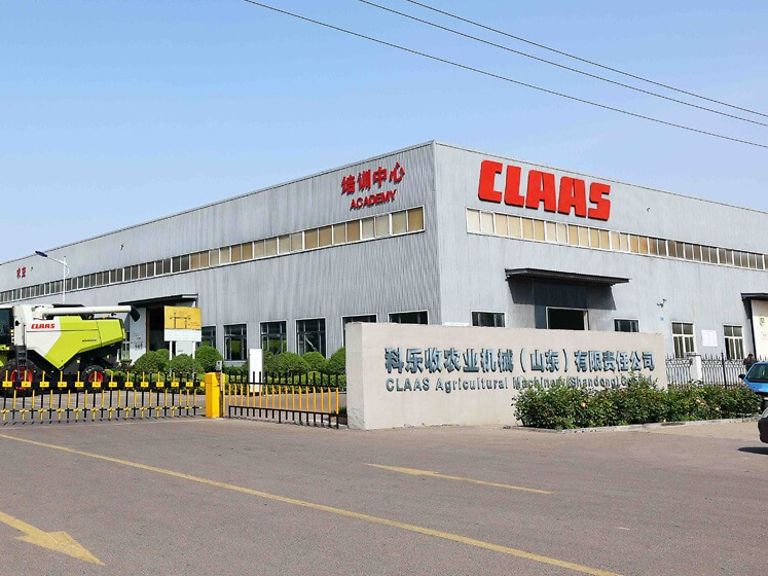
In 2014, CLAAS acquired a majority stake in the Chinese agricultural machinery manufacturer Shandong Jinyee Machinery Manufacture Co. Ltd (Jinyee). The company now operates under the name CLAAS Agricultural Machinery (Shandong) Co. Ltd. and produces various harvesting machines, in particular for maize and wheat harvesting, at the Gaomi site. The machines are manufactured under the CLAAS name and under the local brand name CHUNYU, primarily for the Chinese market. The company has an extensive sales and service network in central and northern China. Since 2012, CLAAS has also been present in China with its own sales and service company CLAAS Agricultural Machinery Trading (Beijing) Co., Ltd.

2017.

Dissen site

Founding of CLAAS E-Systems

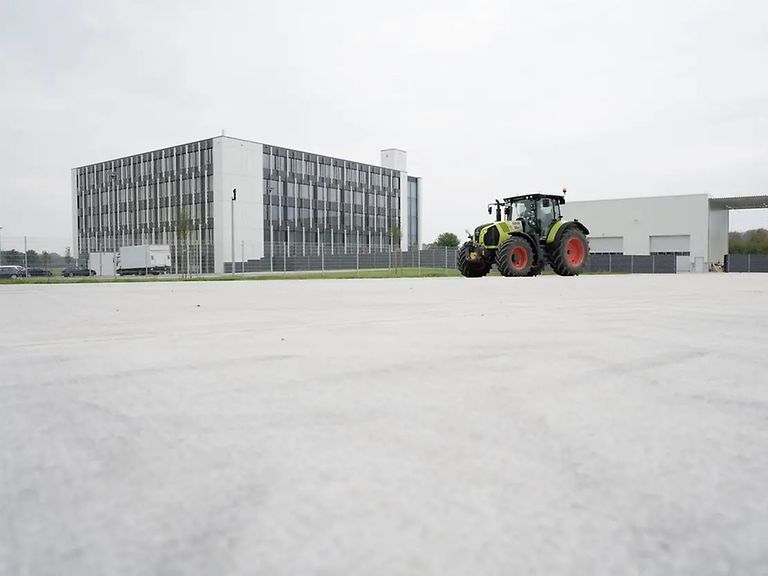
As early as 1994, CLAAS established the AGROCOM business unit and successfully integrated the then leading provider of farm software, Klöpper & Wiege, a few years later. CLAAS has now bundled all its electronics capability in a new subsidiary, CLAAS E-Systems. The new electronics centre in Dissen, Lower Saxony, has been developing innovative solutions for the high-tech farming of the future since 2017.

2019.

CLAAS LEXION 8800

Launch of the new LEXION.

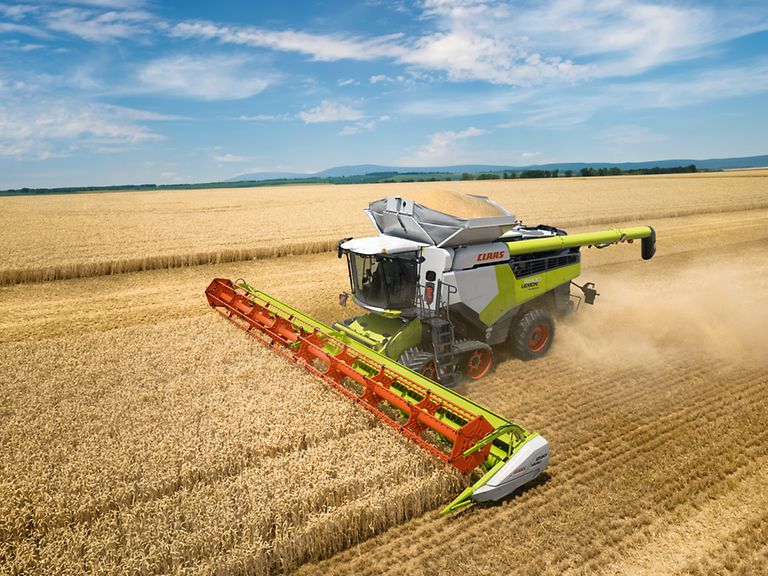
In 2019, CLAAS once again ventured into new territory in combine harvester construction by completely reworking the design of its largest combine harvester, the LEXION. More intelligent and efficient than ever before, the LEXION once again set new standards. The top-of-the-range model boasted an impressive 25% increase in harvesting output over its predecessor. The flagship of the series is the LEXION 8900, while the LEXION 8700 and 8800 offer even greater power reserves than their predecessors thanks to more powerful engines and updated process technology. The new LEXION 8600 rounds off the range and boasts impressive efficiency and solid throughput in all harvesting conditions.

2021.

CLAAS TRION 530

Launch of the TRION.

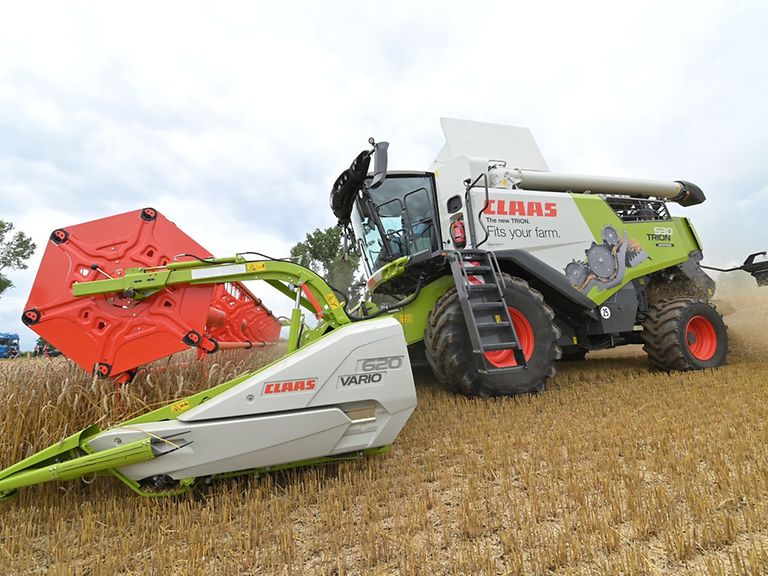
In 2021, CLAAS continued its campaign of new harvesting technology, which it had launched in 2019, with 20 new TRION series combine harvesters. The state-of-the-art TRION range includes 5- and 6-straw walker machines, hybrid single- and double-rotor combines and several TERRA TRAC and MONTANA versions. The result is a range of variants and equipment that is unrivalled in this class of combine harvester. The new TRION marks another milestone in the CLAAS combine harvester range, as it can be tailored to suit every market, every customer segment and every crop and grain type. The TRION combines maximum harvesting efficiency with ease of operation in a customer-focused way – for every farm and every condition. In short: TRION – Fits your farm.

2023.

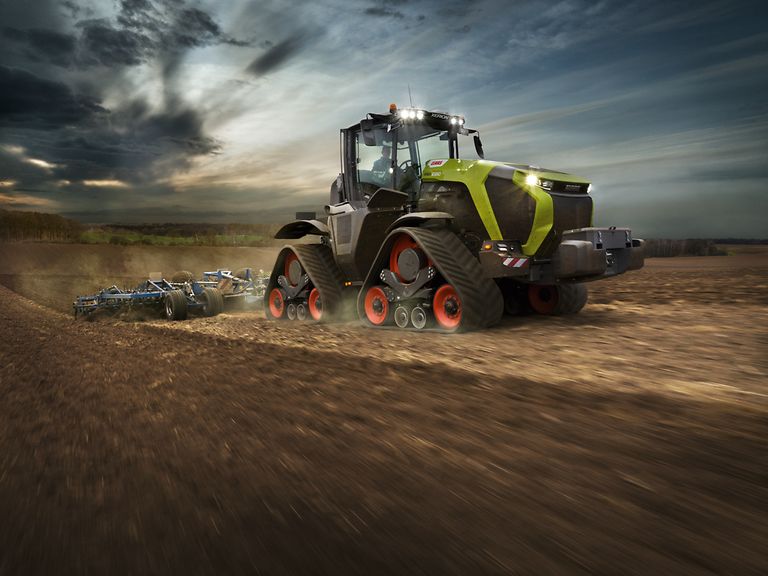
CLAAS XERION 12.650

New 12-series XERION

CLAAS unveils two uncompromisingly powerful specialists in the top tractor performance class – the new XERION 12 series. The two models above the XERION 4200–5000 feature the highly efficient low-speed drive concept 2.0, the CEMOS operator assistance system, an enormous hydraulic pump output of up to 537 l/min and a new spacious cab with four-point suspension. The TERRA TRAC variant is additionally equipped with newly developed, dampened crawler tracks from CLAAS Industrietechnik, making these machines more powerful than ever. As a result, they offer greater profitability, greater tractive power, greater comfort and greater assistance.