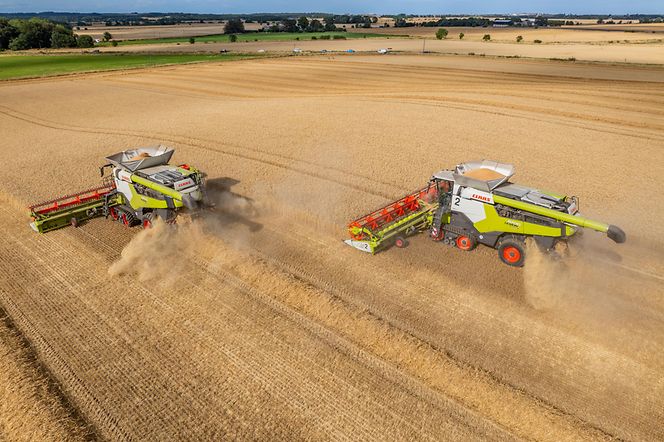
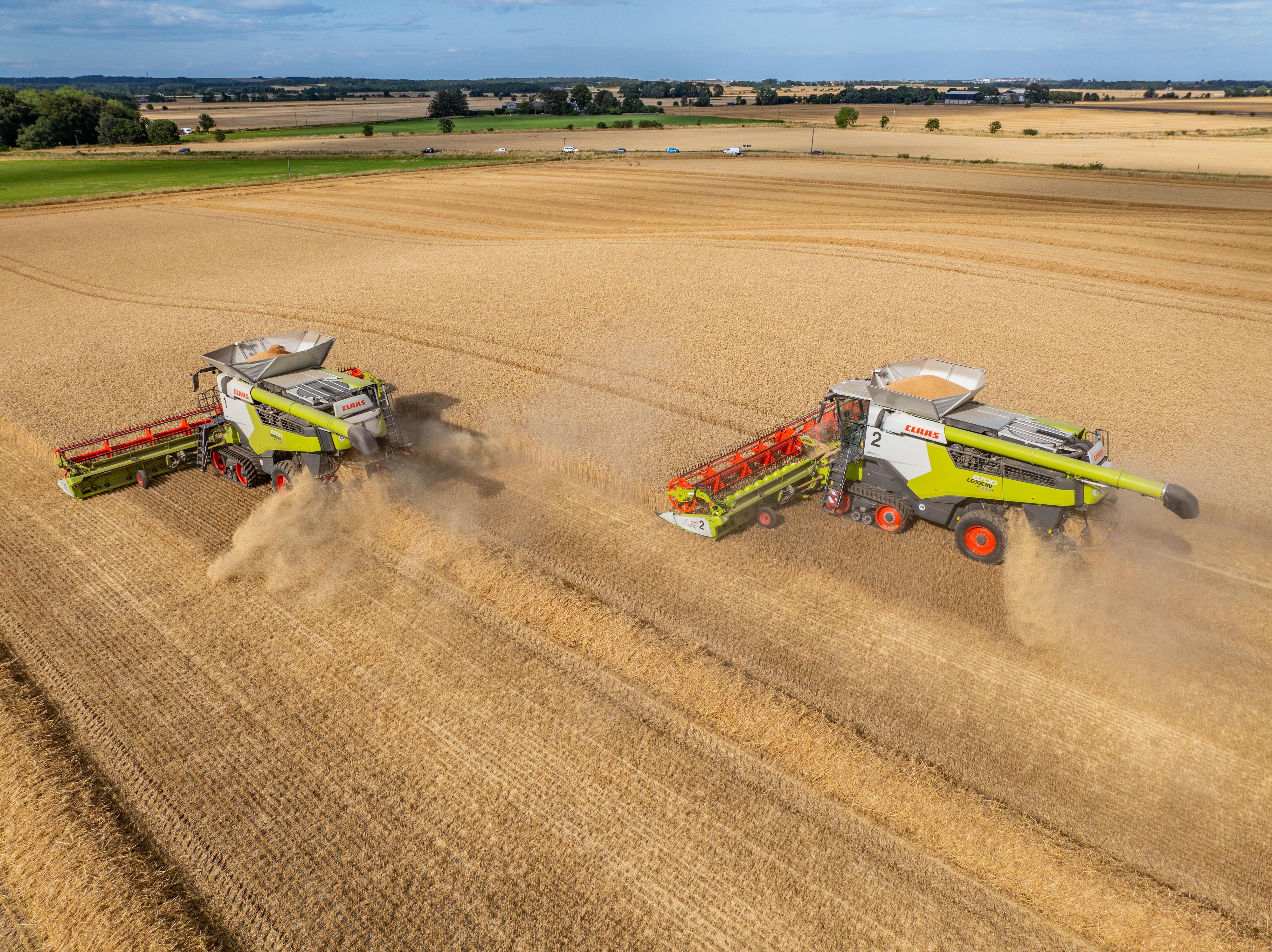
2x CLAAS LEXION 8700TT - J&J Green, Inverness
Agricultural machinery
Digital Solutions
Service & Parts
Experience
Careers
Press
About CLAAS
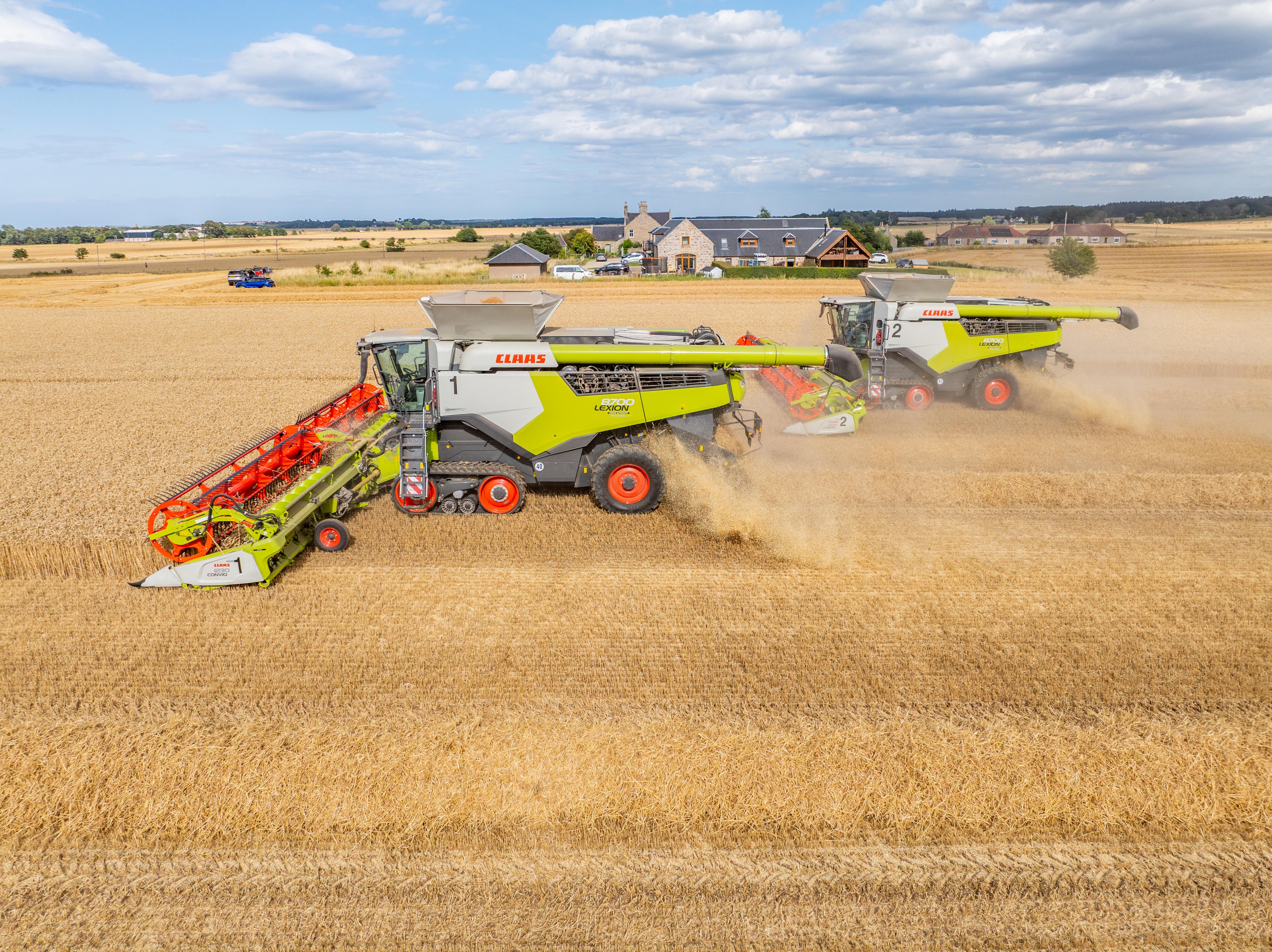
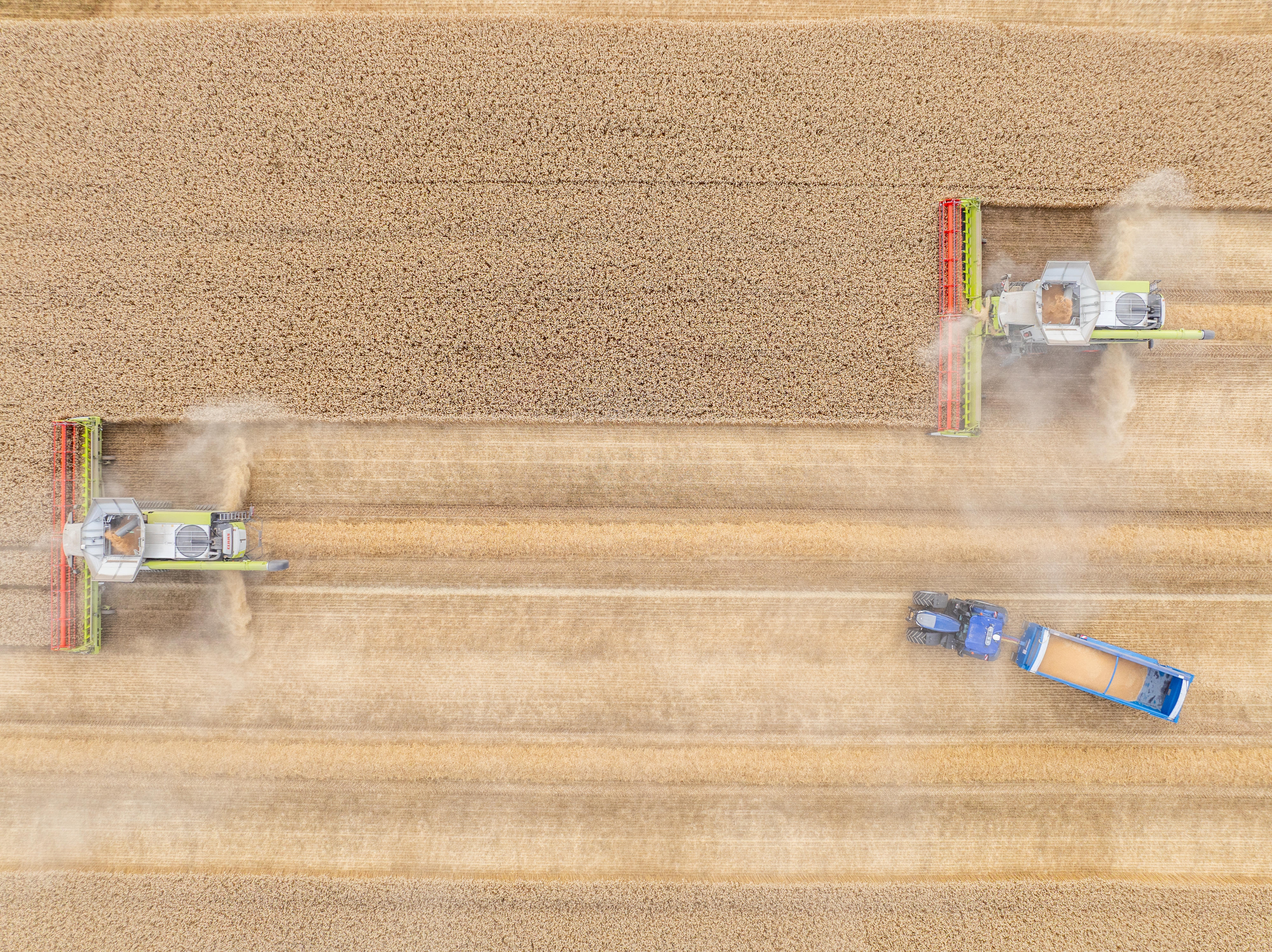
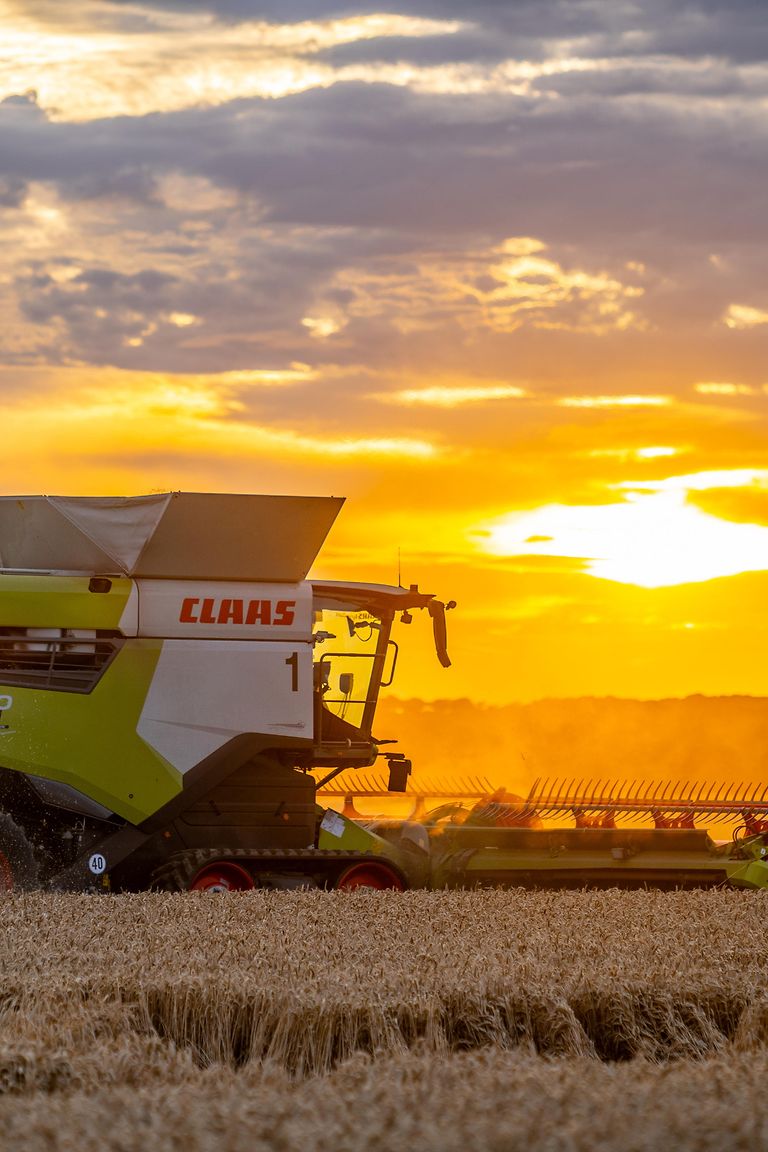
2x CLAAS LEXION 8700TT - J&J Green, Inverness

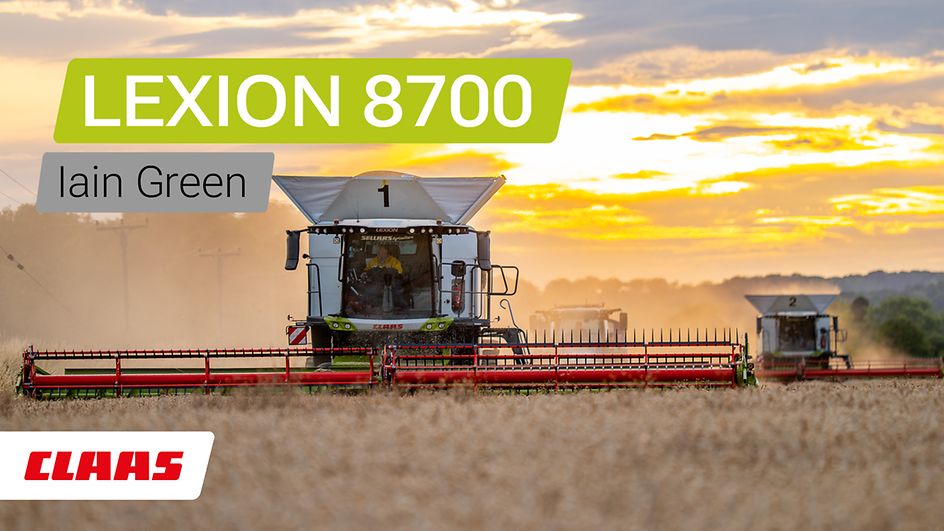
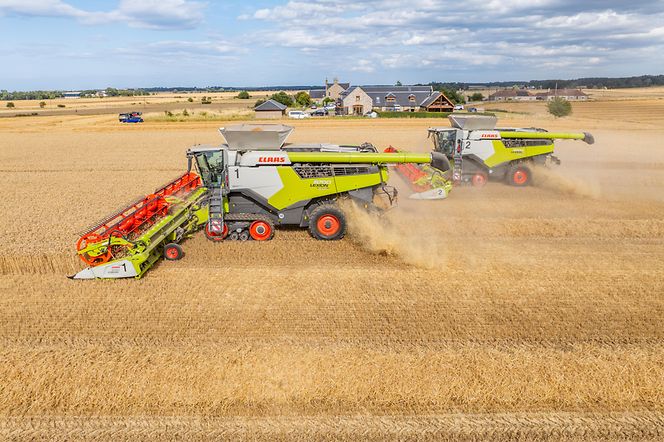
2 x LEXION 8700s - Iain Green, Moray, North east Scotland

  • WJ & J Green, Corskie Farm near Inverness, North east Scotland
  • Farmed area: 2460ha (6079acres)
  • Cropping: Spring barley 944ha (2332acres), winter wheat 157ha (388acres), winter barley 170ha (420acres), peas 12ha (30acres), green covers 90ha (222acres) - remainder in rotational grass, permanent pasture and forestry
  • Livestock: 1500 cattle - 380 Beef Shorthorn X suckler cows with all offspring taken through finishing, 200 pedigree Simmental cows with heifers and bulls sold for breeding plus 160 commercial sucklers cover under a contract farming agreement
  • Haulage: 38 artic tractor units running bulk tippers for grain haulage, malting, distilling and quarry industries
  • Staff: Family partnership consisting of Jimmy, Nan and Iain Green with daughters Laura, Jemma and Hannah and their partners Rob Beattie, Shaun Cumming and Callum Fettes and plus another 9 full-time farm staff, 2 mechanics, 38 lorry drivers and 3 office staff

Why LEXION 8700s?


“We like the flexibility of running two combines and I wouldn’t feel comfortable in putting my faith in one machine to clear our entire acreage in a tricky season. We’ve long viewed our second combine as an equivalent to the grain dryer. By being well on top of the job, we know we can wait until the crop is at its driest and then go out and knock off a big lump in one go without having piles of wet corn to deal with for the following three weeks.


For that reason, we felt the 8700s potential output would provide plenty of insurance in a tricky season. The CONVIO header was an absolute must particularly because we found we were baling 10% more straw behind the demo LEXION thanks to the ground-hugging nature of the FLEX cutterbar. Straw is an incredibly valuable asset to us as we use every last stalk here on farm and return it to the soil as nutrient-rich muck.


That’s another area where we were pleasantly surprised. With its big diameter drum and concave up front followed by a pair of rotors, the guts of these new LEXION are gentle on the straw while separating out every last grain.”
What are the key challenges facing the business?


“It’s becoming ever more difficult to achieve the prices we need to generate decent margins. With three daughters and their partners back here on the farm we need to set the business up to be as resilient as possible to future challenges.


A big part of the solution has to lie in new technology. It presents a huge opportunity in helping us measure and monitor all manner of things we weren’t able to quantify previously whether it’s daily liveweight gain in cattle or protein in the grain. There’s no point in just doing the job as we’ve done it before. Why wouldn’t we use all the information we’ve now got access to in order to help streamline what we do?


Specific to our arable operations we’re experiencing increasingly tight harvesting windows, so we need to be able to go out and clear big acreages whenever the opportunity presents itself. We need to cut grain as dry as we can to minimise our drying costs and critically achieve malting premiums to make the most of the opportunity we have with the countless whisky distilleries we have here in Moray. Moving to these two high output LEXION machines has helped us in achieving that.”


Tech savvy


“All the SELLARS team are fully clued up on the many automated features that these LEXION have got and the training we received pre-harvest was just superb.

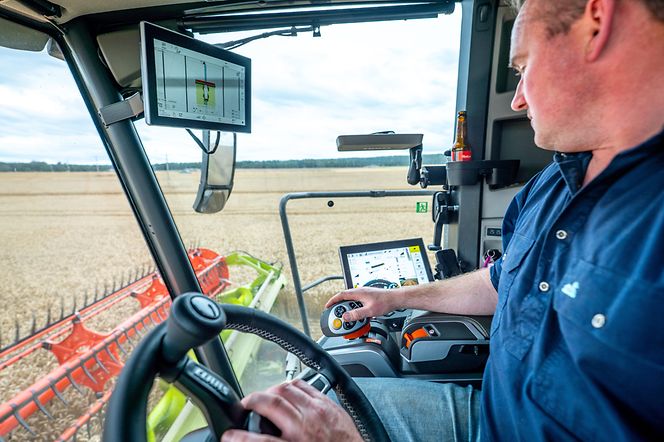
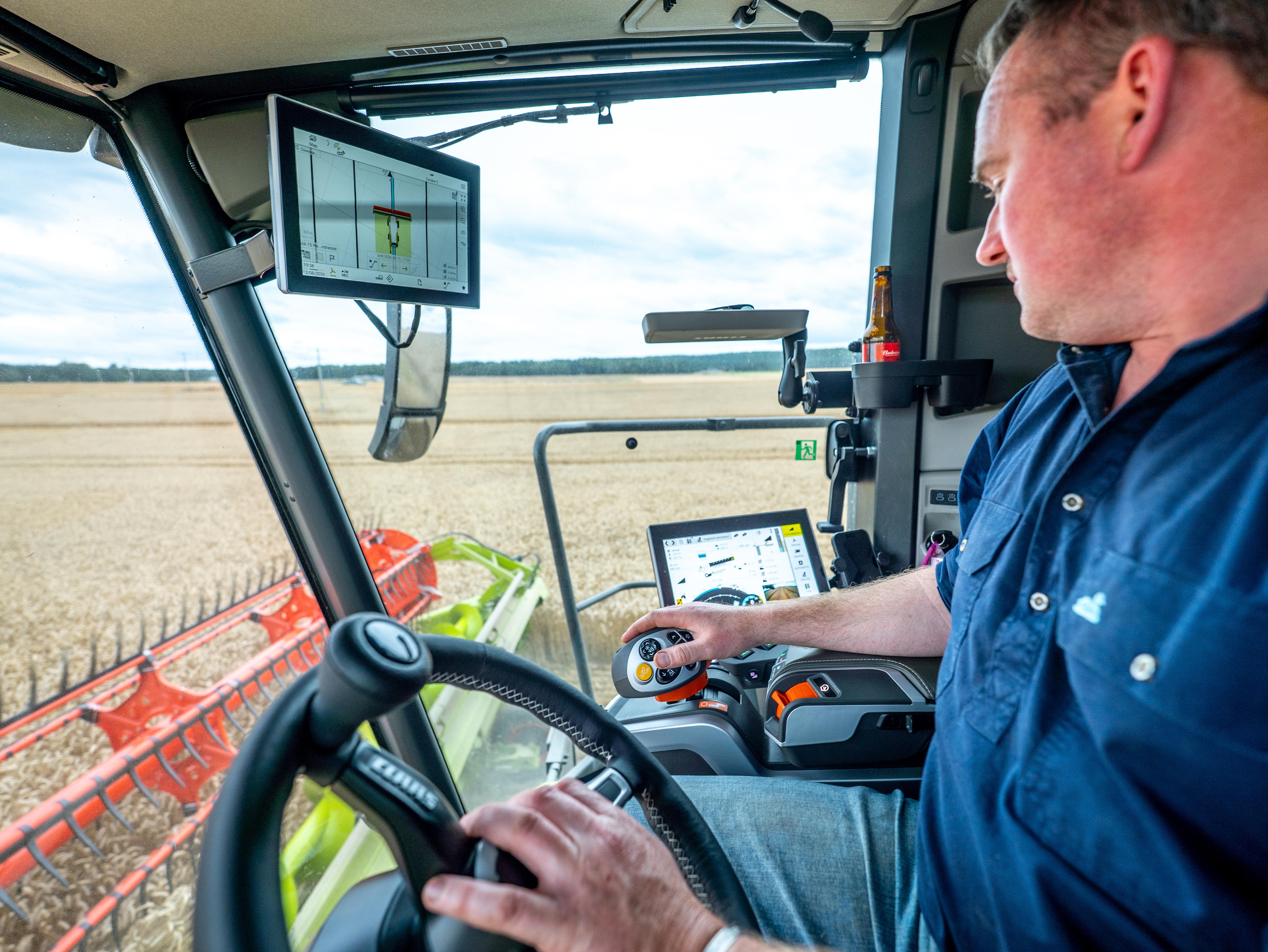
Due to this we’re able to get the full potential out of the combines. Swapping from one brand to another is always a bit daunting but although it’s been a steep learning curve, CLAAS’ intuitive CEBIS touchscreen computer has made it a much easier transition.


While CRUISE PILOT is constantly working away to tweak forward speeds to keep the combine full, the CEMOS automatic system deals with everything else from drum speeds and concave clearances to returns levels and sieve loading. Its performance this season has given me full confidence to let it get on with the job, humming away in the background to ensure the combine is always running at its optimum. The grain quality camera guarantees we’re always getting the best possible sample without denting output.”

What have been the key technological developments in streamlining operations at Corskie Farms?


“For years we’ve been soil sampling and using that information to tailor our crop inputs. Fertiliser, lime, muck and slurry are all spread using variable rate technology, ensuring we only apply what’s needed where it’s needed. That way we can aim for maximum yield while controlling input costs and maintaining soil fertility. 


Measuring the growth potential of our cattle has been a game changer as many are sold as breeding animals. A few years ago, we installed weighing platforms at the water troughs in the finishing sheds. With that we can precisely monitor daily liveweight gain and spot any animals that aren’t performing as they should. 


We can also draw off finished animals the moment they’re fit without running the whole mob through the race and stirring them all up. In our AHDB Monitor Farm trials we found each animal could lose up to seven days’ growth through the stress of being penned up and weighed. This new technology avoids all of that, keeping the whole shed peaceful and calm. It also means we can measure real-time responses to rations changes.


With pig margins tighter than ever, it’s never been more important to keep a close eye on costs. Finishing over 11,000 pigs a year, there’s a huge risk of losing big sums of money. We’ve recently invested in ‘Freedom farrowing’ pens to ensure we’re working to the standards consumers expect and have installed solar panels and boreholes to keep on top of our energy and water costs.


The investment in ultra high-tech combines that will accurately monitor grain protein levels, straw moisture and yields is just the next step in streamlining what we do.”


Why the switch to CLAAS combines?


“For the last 20 years or so we have been running a pair of twin rotor combines and they’ve performed just fine, but with one five-year-old machine due for a change we decided to trial a few demo rigs of different colours last harvest.


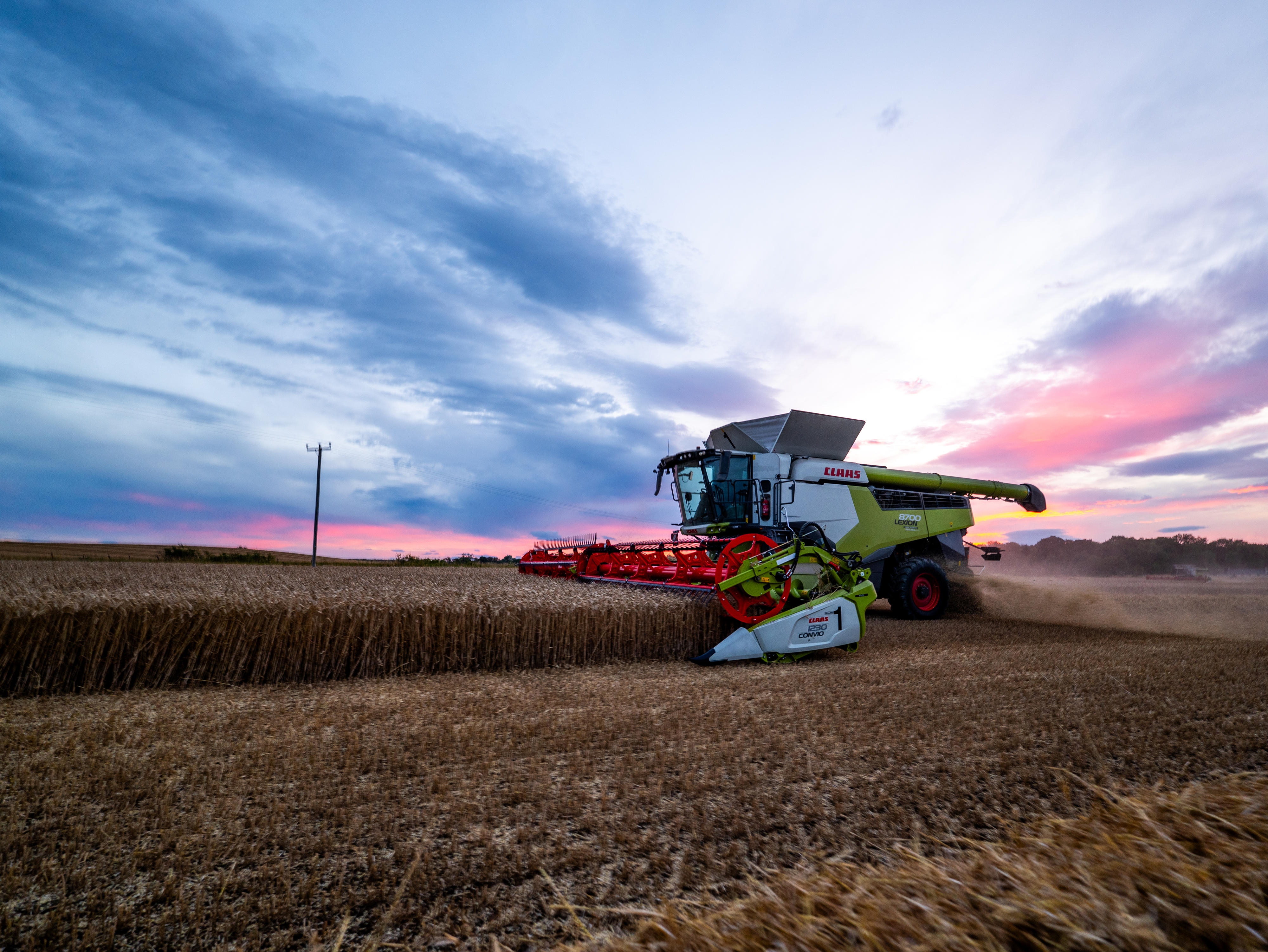
CLAAS lent us a top-end LEXION 8900. Its 13.7m CONVIO FLEX draper header immediately impressed us in its ability to contour. In brackled over barley there was an unbelievable difference. It was able to scoop up every ear without leaving a thing while the 10.5m cutterbars on our own machines were leaving significant numbers behind.


The combine clearly had an insatiable appetite and avoiding going to a belt-fed header supplied by a third-party manufacturer was a big attraction. The electronics all talk seamlessly with the combine, and we knew that should anything go wrong CLAAS would deal with it.


Since the days of our old DOMINATOR 108 we’ve always had a good relationship with our local dealer SELLARS, and we knew they had an excellent reputation in back-up for combines. That was the major factor in giving us the confidence in switching back to CLAAS.”

Value for money

“Ultimately any big investment decision comes down to pounds and pennies and when we dug down into the detail CLAAS offered incredibly good value, especially taking the five-year MAXI CARE service and warranty package into consideration. Critically it covered both the combine and header which wasn’t an option when we looked into third-party cutterbar suppliers.


Initially we were only planning on swapping out our oldest combine, but we wanted to standardise our header widths and maintain commonality between the two. CLAAS understood this and put together a package for a brace of 8700s that we simply couldn’t turn our backs on.”

CLAAS Connect

“As you’d expect from big combines of this size, they’re equipped with yield monitoring which is proving to be particularly accurate. But what sets the CLAAS system apart is its ability to integrate seamlessly with third-party farm management software. I can be combining all day knowing that all the data from the combine is being uploaded to our system as we go. CLAAS is leading the field on this.


In addition, the CLAAS app is really useful in helping the whole team keep tabs on harvest progress as well as monitoring where the combines are and their fuel status. Most importantly at dinner time it means the catering team - my daughter Jemma - can pinpoint our exact location!”

Tyres vs Tracks


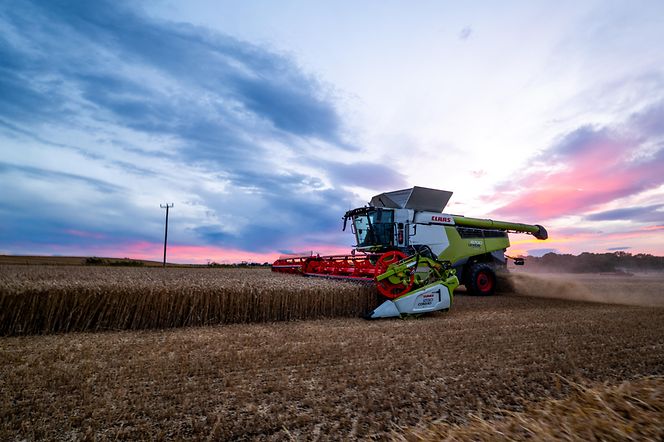
“The move to 12m headers meant we had to swap to tracks whereas previously we would clamp on dual wheels when the going got tough. I hadn’t really appreciated the difference the tracks would make. Being fairly compaction-conscious we opted for the wider belts and, despite that, we’re some 20cm narrower on the road than our previous machines. It just makes moving around so much easier.


In addition, being able to jack the suspension right up now gives us enough clearance to get through most gateways without having to take the headers off - another big time-saver. The other unexpected factor was the impact on header stability, particularly when turning on rutted headlands. The whole platform is just so much better planted with the result that the cutterbar is so much better able to maintain a uniform stubble height even when crossing deep tramlines.” 

How have the LEXION 8700s performed?


“We had hoped we would see a slight increase in output with the new combines but we hadn’t quite anticipated the acreages we’d be able to clear in a day.


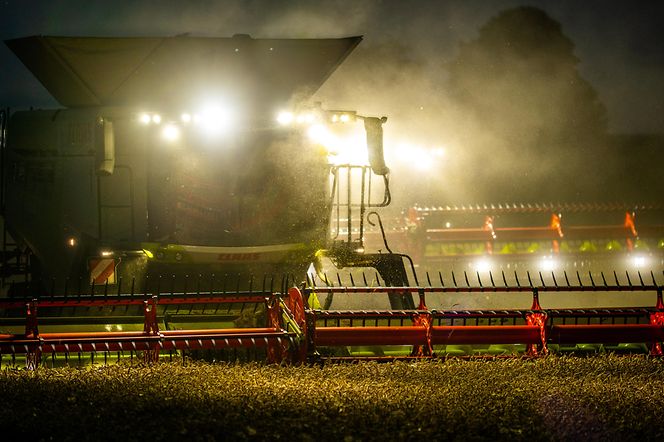
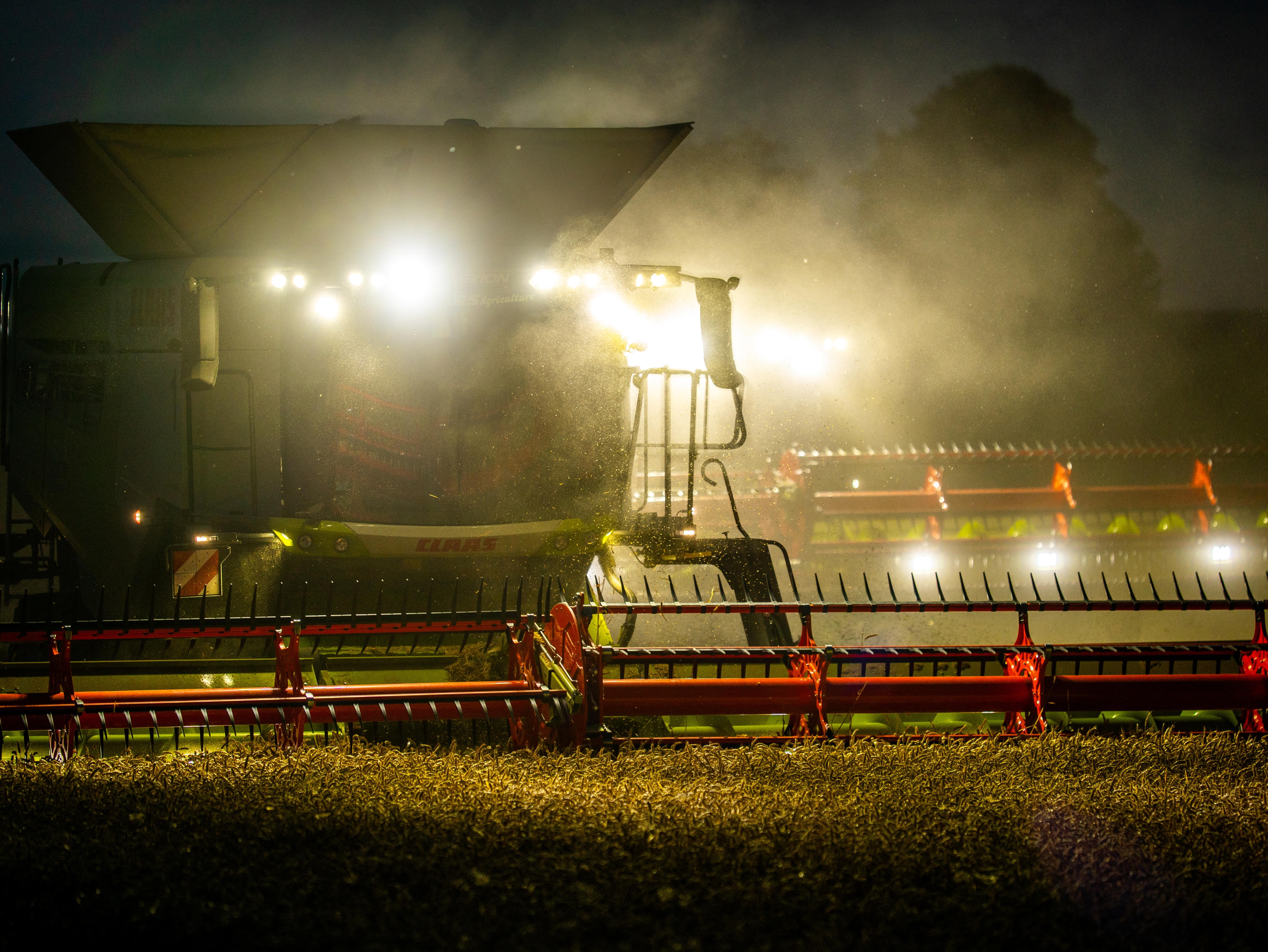
Being close to the coast we’re often not getting started until late morning but despite that we’re still able to drop 100ha before dark. In the big straw crops of wheat we’ve had this year they’ve each been averaging 45-55 tonnes an hour with spot rates climbing to well over 70 tonnes. That’s a good 10-12% more that we were doing with our previous combines.


What’s really startling is the diesel they’re burning for every tonne in the tank. Conservatively I have calculated we’re using 30-32% less fuel. I believe there are a number of reasons for that. At the front end the belt-fed CONVIO headers are presenting the crop consistently head-first to the drum and thereafter the flow of material is so much smoother right through the whole machine. Due to that, there’s no thumping or banging and the engine isn’t surging, trying to maintain an even speed.


On top of that CLAAS’ Dynamic Power system is constantly working away in the background to only deliver the power and torque that’s required. So when you’re swathing a light crop of spring barley it’ll limit fuelling, but when you get into a thick crop of wheat and you’re climbing a bit of a bank while unloading it’ll ramp up to maximum power as it’s needed.


That ingenious electronic wizardry is only part of the package. These LEXION combines are packed with a whole host of other clever technology that adds to their overall efficiency.”


Streamlined logistics


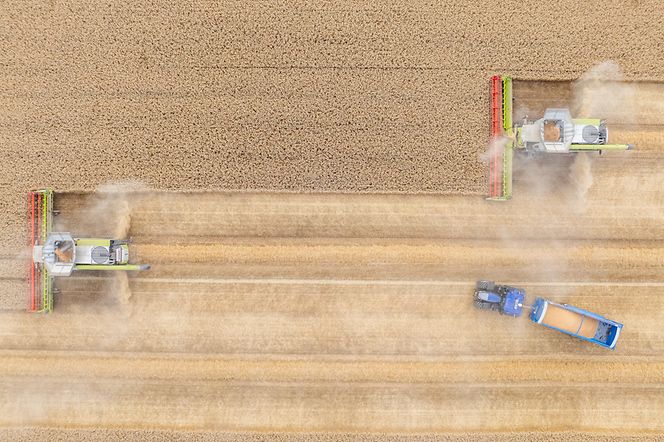
“There are all sorts of clever driver-friendly functions on the 8700s, one of my favourite being the ‘Distance to unload’ feature. It gives you a countdown to the exact spot where the grain tank will be properly brimmed so you can manage the trailers and the get them to the right place without risking any embarrassing roof-top spillages!


When it comes to unloading, the LEXION is a bit of a beast. It’ll dump a full 15,000-litre tank load in a minute and a half. But it’s manageable. The pivoting spout and half-rate shut-off make topping out trailers easy so that they’re always going back to the shed fully-loaded - another factor in improving the efficiency of our whole harvesting operation.”