High-precision measurement thanks to transmission method
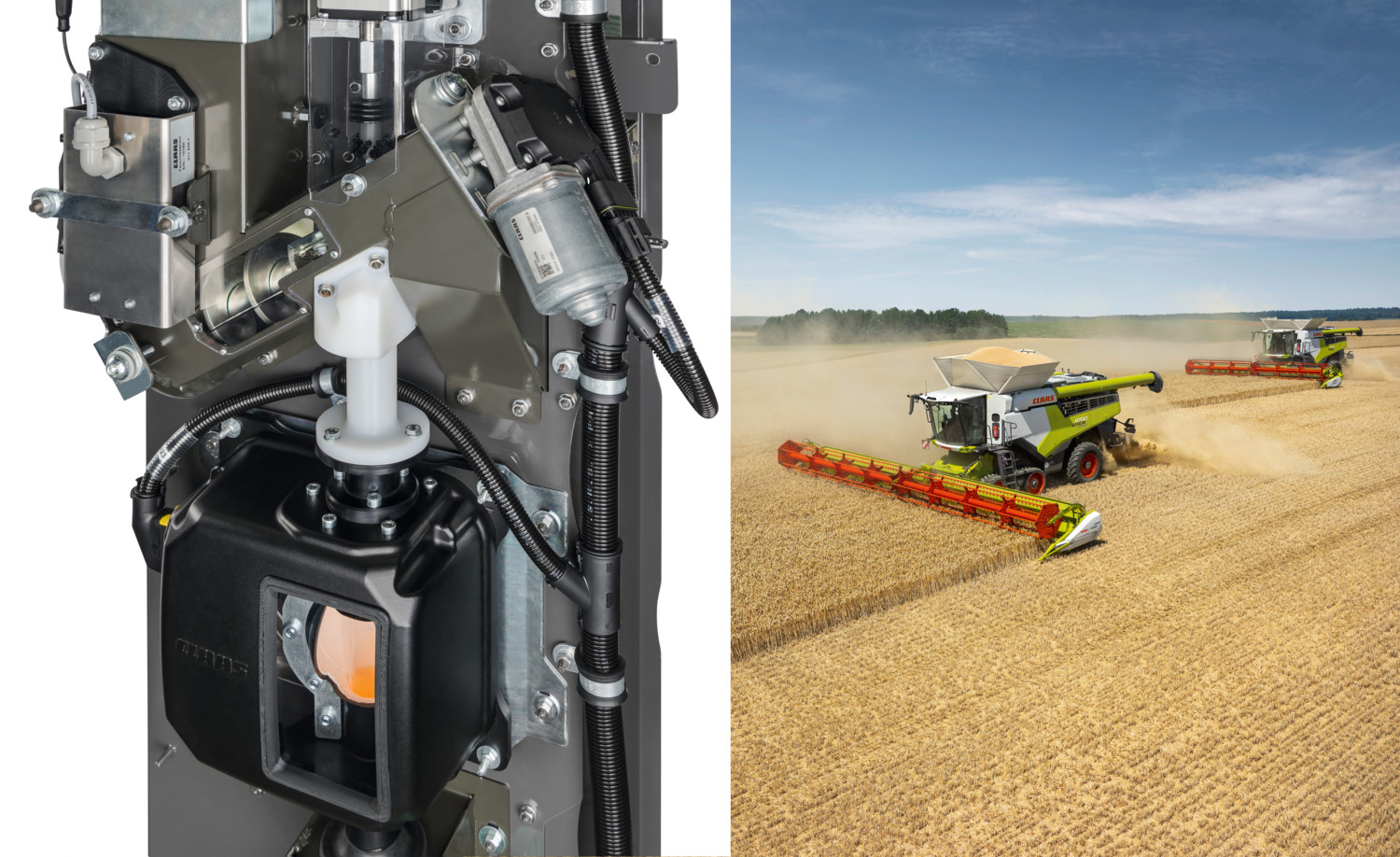
There is growing demand for nutrient analysis using NIR sensor technology in grain harvest. From model year 2026 onwards, the new NUTRIMETER GRAIN from CLAAS will therefore make precise ingredient determination available on the LEXION combine harvester for the first time. The NUTRIMETER GRAIN is the first transmissive NIR measurement system for combine harvesters that enables online measurement of grain ingredients during ongoing harvesting operations. To achieve this, the cuvette transmission method for stationary centres, which has proven itself in laboratory equipment, has been further developed into a continuously operating throughput method. In contrast to the previously common reflection method, which only measures the surface of the centres, the transmissive method measures the ingredients homogeneously through all layers of the centres.
The implementation on the LEXION is achieved via a bypass in the grain elevator, which continuously feeds a small amount of grain through a so-called integrating ball, in which the centre punches are completely illuminated. This enables extremely precise measurement of the protein content in grain and the oil content in oilseeds. The sensor can therefore be used for many types of grain.
Qualitative separation already during harvest logistics and harvest storage
The measured values are displayed in the CEBIS terminal in the cab of the LEXION and also transferred to the CLAAS connect portal. The data documented there can be used for subsequent storage, marketing and process planning. Since the data is already available during harvest in the field, different quality batches with different protein contents can, for example, be sorted specifically during unloading, transported away from the field separately and stored in sorted batches. The greatly reduced mixing of qualities and the targeted formation of batches of different qualities means that better prices can be achieved during marketing – for example, for bread wheat production – especially since the transmissive measurement method is also used in the grain trade and is therefore recognised and accepted in the marketing chain.
Precise real-time moisture determination also enables even more accurate, site-specific yield recording and yield mapping. Mapping the nutrients also allows for even more sustainable, resource-efficient cultivation of high-quality grain – for example, through precise fertilisation and sowing depending on yield and protein or oil content.