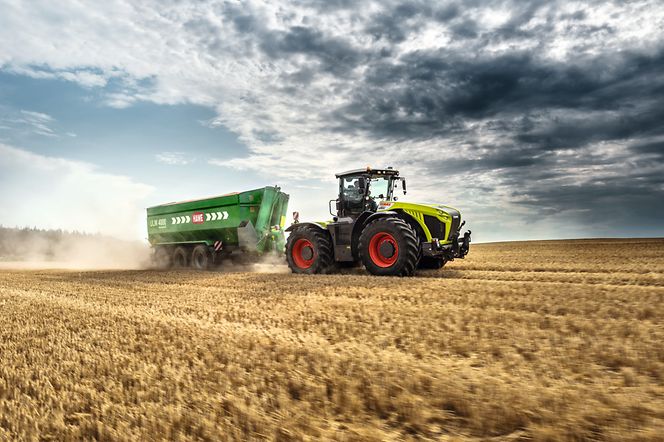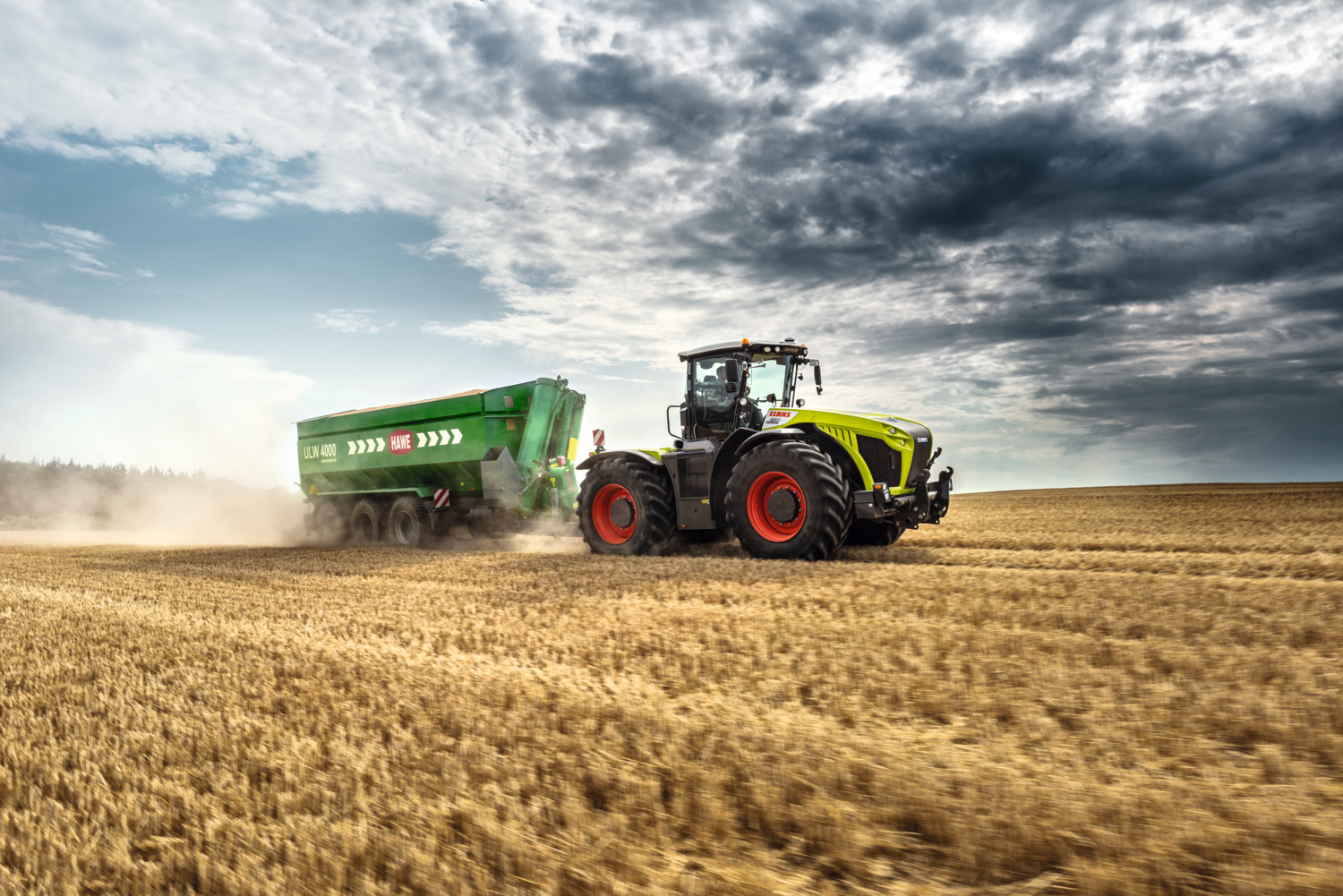
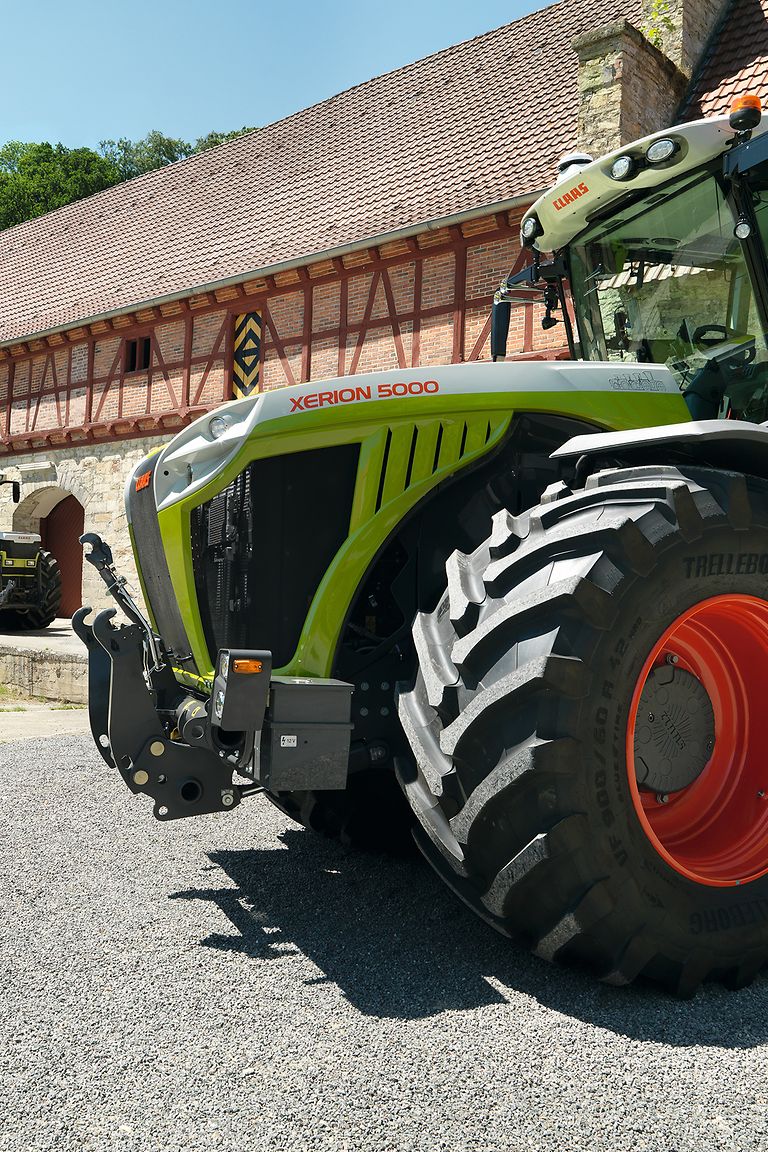
The farming world had never seen a tractor like it. When the first XERION, the 2500, hit the market in 1997, it left industry professionals speechless—250 hp, continuously variable transmission, four equally sized wheels, two steerable axles, four mounting spaces at the front and rear, and a rotating cab. A range of attachments—including for chopping or beet lifting—indicated that this machine was far more than a farm tractor. And that's exactly what the XERION was intended to be right from the start.
Developing a system tractor that could be used all year round and could also handle harvesting tasks was the vision that CLAAS had been working towards all those years. The XERION 2500 could perform not just traditional tasks such as tillage, drilling, and baling; it could also be used as a self-propelled harvesting machine. Specially mounted implements could even be used for beet lifting, chopping, and other specialist applications.
It's precisely because of this versatility that the XERION initially failed to win the approval of customers. "Many wondered why the tractor needed so many functions in the first place," explained Helmut-Hendrik Heppe, Product Manager for tractors at CLAAS. "It took a while for farmers to appreciate the benefits that this machine could offer."
From 250 to 530 hp.
With the launch of the XERION 3800/3300 in 2004, the tractor concept had finally become established. Today, the XERION is used by farmers and contractors throughout the world. Up to 400 machines are produced each year.
In recent decades, the XERION has grown in every respect. While the XERION 2500 was 20 ft 8 in (6.30 m) long and 11 ft 6 in (3.50 m) high, the latest XERION 5000 has a length of 24 ft 6.9 in (7.49 m) and a height of up to 12 ft 5.6 in (3.80 m). The wheels, once 6 ft 4.8 in (1.95 m) high, are now 7 ft 4.6 in (2.25 m). The engine capacity has risen from the original 488.19 to 732.28 cu in (8 to 12 L), and the power output from 250 to 530 hp. The number of control units has doubled from an original four to eight.
The number of XERION variants has also increased. It is now available as a TRAC, TRAC VC, and SADDLE TRAC with the cab positioned over the engine. The onboard equipment has also become more sophisticated. Take the control terminal, for example—the CLAAS electronic onboard information system CEBIS—now has a high-resolution color display and camera displays.