Agricultural machinery
Digital Solutions
Service & Parts
Experience
Press
About CLAAS

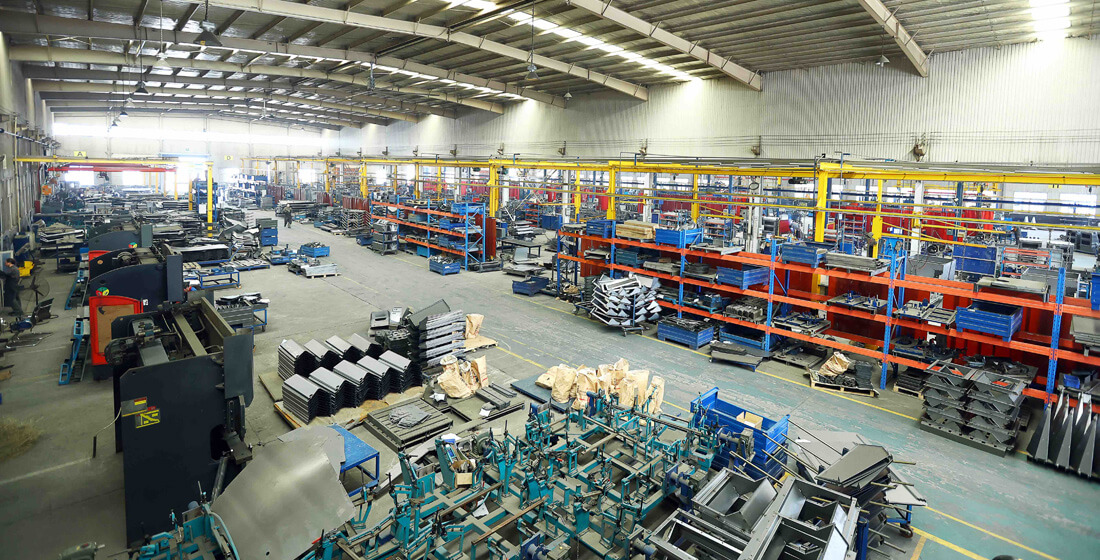
The factory in China's breadbasket.

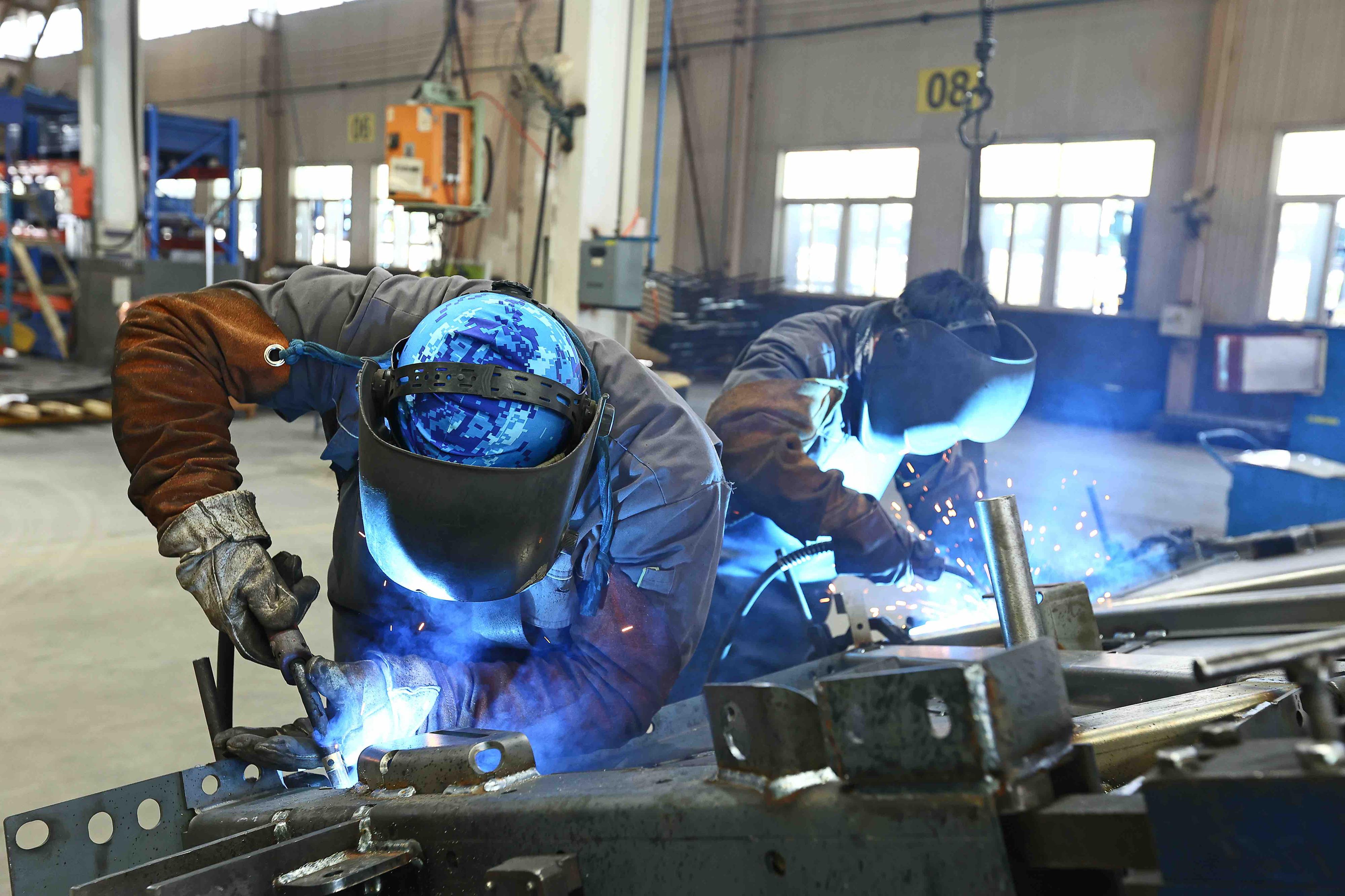
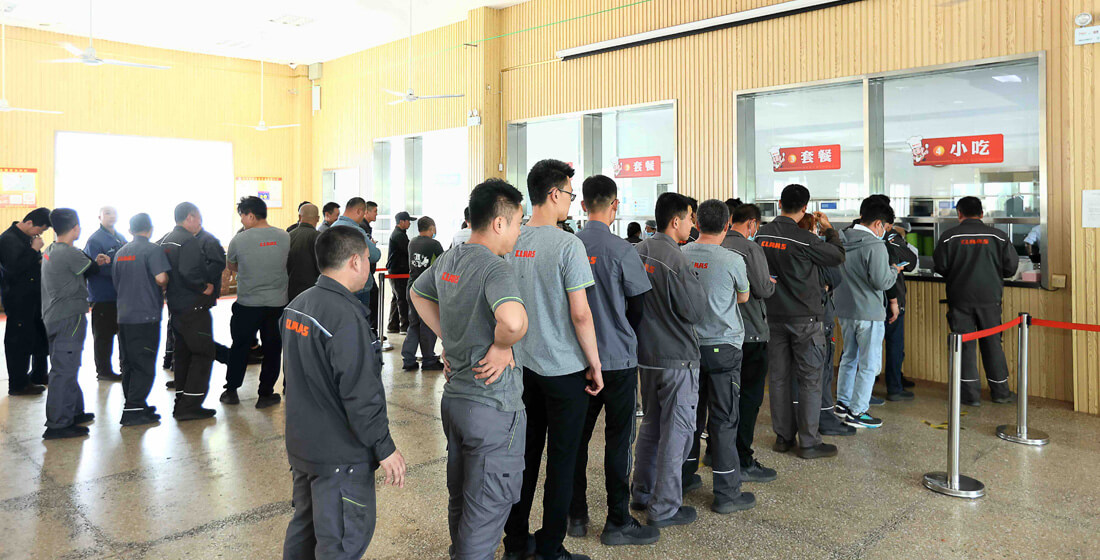
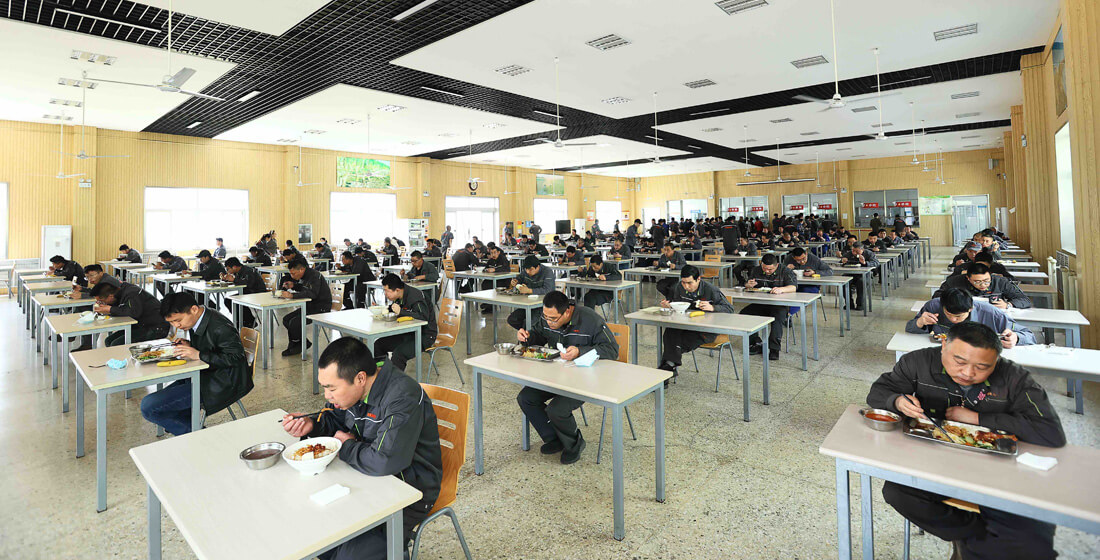
It's still quiet at the factory in the Chinese city of Gaomi at seven in the morning. While some are preparing for the day ahead, workers from away who stay in the hostel are grabbing breakfast in the canteen before starting work. Everywhere you look, people are greeting one another, regardless of their department, or their position in the company: people here know each other.

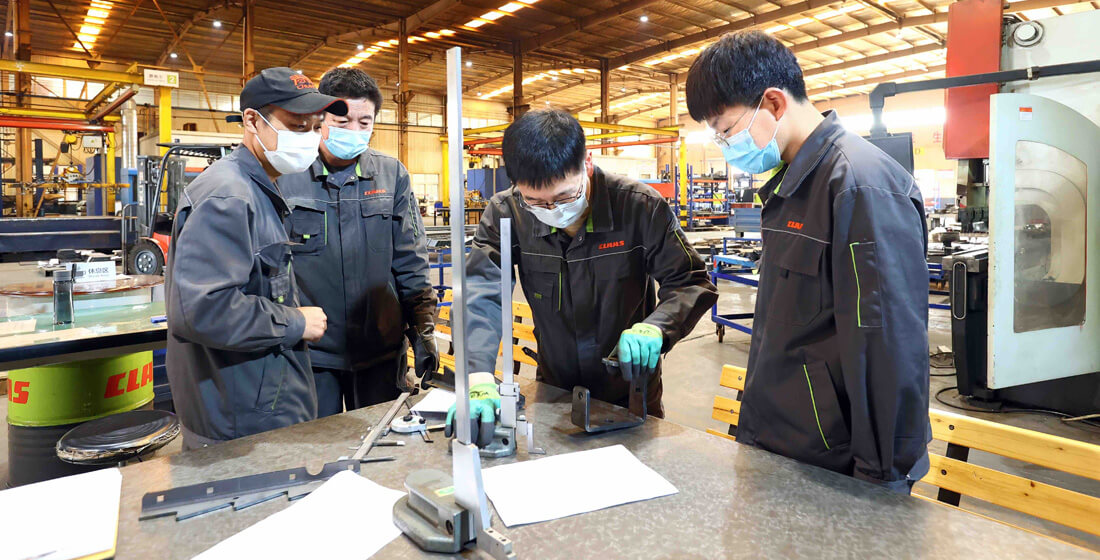
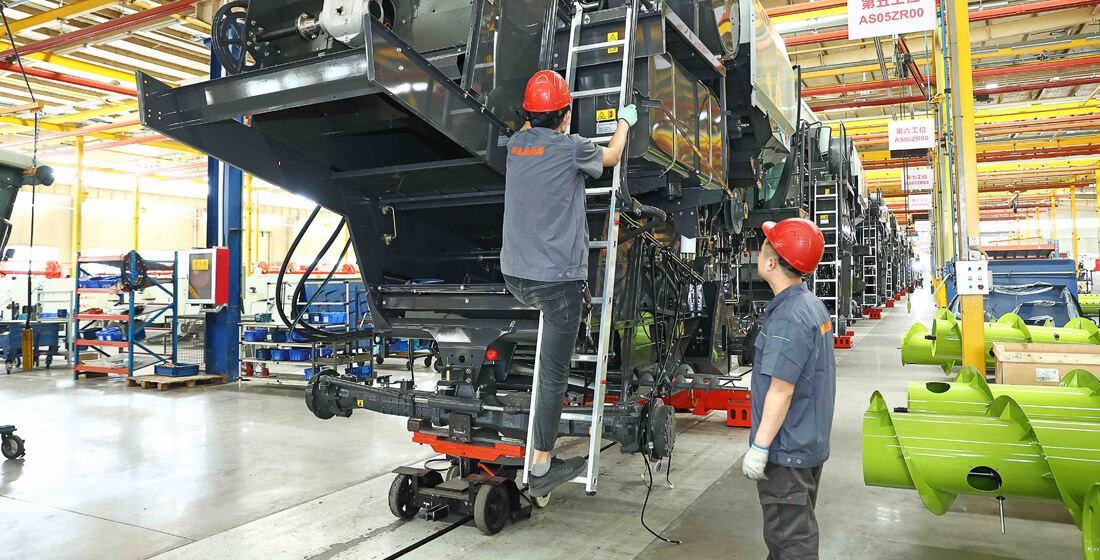
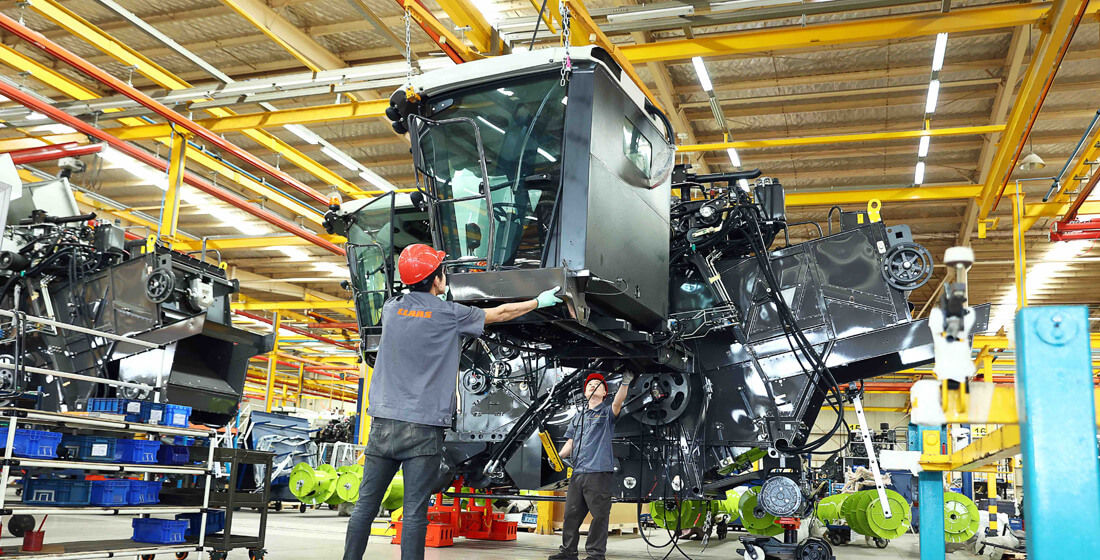
To many outsiders, this appears rather strange. Traditionally, hierarchies in Chinese companies are stricter and direct encounters between management and employees are rare. Yet the CLAAS Gaomi plant champions an open corporate culture. The idea behind this is simple: the production of CLAAS agricultural machinery requires the highest quality standards to be upheld – and that works best when everyone on site pulls together.
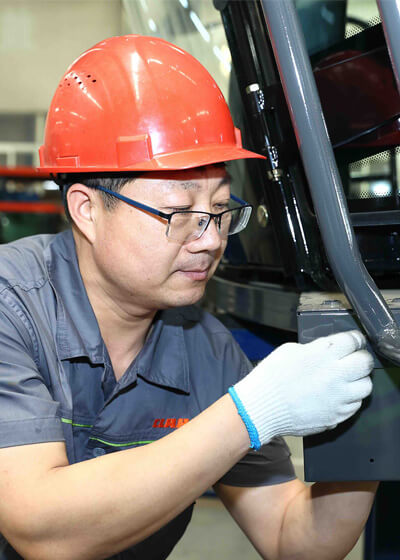
Flat hierarchies and open communication.

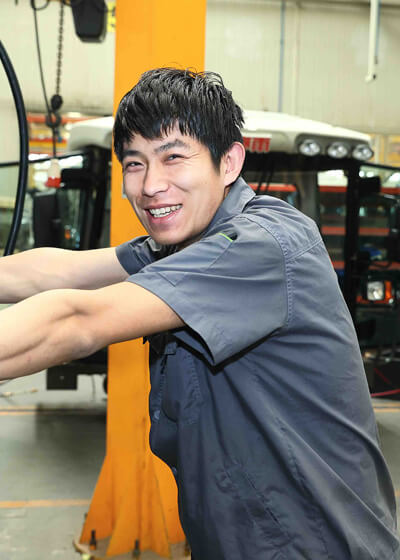
Various initiatives have been introduced in recent years to encourage a culture of openness, including quarterly town hall meetings. Here employees are informed of the latest company developments and the management team answers their questions, which can be submitted in advance by app – even anonymously if they wish. The aim is to share information and encourage employees to voice their ideas. In a market where quality and innovation matter, it is often the little everyday insights that make the difference.
The format has proved very popular with the staff. One major success is the new app-based suggestions scheme, which has already led to many improvements in Production. The culture of open communication and constructive criticism is also producing results.

Everything revolves around an app which everyone has on their mobile phone, from the boss to the trainee. It is used to log working times and access rights, request business trips and holidays, and even to pay for food in the canteen.

Several hundred machines a year.

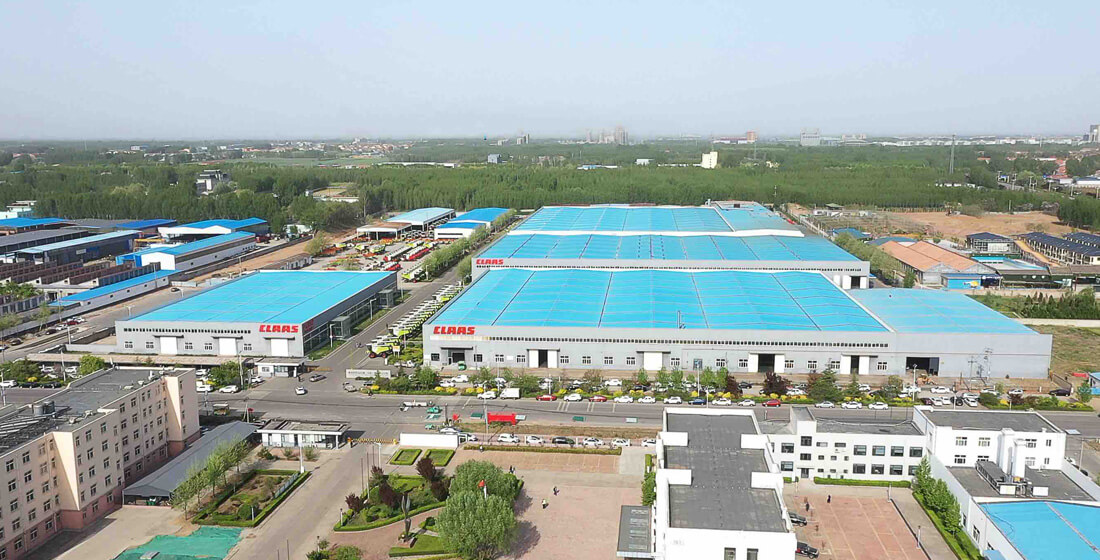
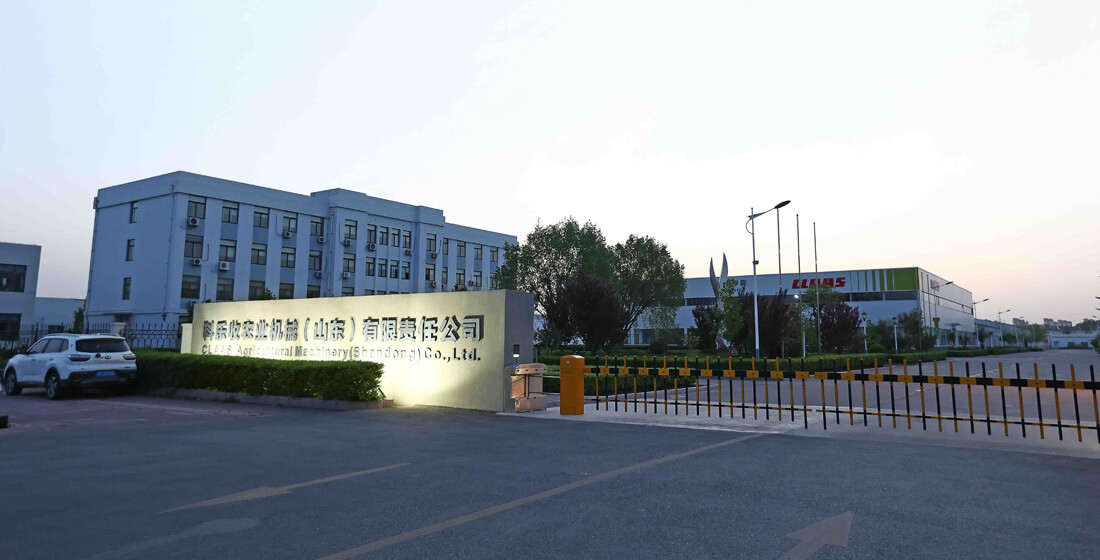
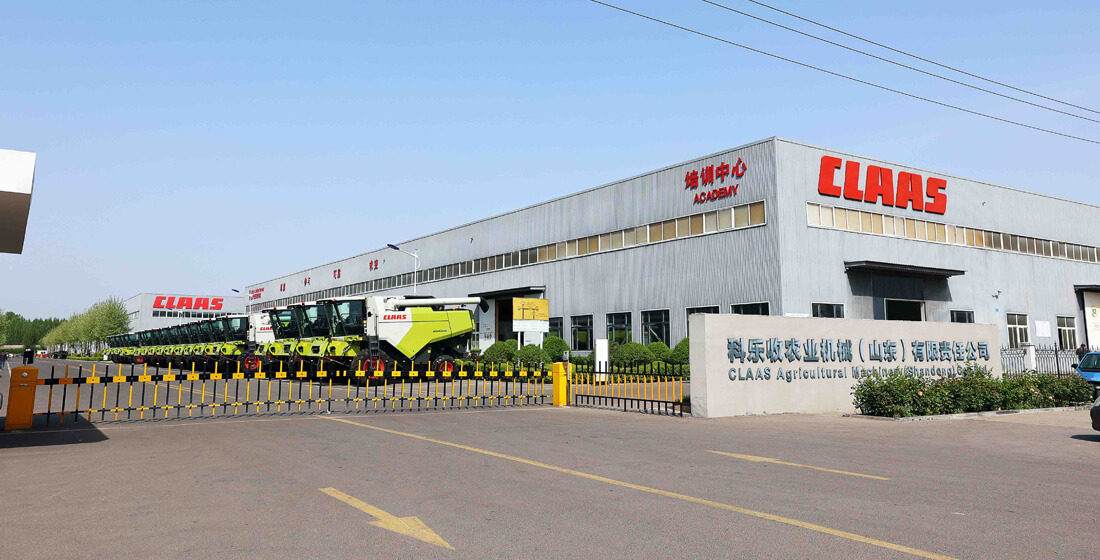
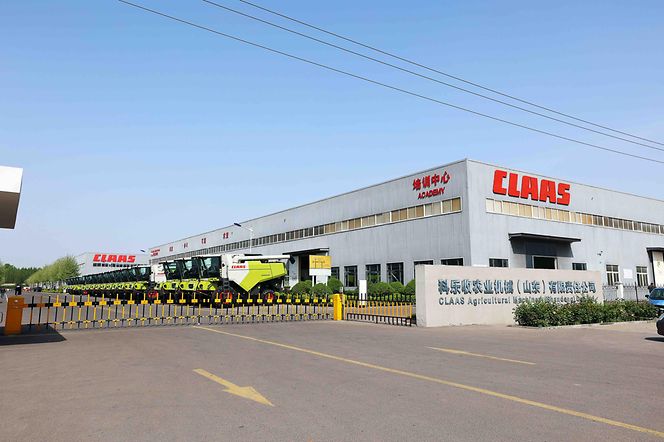
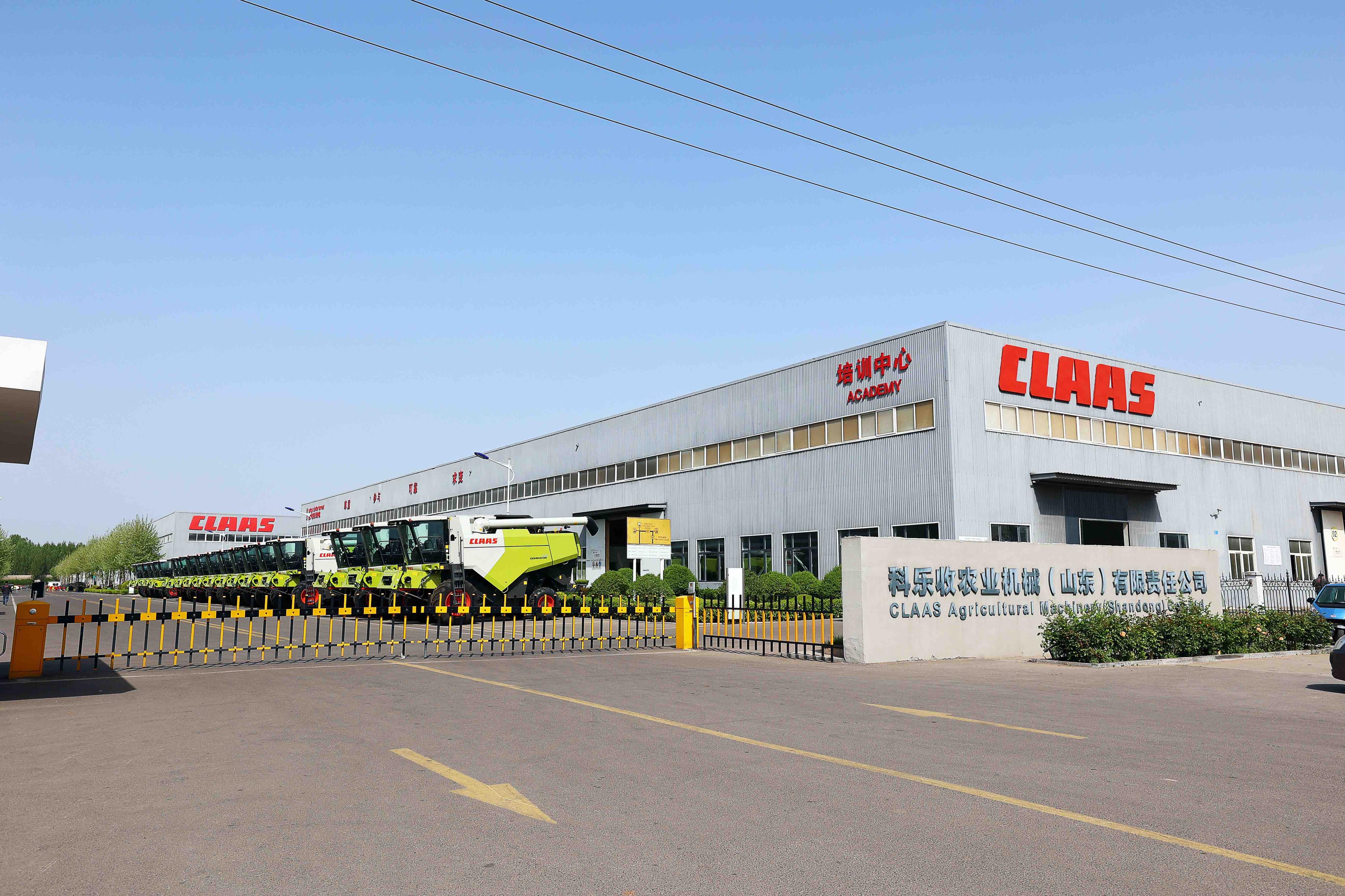
These changes to the corporate culture in recent years have contributed to the success of the production plant. It was established in 2014 as a joint venture with a Chinese company. Since 2016, it has traded under the name CLAAS Agricultural Machinery (Shandong) Co. Ltd and is part of the Germany company.
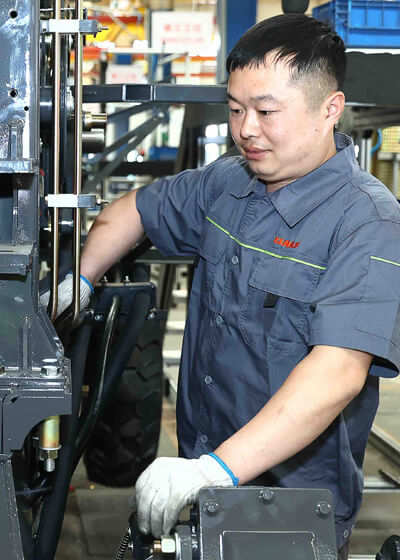
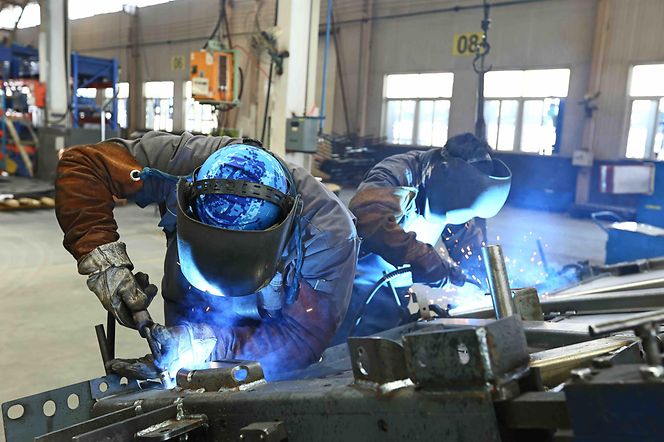
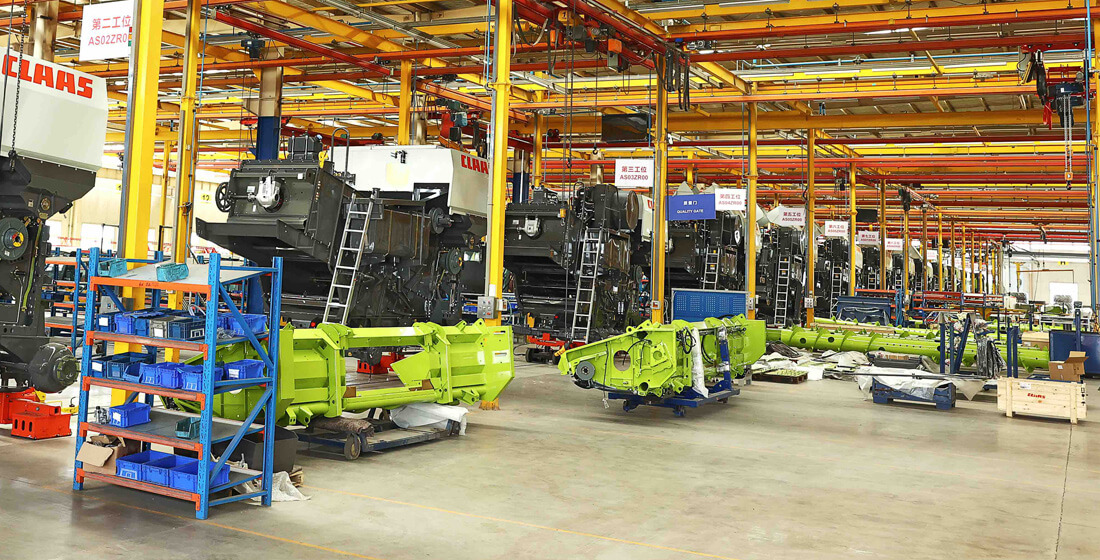
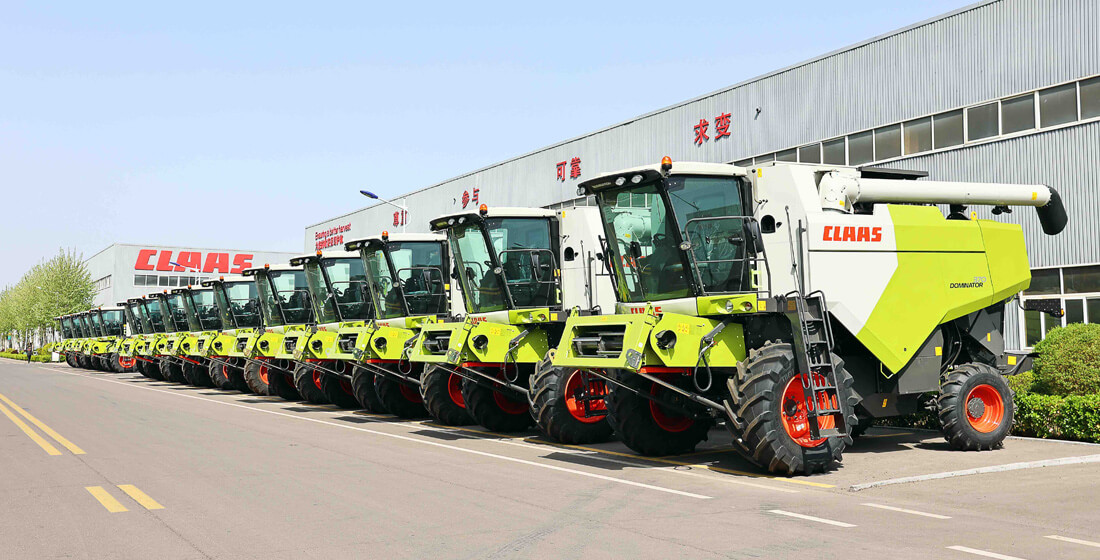
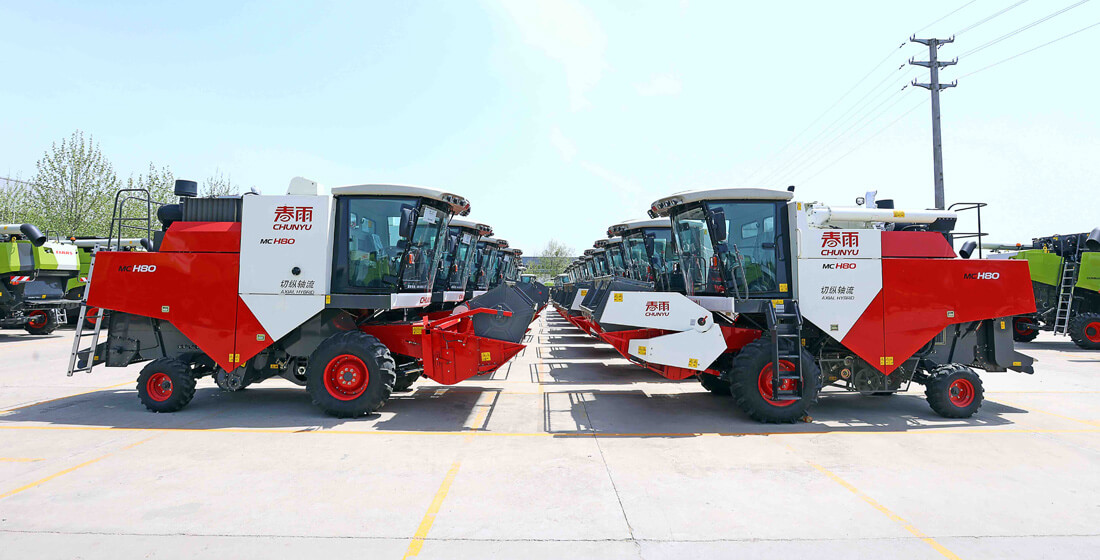
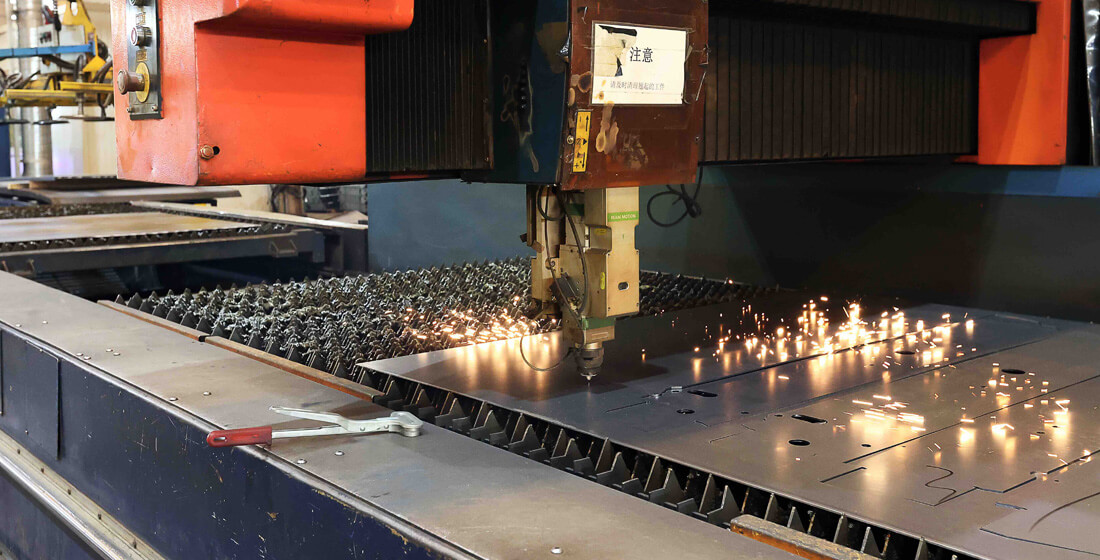
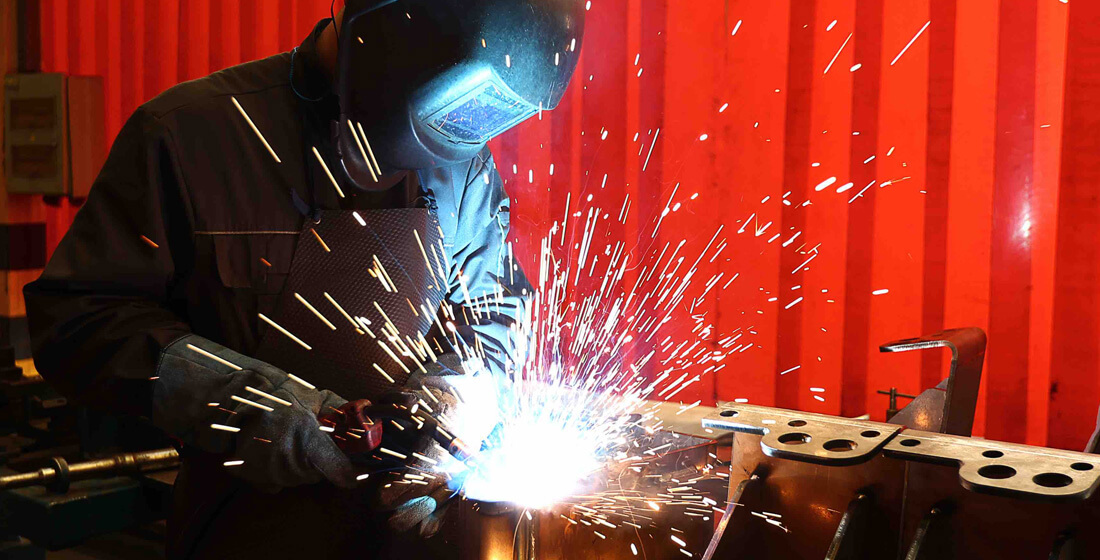
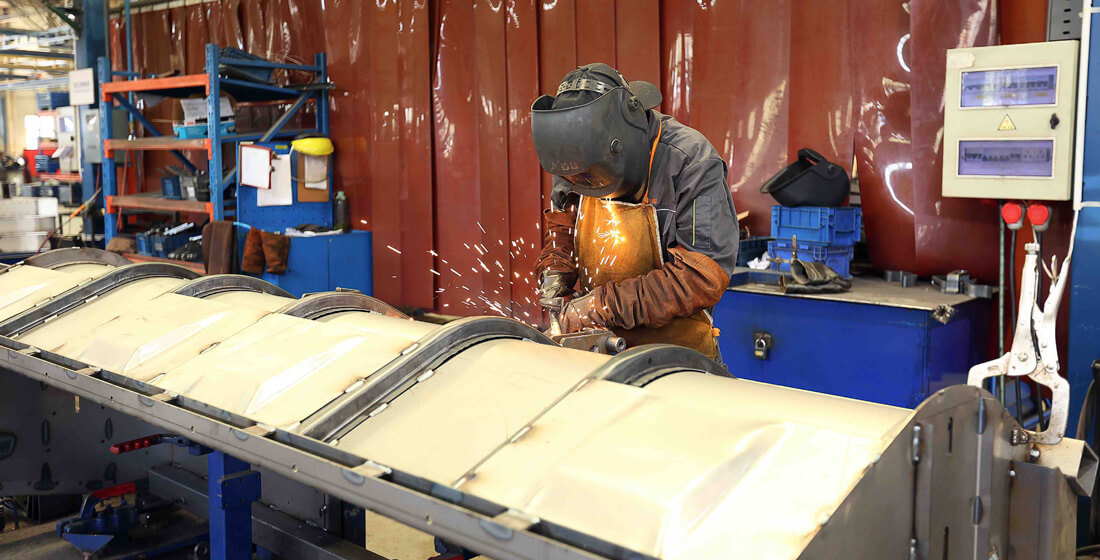
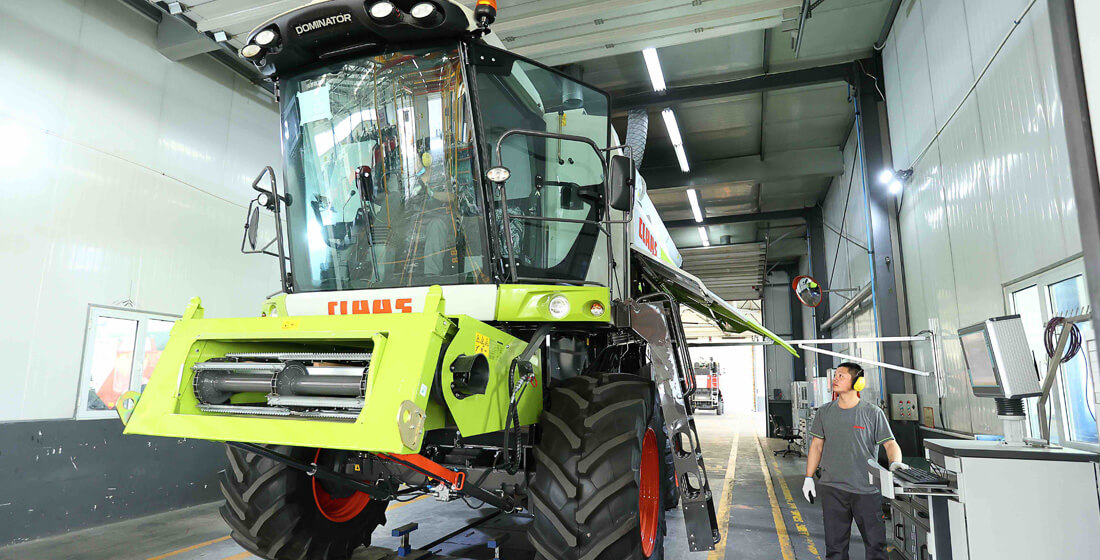
After initial challenges in gaining a foothold in the Chinese market, CLAAS in Gaomi now produces several hundred machines per year – mainly combine harvesters. These are manufactured primarily for the Chinese market under the CLAAS name and the Chinese brand name CHUNYU. For some years now, Gaomi has been preparing the ground for exporting to foreign markets.
The site employs 600 staff and has a comprehensive sales and service network in Central and Northern China. CLAAS is currently the only German firm in Gaomi. The city with 900,000 inhabitants – quite small by Chinese standards – is in the Shandong Province, one of China's main agricultural regions and known as the breadbasket of China. The megacity Shanghai is seven-and-a-half hours away by car, or around six hours by train.

Better than many German suppliers.

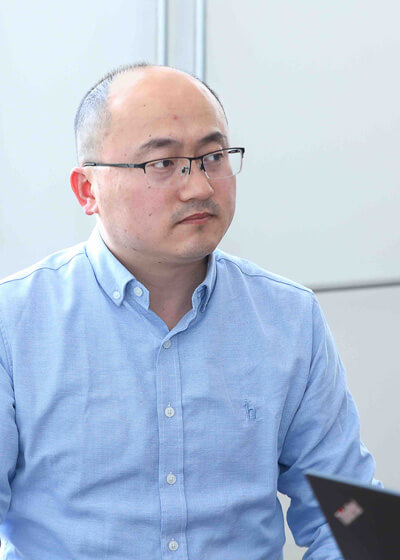
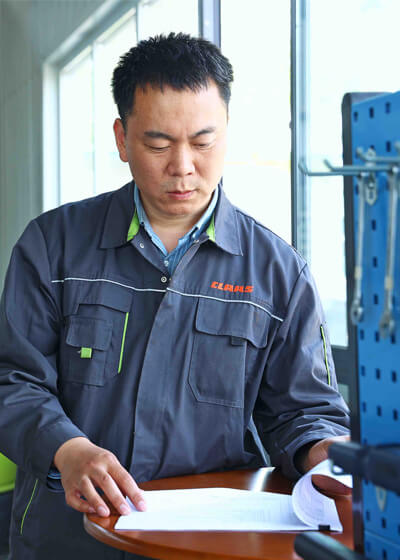
The Morning Operation Briefing takes place every morning at nine in the meeting room next to Assembly. In these sessions Xi Chen discusses current issues with departmental and area managers for half an hour. They inform him of the progress that has been made and challenges they face. Shirley Wang, 37-year-old head of Quality Assurance at the CLAAS Gaomi site, always attends these meetings.
"The CLAAS corporate culture is based on mutual support and trust", she says. The Quality Department has to work very closely with Production, Design and the customers to achieve the best possible results. And the work of Shirley Wang and her 37-strong team is having an effect.
This is illustrated by the fact that Gaomi also supplies CLAAS Industrietechnik – a subsidiary of the CLAAS Group based in Paderborn. The components produced in Gaomi are used in CLAAS machines throughout the world. The company's headquarters in Harsewinkel recently confirmed that General Manager Chen produces better quality than many German suppliers.

This is due in no small measure to the close relationship that has developed across the national borders. In recent years, German and Chinese colleagues have regularly worked in tandem teams in Gaomi and Harsewinkel. What's more, CLAAS invests heavily in training the workforce in Gaomi. Even during the pandemic – in the middle of China's 'zero-covid' policy – Chinese colleagues flew to Harsewinkel to attend seminars.
Xiandian Meng greatly appreciates this exchange within the CLAAS Group. The 35-year-old purchasing director was head of the CLAAS Industrietechnik department in China until the end of 2022 and worked closely with CLAAS Industrietechnik colleagues in Paderborn. Meng obtained his master’s in mechanical engineering at RWTH Aachen University and is convinced that German and Chinese cultures complement one another very well. The Chinese are often extremely efficient and flexible, while Germans place great value on accuracy, he explains.
My colleagues in Gaomi have to get used to the fact that Germans communicate more directly than we do." While the Chinese tend to politely skirt around issues, the Germans don't beat about the bush. "Over time we’ve come to realise that it’s not intended to be personal, it's just matter-of-fact", he laughs.

Dual education and training: a recipe for success.

Another aspect of German corporate culture embraced by the Gaomi plant is the dual education and training programme for technicians. The system is virtually unknown in China, explains Qian Liu, the plant's Dual Education and Training Manager. The 38-year-old engineer joined CLAAS in September 2021 having previously worked for BMW in China and is familiar with the German apprenticeship culture.
Chinese companies normally recruit university graduates and then train them. In contrast, apprentices at CLAAS spend much of their time working in the factory as well as attending college. "When they graduate, these young technicians are already familiar with the company and have a clear career path to follow", says Lui. "That's something they really appreciate." Twelve graduates have completed the programme to date – and if the company has its way, there will be plenty more to follow.

A key future market.

That tallies with the company’s plans for China: CLAAS is developing the export share of the Gaomi factory – with combine harvesters for Europe, Africa and Central Asia. The side of the business that supplies components to other factories is also growing as it helps CLAAS play to its strengths in terms of procurement and in-house production.
"China will remain a key future market for us, although we must always keep a judicial eye on its distinctive characteristics and framework conditions", says Bernd Kleffmann, Senior Vice President Product Unit Combines Range C-F at CLAAS. "China attaches great importance to food self-sufficiency. That's why products from different CLAAS sites have Chinese customers waiting for them. And that includes combine harvesters in green and red from Gaomi."

The Gaomi factory is growing – and with it the workforce's ambitions. The flat hierarchies and freedom of expression are paying off: those who have something to say are listened to, and those who take responsibility can actively shape the site's future.

It may be quiet in the canteen at the weekend, but on Monday mornings the place swings into action. The new working day begins at seven am – and with it another step towards an increasingly advanced, forward-looking production plant.

From agriculture to literature: five facts about Gaomi.

1.

Gaomi is a district in the Weifang region with a long track record of manufacturing farm machinery such as combine harvesters and tractors that goes back several decades. As a thriving business centre, Gaomi has a mixed agricultural and industrial economy. Shandong Province, where the district is located, is famous for cereal and vegetable production.

2.

With a population of 877,000 – by comparison, Frankfurt am Main has 753,000 – the city of Gaomi, which bears the same name as the district, is small by Chinese standards. Hardly surprising, given that Shandong Province has over 101 million inhabitants, more than Germany, Austria and Switzerland combined.

3.

The city of Gaomi has a population density of 550 inhabitants per square kilometre, more than double that of Germany.

4.

The novelist Mo Yan – the first Chinese winner of the Nobel Prize in Literature – comes from Gaomi. Most of his novels are set in the city, including ‘Red Sorghum’, which gave him his literary breakthrough in 1986. It was adapted for film by director Zhang Yimou to critical international acclaim in 1987.

5.

Because of Mo Yan's novel, Gaomi is known throughout China for its red sorghum, a type of millet which is grown in the region. Sorghum is not only a global staple food; it is also used in cattle feed.