
3. Liquid fuels
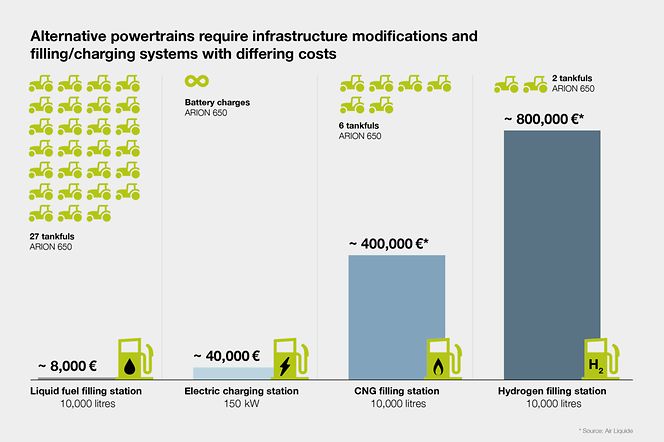
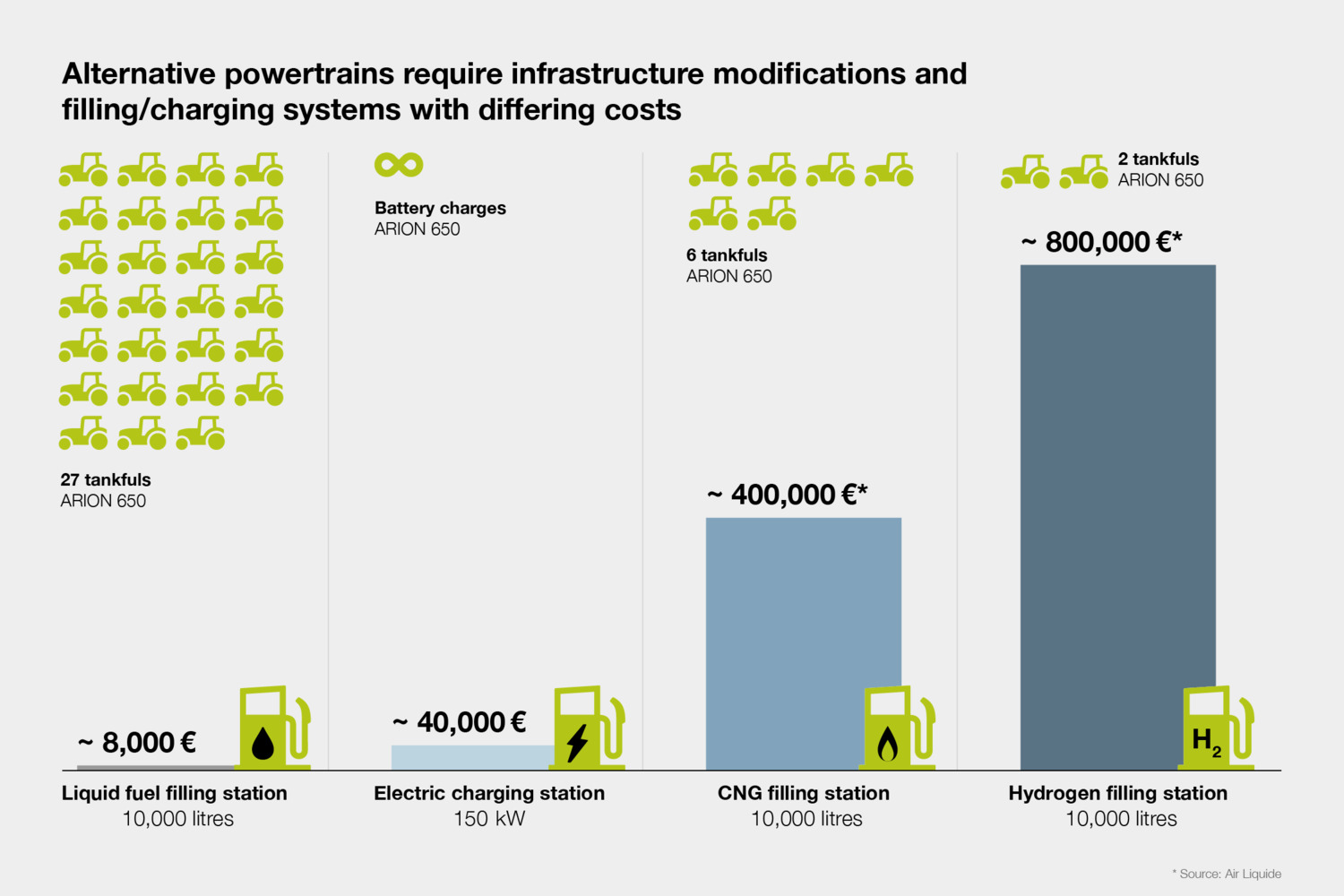
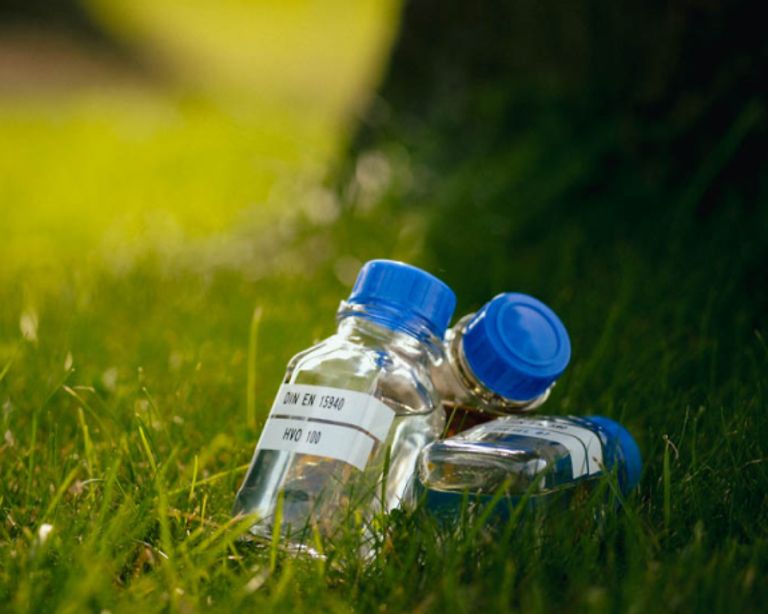
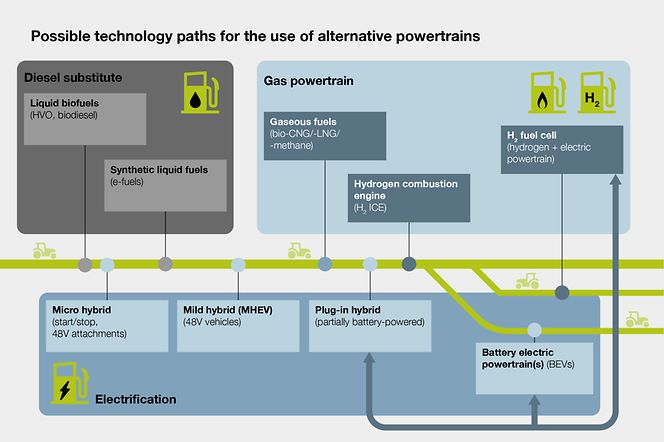
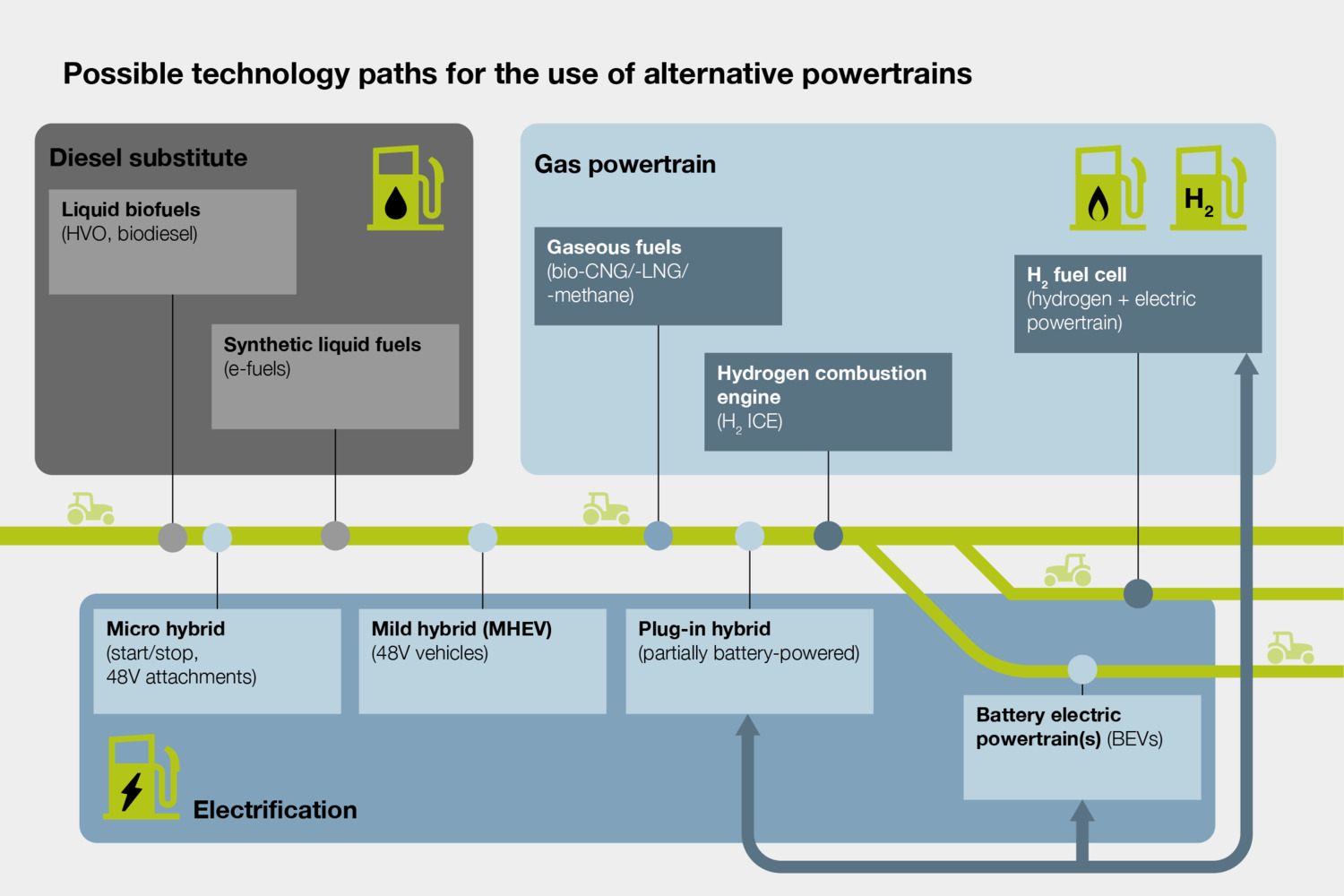
'Drop-in' fuels are the most promising drive technologies. The term is derived from the fact that they can be used without having to modify the vehicle. One example is HVO (hydrotreated vegetable oil), made from biowaste and oils. Another is e-fuel (synthetic fuel) made from water and CO2 using electricity. Although the use of drop-in fuels, like conventional diesel, releases CO2 – the same amount of CO2 is removed from the environment to produce them, so they are in effect carbon-neutral. Switching to HVO would be by far the most affordable and effective solution since the existing fleet would reap the benefits. An average farmer would have to invest only around 8,000 euros in a fuel storage tank.
In theory, HVO is already available and by the end of 2023 CLAAS will have approved most of our machines for its use – although fuel stations in Germany are not currently permitted to sell this sustainable alternative to diesel. E-fuels will not be available in sufficient quantities until around 2030. Biodiesel is another environmentally friendly liquid fuel that is already available and in use. However, machines would have to be modified before they could run on this fuel, and there are difficulties associated with its handling and storage.