A rethink is needed if agriculture is to operate more sustainably. To effectively reduce CO2 emissions, we must consider all alternative drive options and give serious thought to which technologies will be viable in the long-term.
As an agricultural machinery manufacturer, CLAAS aims to provide efficient, sustainable solutions – because farming can only work in harmony with nature. At the same time, we believe in maintaining a balance and taking seriously the cost pressures facing farmers. For this reason, we are constantly assessing innovations to determine which are practical, climate-friendly and financially viable.
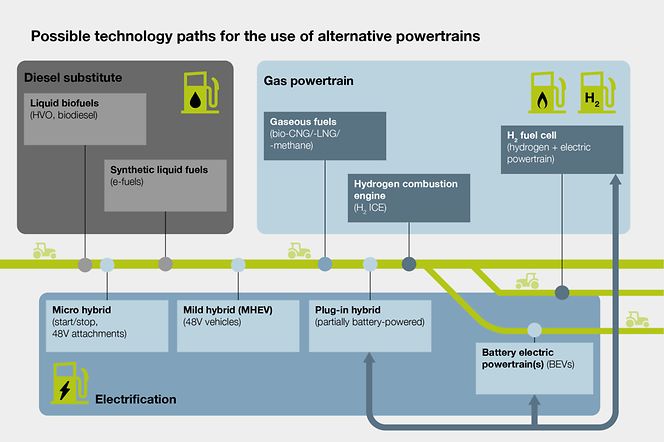
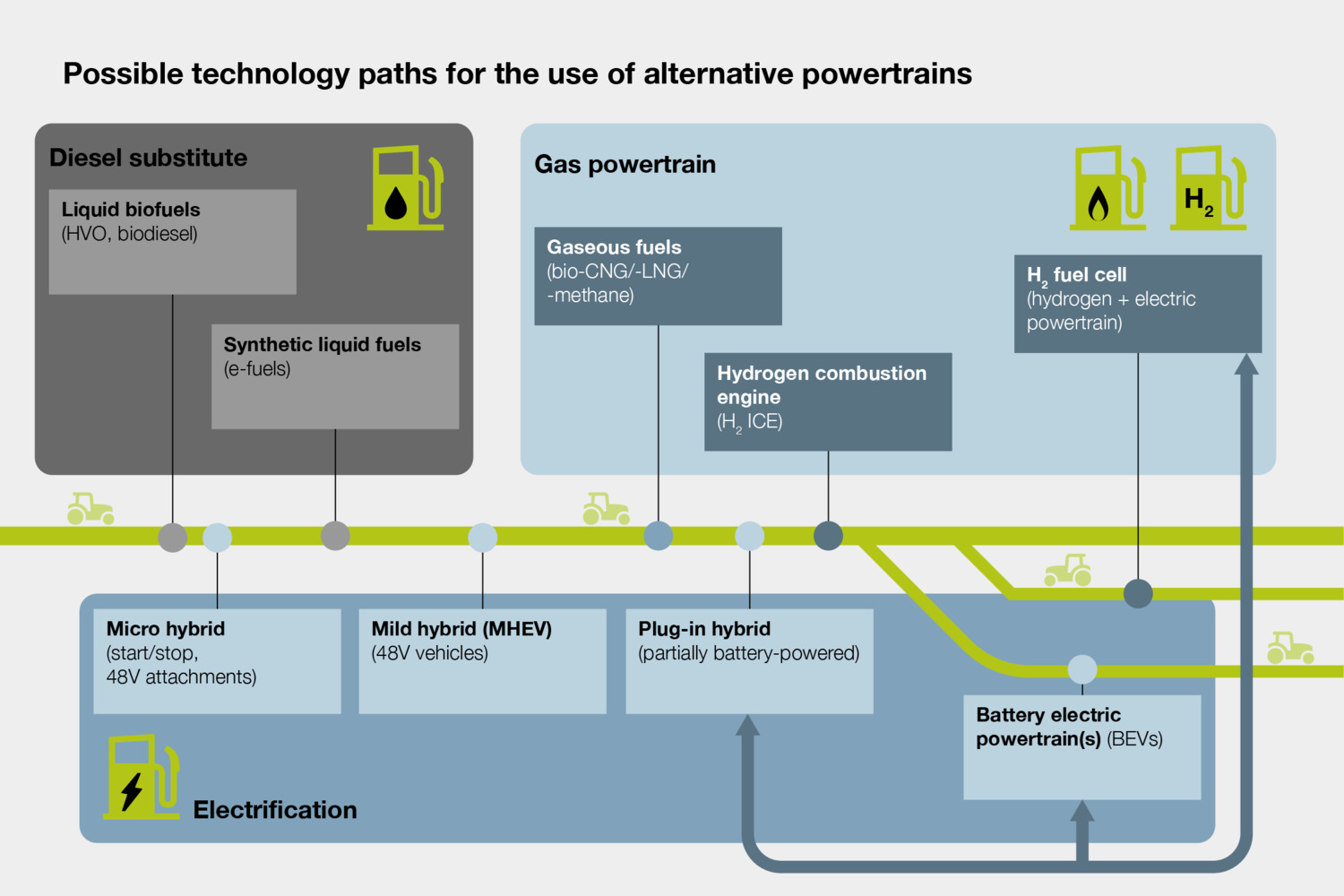
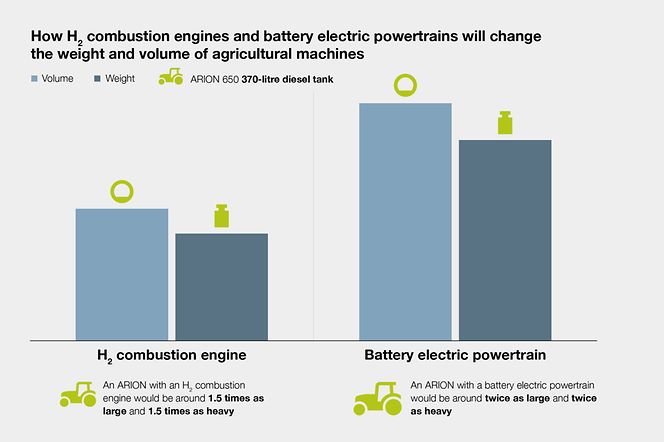
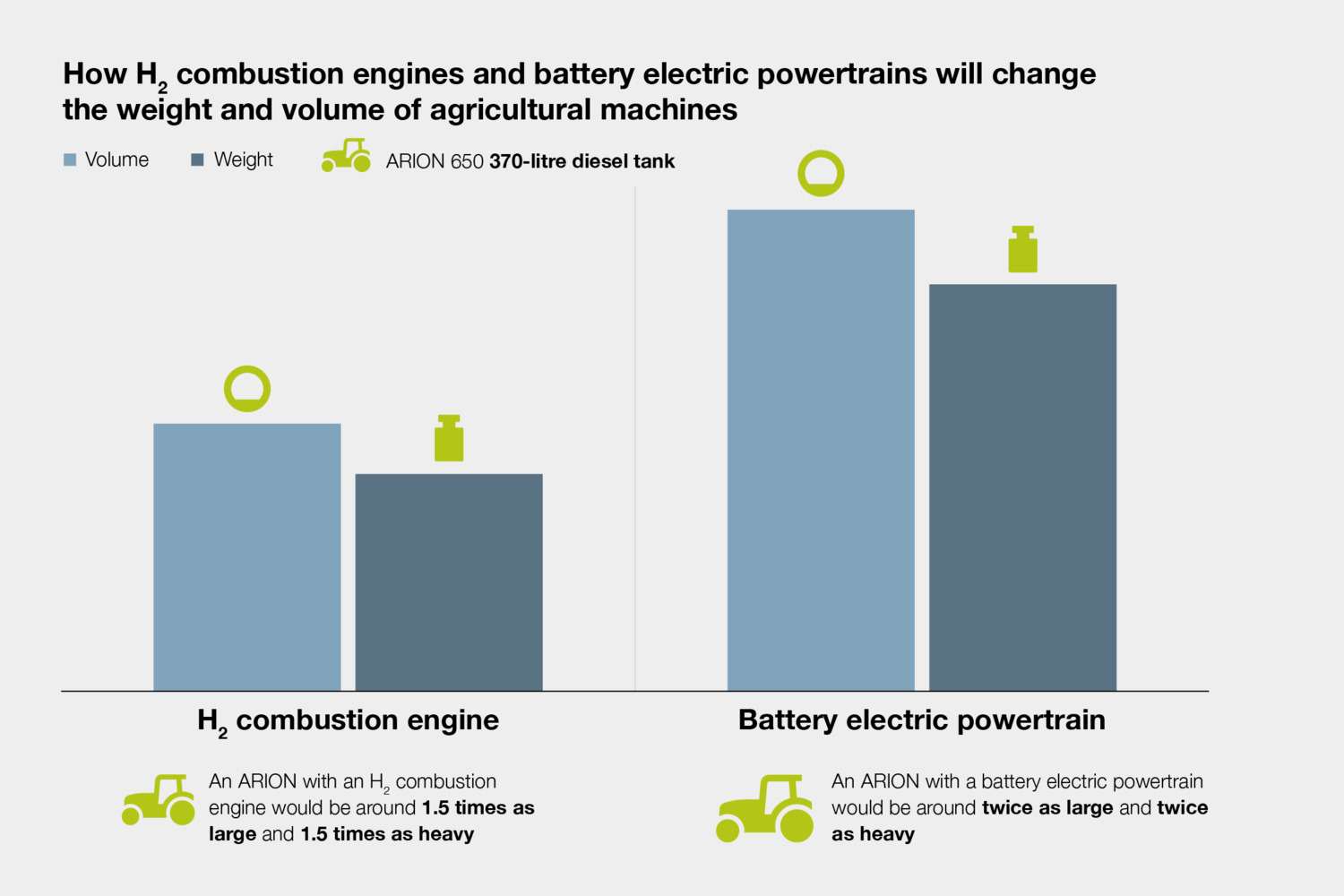
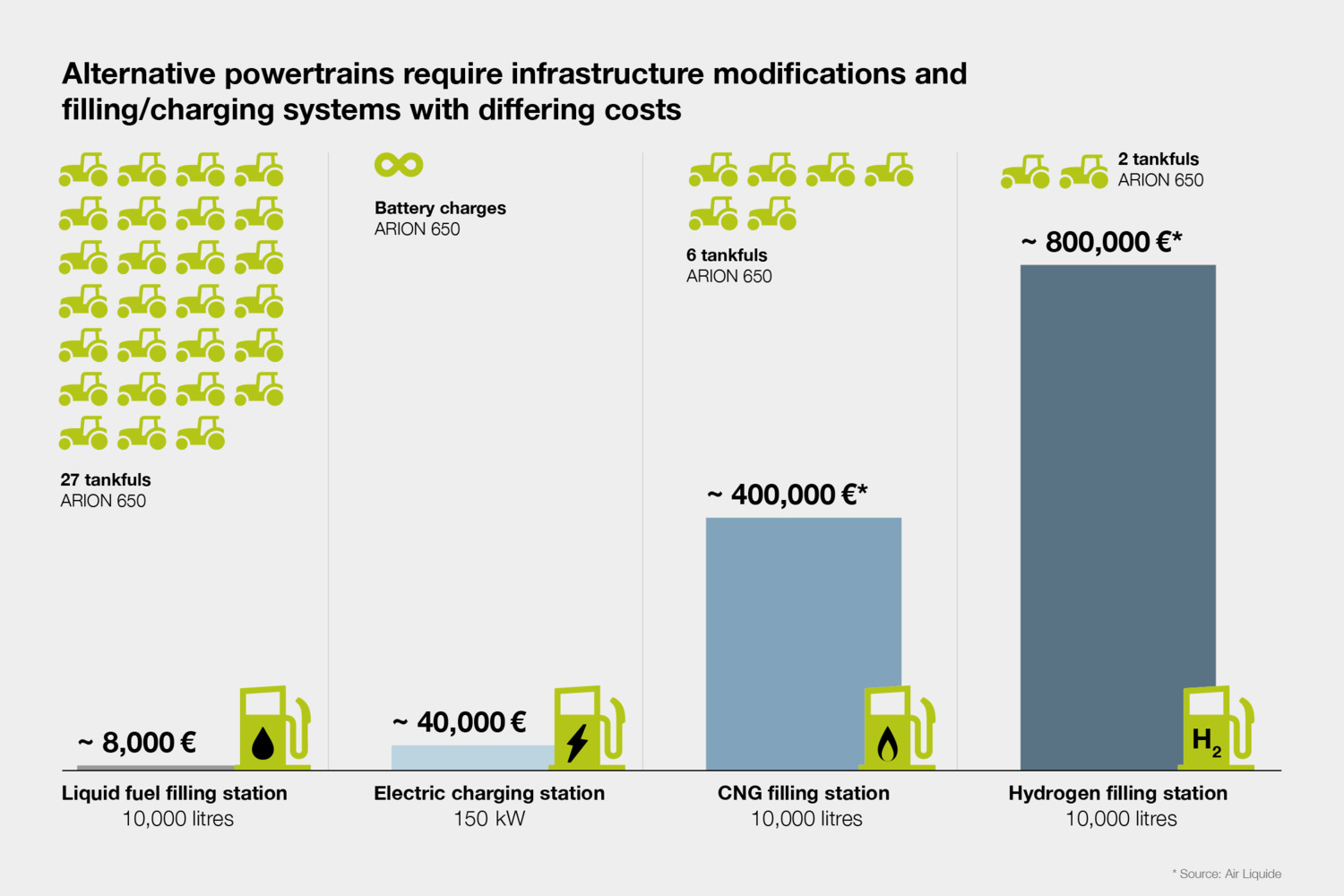
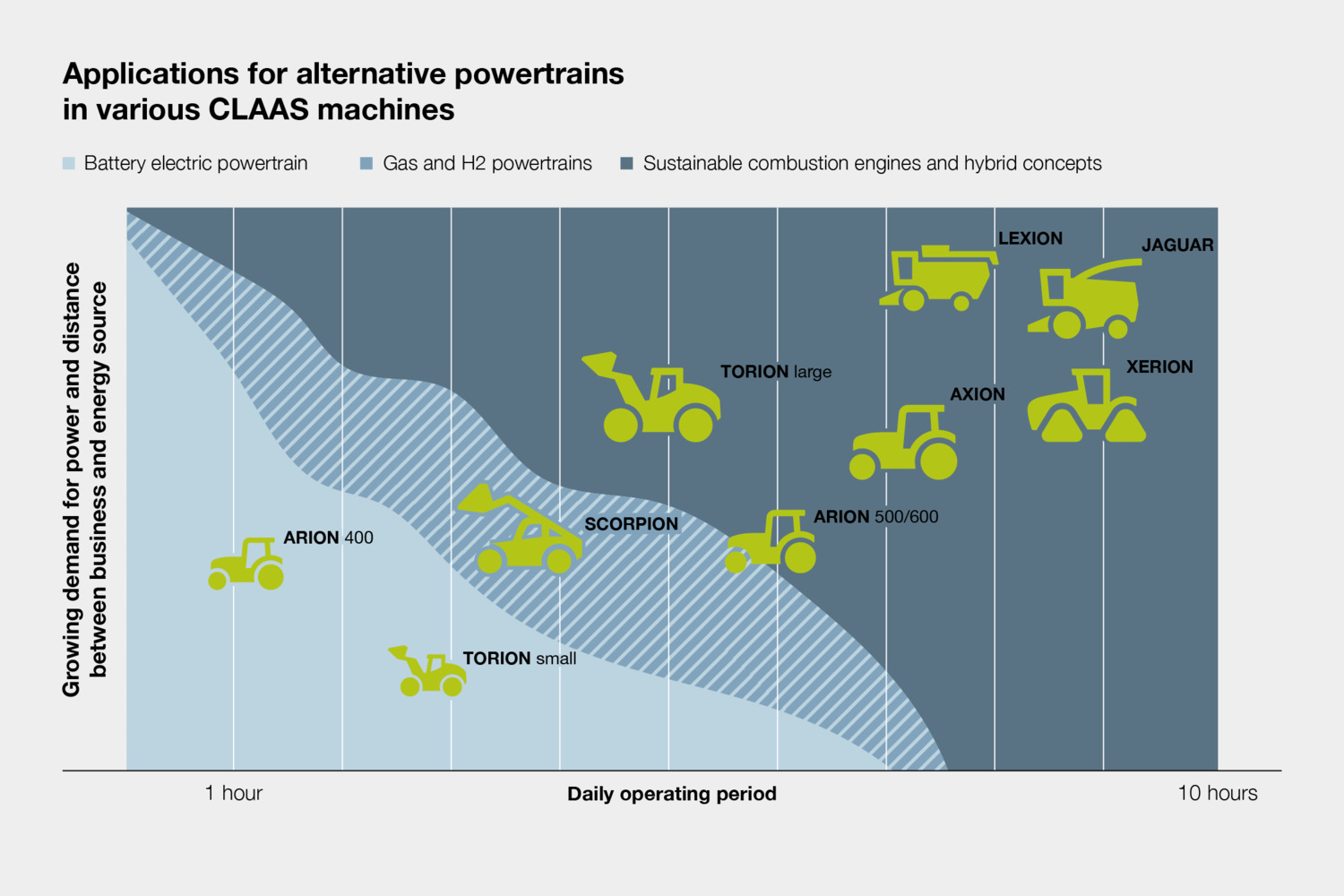
According to the German Federal Environment Agency, 'mobile and stationary combustion', which includes emissions from agricultural machines, accounted for one tenth of agricultural greenhouse gas emissions in 2021. This equates to around 0.9% of total emissions in Germany. Although this may seem a modest amount, at CLAAS we are taking an open-minded approach and considering all options to further reduce it. Three alternative drives are under discussion: battery-electric solutions, hydrogen drives and environmentally friendly liquid fuels. We explain the pros and cons of these three approaches and their possible uses.