CEMOS for Tractors
Agricultural machinery
Digital Solutions
Service & Parts
Experience
Careers
Press
About CLAAS

CEMOS

Can a tractor make its operator better?

CEMOS for Tractors

CEMOS operators are unbeatable.

The advantages of CEMOS.

  • Reduces tyre wear
  • Reduces soil compaction by optimising tyre pressure
  • Reduces operating costs by increasing work rates
  • Utilises the full potential of the machine
  • Reduces implement wear (implement assistant)
  • Improves carbon footprint of the farm

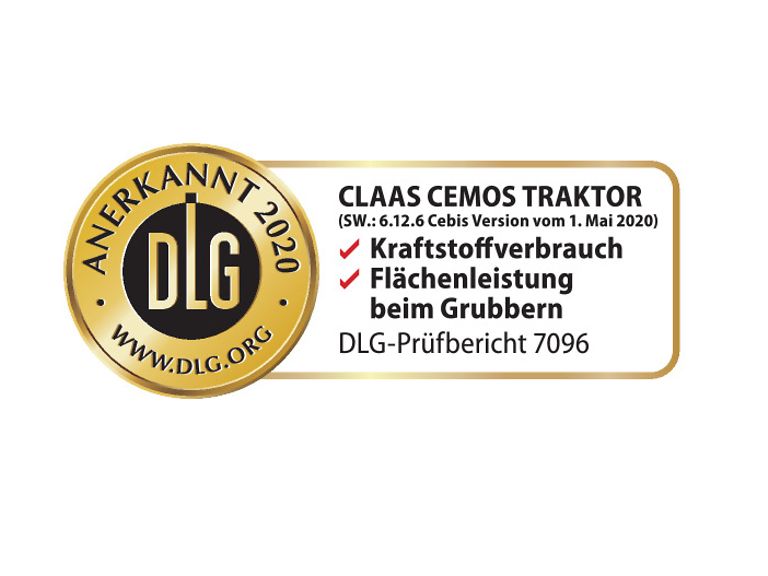
Tested, certified and awarded the 'DLG-approved' quality seal by independent test institute the DLG (German Agricultural Society):

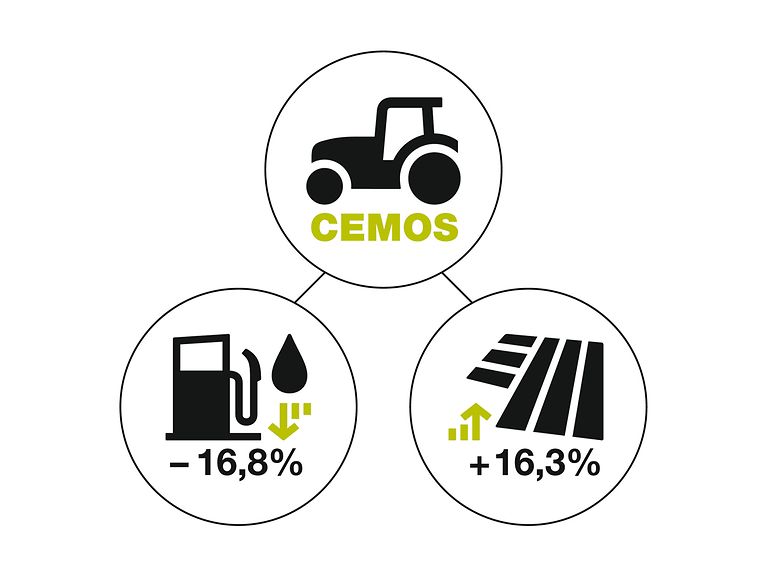
  • up to 16.3% higher work rate (ha/h)
  • up to 16.8% lower fuel consumption (l/ha)
  • Eight out of ten test participants managed to reduce their fuel consumption while at the same time increasing their work rate

Interactive soil protection.

The first silver medal goes to the integration of soil compaction risk analysis into the self-learning operator assistance and process optimisation system CEMOS for Tractors. The compaction risk is calculated on the basis of scientific field trials and formulae developed by Bern University of Applied Sciences (BFH-HAFL) in cooperation with the Agroscope Research Institute in Reckenholz, Aarhus University in Denmark and the Swedish University of Agricultural Sciences (SLU).

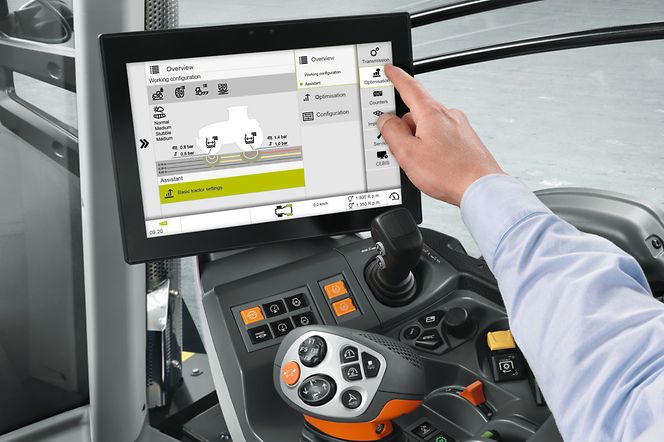
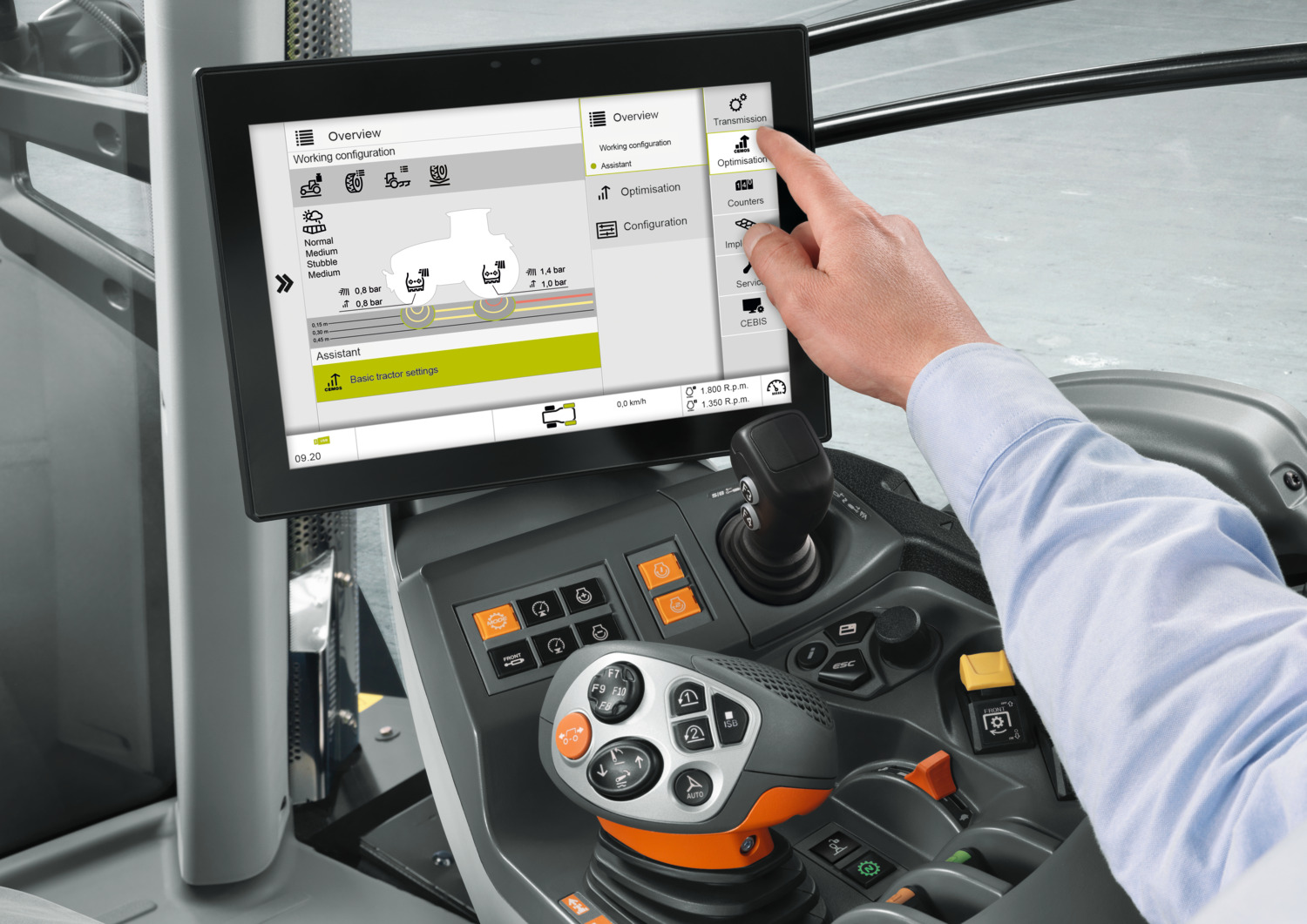
The universities and institutes combined their knowledge to create the Terranimo® model for predicting soil compaction, which is freely available as a web-based app. The Innovation Committee recognised the additional benefits of linking this tool to CEMOS: by integrating this specialist knowledge into the farm machine itself, the operator does not have to enter any additional data because CEMOS already provides it. A display on the CEBIS terminal informs the operator if the current tractor-implement combination represents a risk of harmful soil compaction under the prevailing soil conditions. If the operator confirms the suggested optimisation settings, the information is fed straight back into the current risk assessment performed by the function.

DLG certification.

During and after Agritechnica 2019 we challenged our customers and visitors to a dual with CEMOS for tractors: professional drivers head-to-head with a professional system – that's how it started.

We selected ten particularly experienced farmers and tractor drivers from four European countries from the large number of applicants who responded to our request. The CEMOS Dual took place in September 2020 on a farm in eastern Germany.

Georg Schuchmann from DLG Test Center Machinery and Farm Inputs was there to ensure that the test was performed under objective conditions. He measured the speed, fuel consumption, work rate, working depth and quality of work for each test drive. Under the watchful eyes of the DLG, the experience of the drivers was pitted against the capabilities of the CEMOS operator assistance system – and the “DLG-approved” seal was in the bag. This DLG award confirms the effectiveness of CEMOS in terms of fuel savings (up to -16.8%) and cultivation work rate (up to +16.3%). Eight out of ten test participants managed to reduce their fuel consumption while at the same time increasing their work rate.

Official test report

Operator assistance system

CEMOS teaches itself and trains the user.

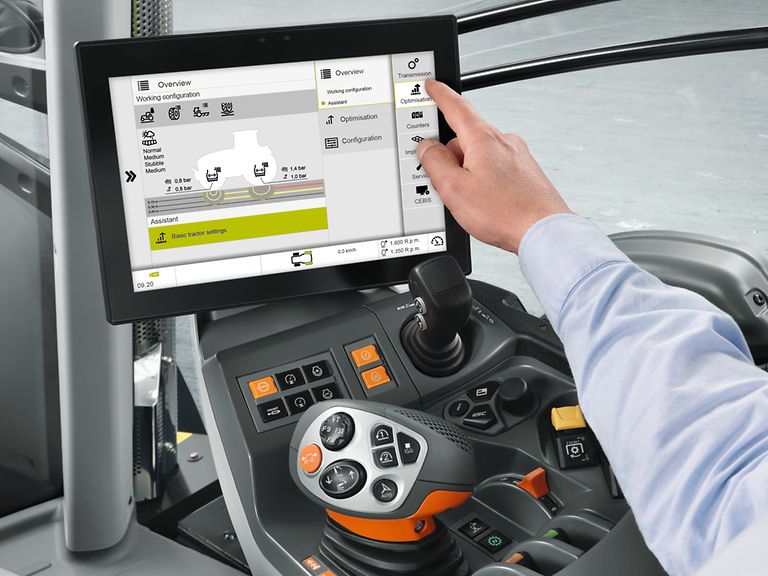
The CEMOS self-learning operator assistance system is the only one of its kind on the market to optimise the performance of both the tractor and attached implements such as ploughs and cultivators. It helps the operator to set the correct ballast and tyre pressure.

Phase 1.

Preparation in the farmyard.

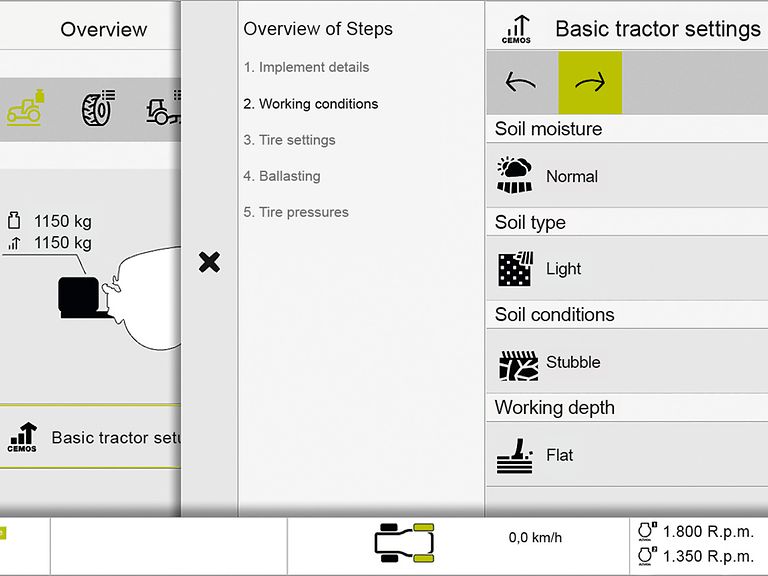
CEMOS recommends the required ballasting and optimum tyre pressure to suit the selected implement and task before the driver has left the farmyard. The dynamic learning system gathers more measurements while work is under way, and adapts its recommendations accordingly next time around.

Phase 2.

Basic setting in the field.

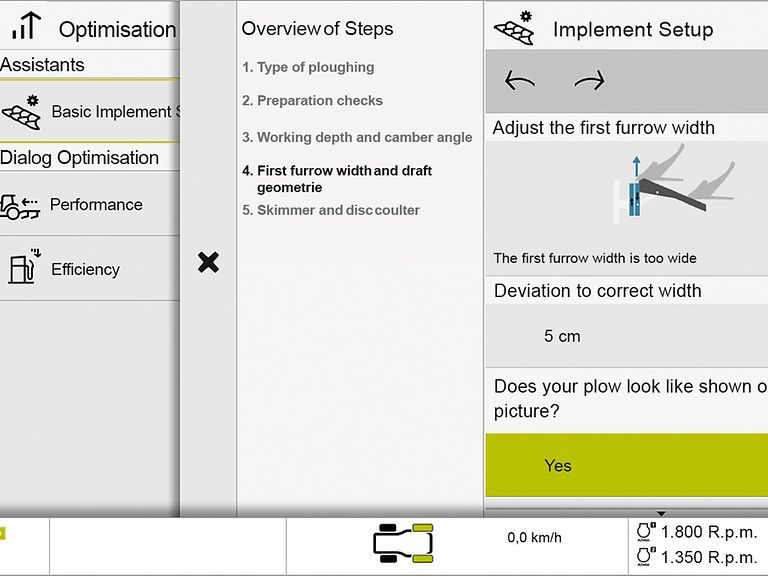
The integrated CEMOS knowledge database provides step-by-step instructions on basic settings for implements, with illustrations. Assistance systems are currently available for ploughs and disc mowers. The list of supported implements is steadily expanding.

Phase 3.

Optimisation while work is under way.

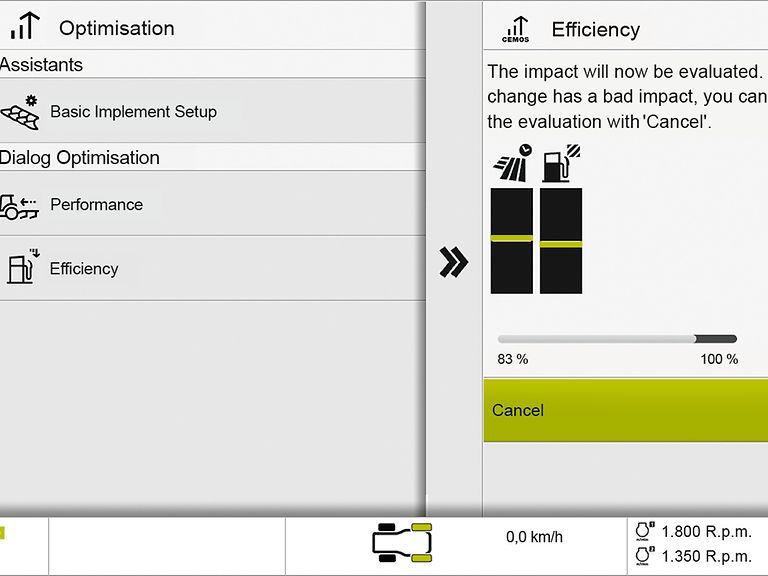
The operator opens the optimisation dialogue in the field. CEMOS checks all the basic settings, and offers suggestions for improving 'performance' or 'efficiency', which the operator can accept or reject. After each change of setting, CEMOS recalculates and shows whether the area output and diesel consumption have improved, and by how much.

“CEMOS spurs me on.”

Hof Wiesbyll – one of the first CEMOS customers

Impresses owners and operators.

How much has CEMOS helped you in your day-to-day work?

Nicolai Schulz: We have used the system a great deal. It's a massive help to know how much ballast you need, what the tyre pressure should be set at, which engine droop setting to use and how to configure the transmission settings while you're still in the yard.

Jörg Andresen: My tractor does the main soil cultivation work and clocks up 1,200 hours a year. We use CEMOS all the time and every implement is now connected to it. Continually optimising the machine settings with CEMOS soon becomes second nature.

What do you particularly like about this operator assistance system?

Nicolai Schulz: The diesel consumption is indicated with every change you make – so the driver can see the immediate benefit of their actions.

Jörg Andresen: CEMOS spurs me on. You find yourself constantly opening CEMOS while you're working to see if you can further tweak the settings. It's very motivating to find that you've driven better today than you did the day before.


“You can tell from your own pocket.”


How worthwhile is CEMOS in business terms?

Dr Volker Schulz: I really hadn't expected all the advantages. The quality of the operators' work improves and with it the quality of soil cultivation. You can tell from your own pocket. If you save at least two litres of diesel per hectare in conjunction with the tyre pressure control system, that adds up to quite a significant savings potential across all tillage operations in the yearly cycle.

Nicolai Schulz: We need tyre pressure control systems in this region because it isn't possible to use dual tyres. The tyre pressure has to be continuously adjusted as you move from field to field.

Jörg Andresen: When cultivating, I want to drive with the lowest possible tyre pressure without damaging the tyres – that would be expensive.

Dr Volker Schulz: Driving with optimum tyre pressure means that you can switch to a smaller machine and still transfer the same tractive power. This lowers the net weight, and with it, the ground pressure.

“The operating weight has gone right down.”


How does CEMOS help you to better understand your machine?

Jörg Andresen: I'm always learning something new. And when it comes to ballasting, CEMOS has really taken me by surprise. The operating weight has gone right down compared with before. I could hardly believe it at first, but it works. We now drive on the field with less ballast and achieve the same quality of work.

Nicolai Schulz: Getting the plough settings right is the key to reducing wear. It's great to have an assistant like CEMOS who takes you by the hand and guides you through the settings.

And now for the ultimate question: Would you recommend it to a colleague, yes or no?

Nicolai Schulz: Without a doubt. I would urge anyone intending to buy a CLAAS tractor to take a look at CEMOS as well.

Dr Volker Schulz: The future is all about automation and making life easier for the operator.