Alternative drives
Products
Smart Farming
Service & Parts
Discover CLAAS
Career
Press
About CLAAS

Efficient farming:

Alternative drives

Alternative drives

Pros and cons of alternative drives.

A rethink is needed if agriculture is to operate more sustainably. To effectively reduce CO2 emissions, we must consider all alternative drive options and seriously consider which technologies will be viable in the long term.


As an agricultural machinery manufacturer, CLAAS aims to provide efficient, sustainable solutions because farming can only work in harmony with nature. At the same time, we believe in maintaining a balance and taking seriously the cost pressures facing farmers. For this reason, we constantly assess innovations to determine which are practical, climate-friendly, and financially viable.


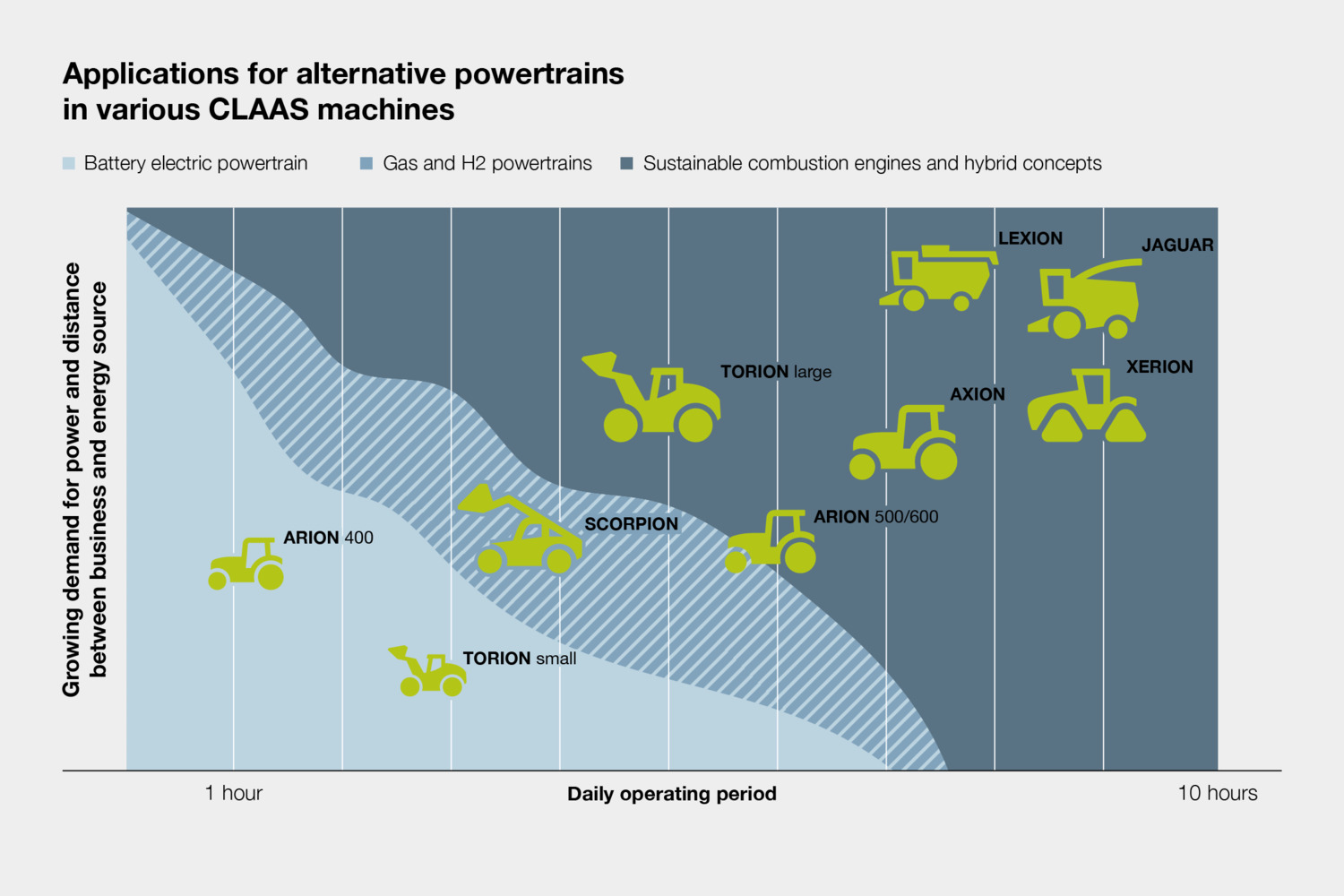
According to the German Federal Environment Agency, 'mobile and stationary combustion'—which includes emissions from agricultural machines—accounted for one-tenth of agricultural greenhouse gas emissions in 2021. This equates to around 0.9% of total emissions in Germany. Although this may seem like a modest amount, at CLAAS, we are taking an open-minded approach and considering all options to reduce it further. Three alternative drives are under discussion: battery-electric solutions, hydrogen drives, and environmentally friendly liquid fuels. We explain the pros and cons of these three approaches and their possible uses.
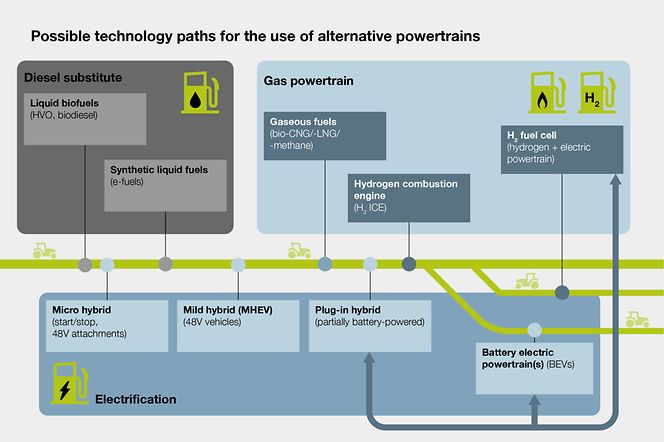
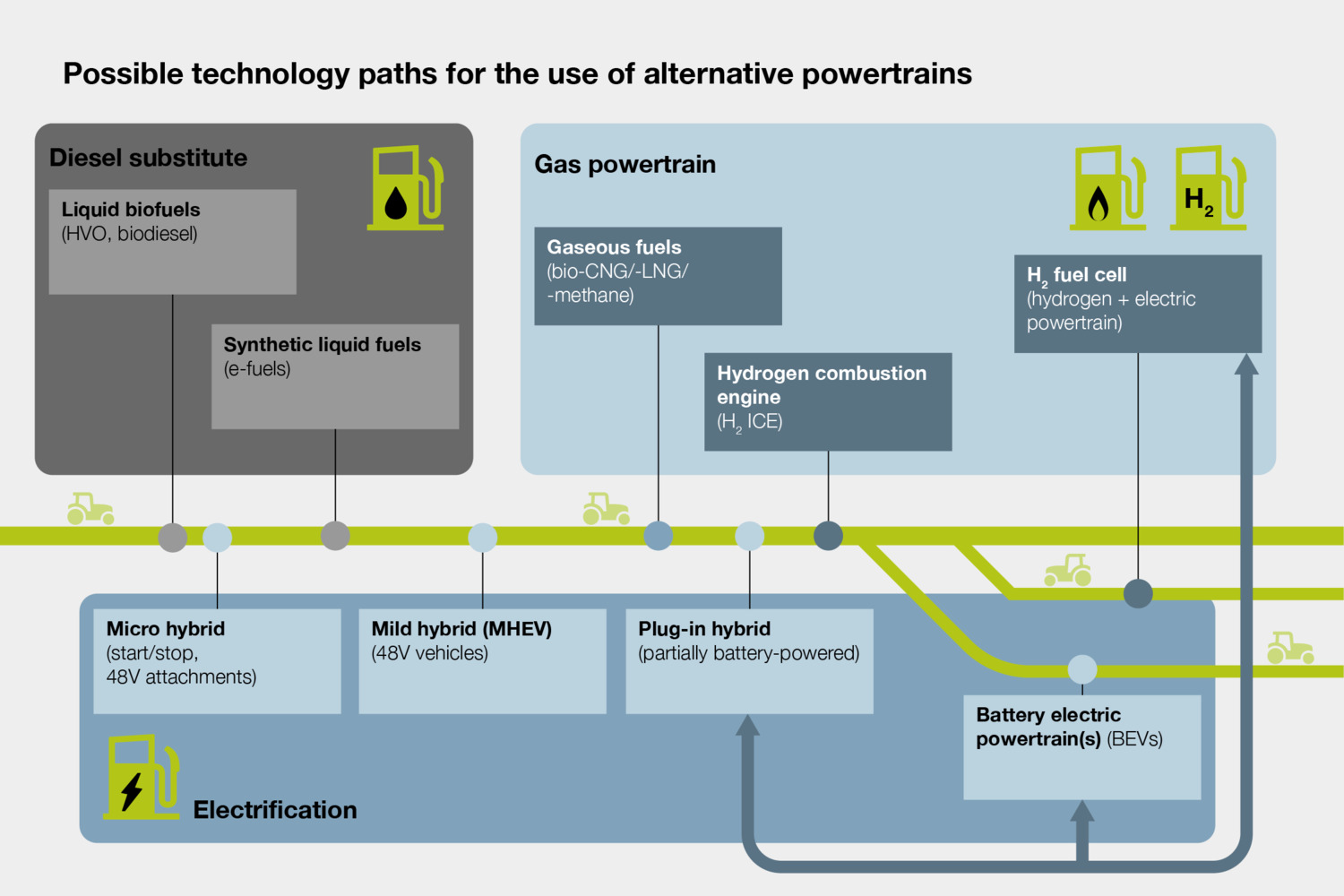
 

Download "Efficient Farming" white paper

1. Electric drives


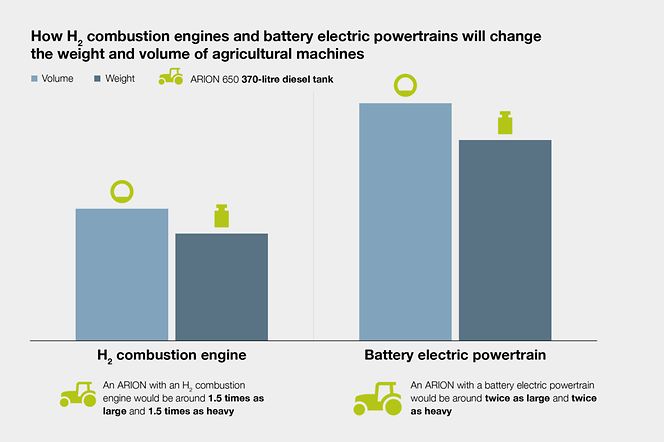
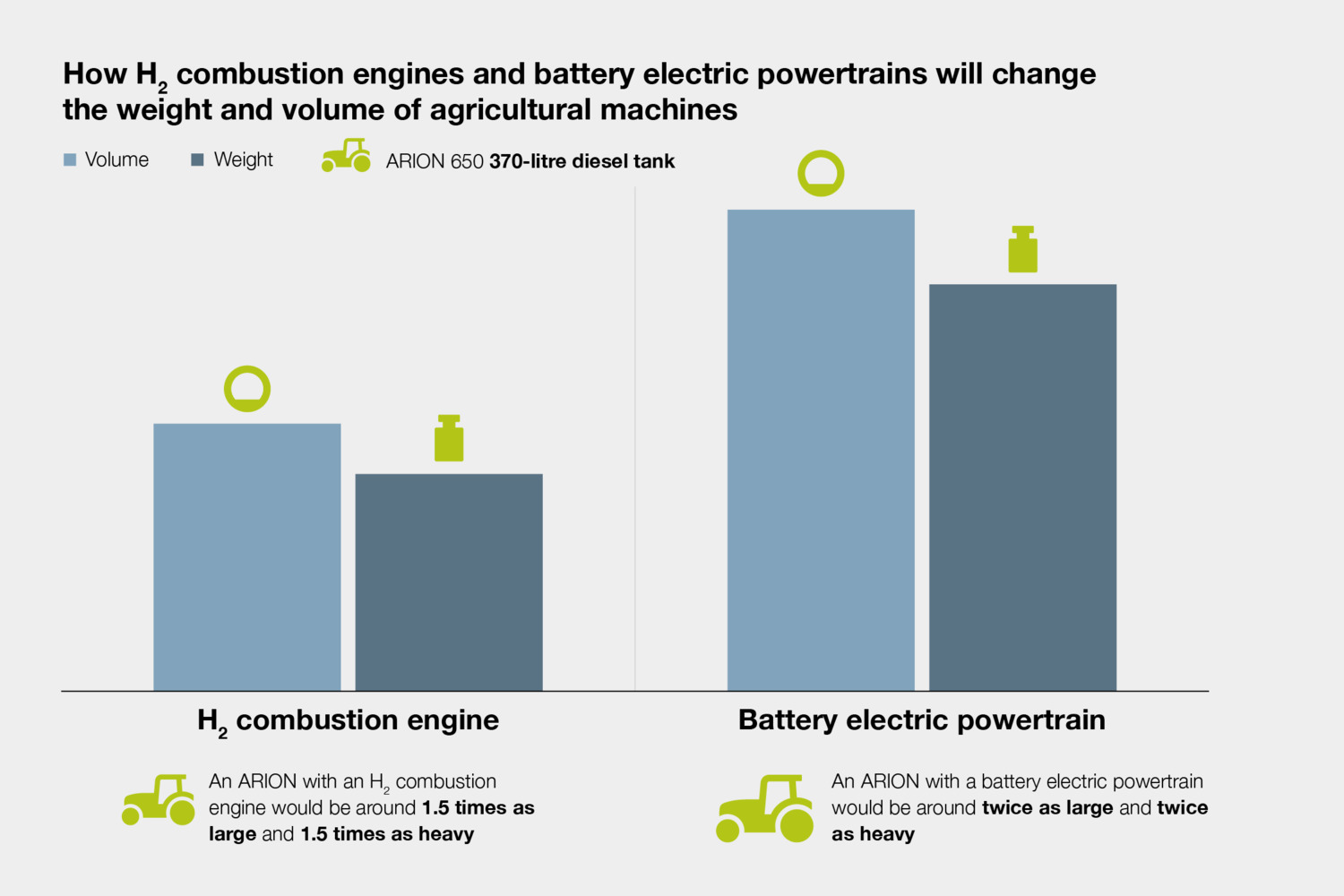
Battery-electric drives are well-established in passenger transport and have proved a viable alternative to the combustion engine for everyday use. They can also be used to good effect in some agricultural areas; for example, a battery-electric small tractor can handle the practical demands of yard work, light fieldwork, and municipal work. However, at this stage, electric motors are not a viable option for larger and more powerful machines. These machines need higher tractive performance, and in some cases, their engine has to drive other components apart from the vehicle itself, such as the threshing unit in a combine harvester. This would require an extremely large, heavy battery. An electric tractor with a 135 kW output would need a battery ten times heavier than a conventional engine with diesel tank. This would make the resulting machine so heavy that it would cause long-term damage to the soil by compacting the substrate as it drove across the field. If the battery capacity was reduced to an acceptable additional weight, its range would be too short to be practical.


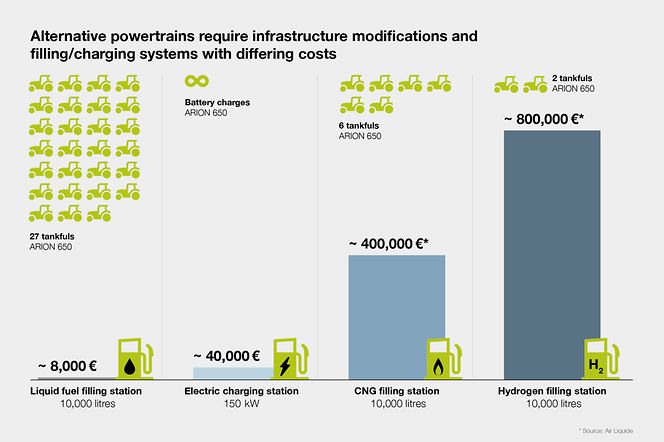
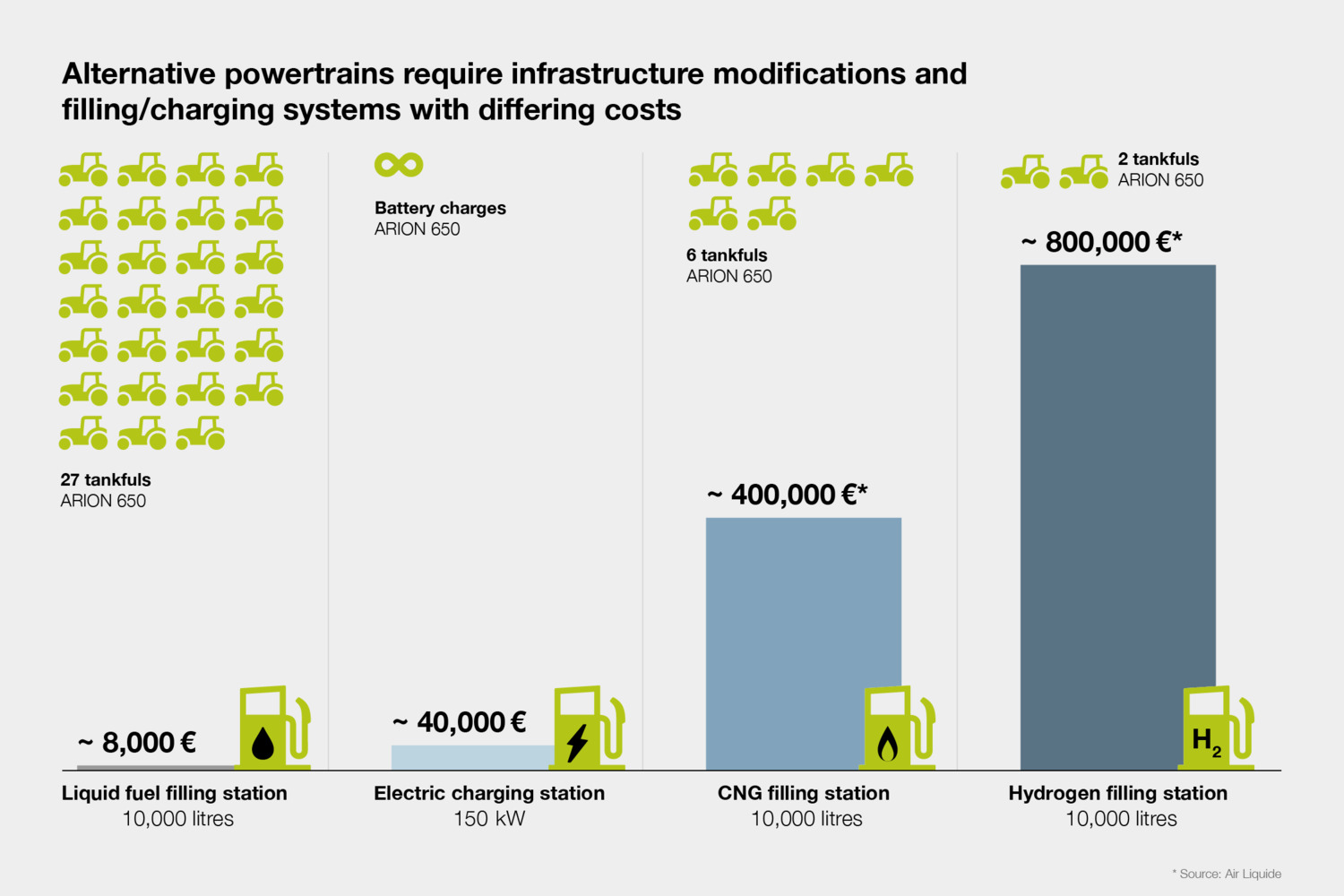
However, it would be wrong to underestimate the speed of technological development. Battery capacities and charging speeds especially have continued to improve in recent years. Although high investment costs for batteries and charging infrastructure will slow their spread initially, financial incentives and the use of affordable, self-generated electricity mean that the investment will pay for itself over several years. Currently, a farmer would need to invest $XX,XXX in their own charging infrastructure.


2. Hydrogen drives


The use of hydrogen fuel cells as an alternative drive in agriculture is not a realistic proposition at present. Agricultural machines need a large amount of power in a short time—and that's not what fuel cells are designed for. However, hydrogen combustion engines could be an option in the future. Unlike an electric drive, they would have the advantage of allowing the existing drive train to be largely retained, although a different engine would obviously have to be installed. The existing tank capacity would need to increase tenfold to carry the hydrogen required without making frequent stops for refueling. This additional space requirement would completely change the existing machine architecture. Infrastructure and logistics pose further challenges since an on-farm hydrogen fuel station would be extremely expensive to install compared with a diesel tank. At today's prices, a farm would have to invest around $XXX,XXX. In addition, hydrogen would have to be delivered frequently to the farm, unlike electricity from the power outlet.

3. Liquid fuels


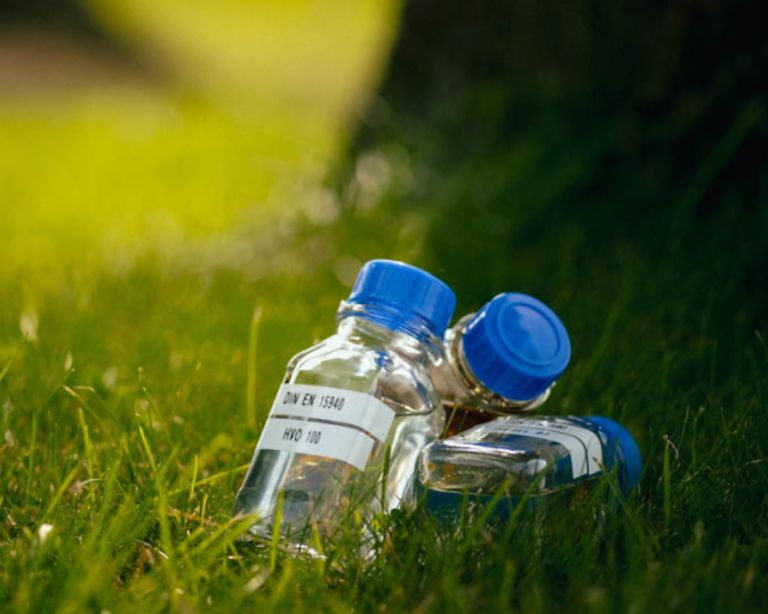
'Drop-in' fuels are the most promising drive technologies. The term is derived from the fact that they can be used without having to modify the vehicle. One example is HVO (hydrotreated vegetable oil), made from biowaste and oils. Another is e-fuel (synthetic fuel) made from water and CO2 using electricity. Although the use of drop-in fuels, like conventional diesel, releases CO2, the same amount of CO2 is removed from the environment to produce them—so they are effectively carbon-neutral. In addition, making the switch to HVO would be by far the cheapest and most effective option in direct comparison, as the existing fleet would also benefit. An average agricultural business would only have to invest around $X,XXX in a fuel storage tank.


HVO is already available in theory. CLAAS will have approved most of its machines for use by the end of 2023, although fuel stations in Germany are not currently permitted to sell this sustainable alternative to diesel. E-fuels will not be available in sufficient quantities until around 2030. Biodiesel is another environmentally friendly liquid fuel that is already available and in use. However, machines would have to be modified before they could run on this fuel, and there are difficulties associated with its handling and storage.

An open-minded approach to alternative drives


The good news is that there are many different ways to make agriculture carbon-neutral—even in the near future. Some technologies are already available, while others are well on their way to being suitable for agricultural use. The key requirement for a sustainable future is to be open to different technologies. An economic sector as complex as agriculture, with all its diverse requirements, needs approaches tailored to each application. The first step is to make the existing drive as efficient as possible—something we continuously endeavor to do.


Here at CLAAS, we want to increase the efficiency and, thus, the environmental sustainability of agricultural machines throughout the process chain. In addition to researching alternative drives, this includes increasing process efficiency with the help of connected machines, optimizing operations using smart automation and boosting machine efficiency.